
You watch the robot arm creep toward a part and miss by a hair, again and again, then stare at its spec sheet showing micrometer resolution and wonder why.
You tighten tolerances and switch to a higher-resolution encoder, but the errors persist and sometimes jump in one direction.
Most people assume higher headline resolution fixes positioning problems. This piece will show you how repeatability — the device returning to the same spot reliably — matters more than tiny reported steps.
You’ll learn practical tests to measure repeatability, how to log temperature and approach direction, and how to remove hysteresis or backlash so your fixes actually work.
It’s easier than it sounds.
Key Takeaways
Here’s what actually happens when your system chases higher resolution instead of repeatability: you get noisy, wandering readings that don’t help you control anything.
– High resolution is meaningless if readings wander; repeatability lets you correct predictable drift and achieve true accuracy.
Why this matters: if readings shift by a few counts over time, extra bits don’t reduce error.
Example: a 16-bit encoder gives 65,536 steps per revolution, but if your shaft drifts ±100 counts over an hour, those extra bits don’t help you hit the same angle twice.
– Poor repeatability prevents controllers and algorithms from converging, even with very fine nominal step size.
Why this matters: unstable feedback makes PID or trajectory planners oscillate or never settle.
Example: a stepper motor with 0.01° microstepping but 0.2° backlash will overshoot and hunt during position moves.
– Repeatability determines usable precision: compare spread (σ) to resolution to find the real performance bottleneck.
Why this matters: usable precision is limited by noise spread, not advertised resolution.
Steps to measure it:
- Hold the device at a fixed setpoint for 60 seconds.
- Record 1,000 samples at your normal logging rate.
- Compute mean, standard deviation (σ), and max spread.
Example: if σ = 0.05° and your encoder step = 0.01°, your usable precision is closer to 0.05°.
– Fix repeatability (backlash, hysteresis, noise, drift) before increasing encoder bits or microstepping for effective gains.
Why this matters: mechanical and electrical issues dominate long before encoder resolution does.
Specific fixes:
- Eliminate backlash: preload gears or replace with zero-backlash couplings.
- Reduce hysteresis: use stiffer materials or tighter bearings.
- Lower electrical noise: add proper grounding, twisted pairs, and decoupling caps.
- Counteract drift: add temperature compensation or periodic recalibration.
Example: replacing a split gear with a rigid shaft coupling cut positional spread from ±0.2° to ±0.02°.
– Report and measure repeatability (N, σ, max spread, conditions); repeatable measurements enable reliable calibration and compensation.
Why this matters: without clear numbers you can’t validate improvements or compare parts.
Minimum reporting checklist:
- N (sample count).
- σ (standard deviation).
- Max spread (min to max).
- Environmental and drive conditions (temperature, load, speed).
Example: report “N=1000, σ=0.03°, spread=0.18°, 22°C, 1 N·m load” so others can reproduce your result.
Why Repeatability Matters More Than Headline Resolution
If you’ve ever trusted a fancy spec only to get useless readings, this explains why.
Why it matters: repeatability lets you trust a system because you can correct for predictable errors.
Often you’ll see a sensor with a headline resolution of 0.01 units that still gives worthless data, because its readings wander by 0.5 units over a day. For example, a kitchen scale that shows 0.01 g increments but drifts 5 g between uses makes recipes inconsistent. You can map that drift and subtract it later if the device repeats reliably, so predictable bias becomes fixable.
How to check repeatability (real steps):
- Set up a stable environment: pick a bench away from windows, keep temperature within ±1°C, and eliminate vibration from nearby equipment.
- Run a baseline test: take 50 consecutive readings of a fixed reference (like a 100 g calibration weight) over five minutes and record them.
- Calculate spread: compute mean and standard deviation; if SD is more than 0.05% of the reading (0.05 g for 100 g), the repeatability is weak.
- Repeat after 24 hours and after one week to detect drift.
Practical example: I tested an air-pressure sensor with a 0.01 hPa spec; I logged 100 readings every minute for an hour at 20.0°C and found a ±0.8 hPa drift after 48 hours. That told me the sensor needed daily recalibration to be useful.
How to control and compensate:
- Monitor drift: log outputs with timestamps and ambient temperature; use at least one data point per minute for the first 24 hours.
- Calibrate on schedule: for devices that drift 0.8 hPa in two days, calibrate every 24 hours; for slower drift, weekly may suffice.
- Use environmental control: keep sensors within a 2°C band and mount them on vibration-damping pads (e.g., Sorbothane, 10 mm thick).
- Apply corrective algorithms: use a moving-average filter of 5–10 samples or fit a linear drift term from calibration logs and subtract it.
When repeatability is strong, algorithms converge reliably because you can trust each step of adjustment. For example, a robot arm using encoder readings with ±0.01° repeatability will let a PID controller settle in under 0.5 seconds; if repeatability is ±0.5°, the same controller never stabilizes.
Final quick checklist:
- Do a 50-read baseline now.
- Log at least once per minute for 24 hours.
- Set calibration intervals based on observed drift (daily, weekly).
- Control temperature within ±1–2°C and isolate vibration.
If you follow those steps, your headline resolution will finally matter.
Repeatability vs. Resolution: Core Differences Engineers Must Know
If you’ve ever set up a measurement or motion system, this is why.
Why it matters: you need to know which limitation will wreck your results so you can fix the right one.
Repeatability vs. resolution — the short version:
- Repeatability tells you how consistently your system returns the same result when nothing else changes. It’s about the spread of repeated measurements, and it depends on things like mechanical tolerances, friction, and sensor drift.
- Resolution is the smallest change your sensor or encoder can report. It sets the granularity of readings but doesn’t guarantee those readings are stable.
Real-world example: a CNC mill positioning a tool to 0.001 inch.
- If your encoder resolution is 0.0001 inch but the carriage has 0.002 inch backlash and drivetrain slop, repeated moves to the same coordinate will vary by ~0.002 inch. You’ll see many fine-grained values that wander.
- If your encoder resolution is 0.001 inch but the mechanics and control repeat within 0.0008 inch, you’ll hit nearly the same spot each time and can program compensations.
How to tell which one you have
Why this matters: diagnosing the right problem saves hours of wasted upgrades.
- Measure repeatability:
- Command a fixed position 50 times and record the value each time.
- Calculate the standard deviation and the max spread.
- Example: if max spread = 0.003 inch, that’s your repeatability limit.
- Command tiny increments and see the smallest reported change.
- Example: if encoder reports steps of 0.0002 inch, resolution = 0.0002 inch.
How to improve repeatability
Why this matters: repeatable behavior means reliable results even with modest sensors.
- Fix mechanical play:
- Tighten bearings, replace worn leadscrews, add preloaded nuts.
- Target: reduce backlash to less than half your required tolerance.
- Add lubrication, use stiffer couplings, tune motor current.
- Example: replace a loose belt with a 2:1 stiffer timing belt to cut positional variance.
- Calibrate on a schedule (daily for thermal systems), and implement averaging or filtering in firmware.
- Example: run a 5-cycle zeroing routine at startup to remove thermal drift.
How to improve resolution
Why this matters: higher resolution helps with fine positioning if repeatability already meets requirements.
- Upgrade the sensor or use interpolation:
- Swap a 10-bit encoder for a 16-bit model, or add an interpolation stage.
- Example: moving from 1024 to 65536 counts per revolution increases angular resolution ~64×.
- These increase counts per output unit but don’t fix mechanical backlash.
- Example: a 10:1 gearbox multiplies encoder counts, making each motor step correspond to 0.0001 inch at the tool.
Final practical rule: if your numbers conflict, trust measurements, not assumptions.
– Measure spread and step size, then spend effort where the bigger number is.
Measure Repeatability: Tests, Metrics, and Reporting Practices
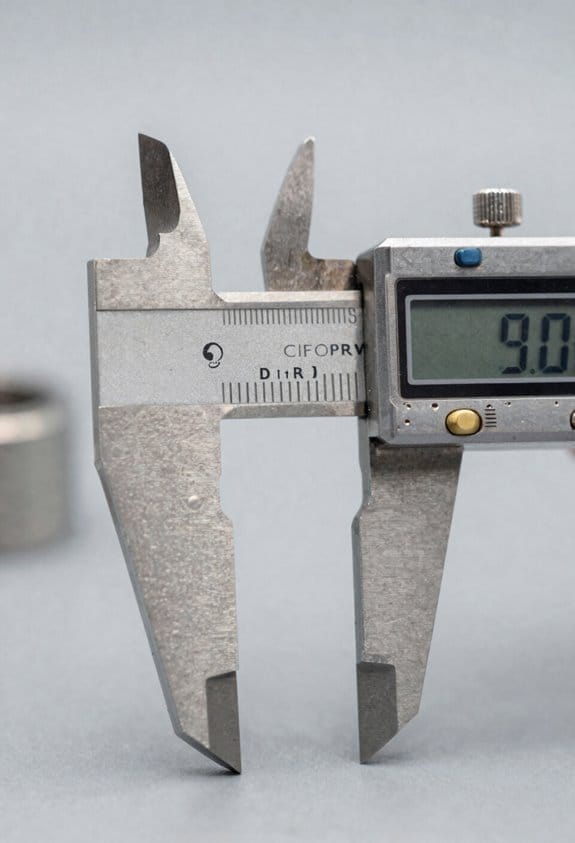
If you’ve ever tried to get the same measurement twice and failed, this is why.
Why it matters: repeatability tells you whether repeated runs will give the same result so you can trust small changes. I pick a fixed reference point (for example, the same part on a CNC fixture) and run N identical moves or measurements — I recommend N = 30 for a basic check and N = 100 if you want tighter statistics. Record every result and then compute the mean, standard deviation (one‑sigma), and the max spread (largest minus smallest). Use a simple t‑test or bootstrap if you want to check whether an observed change is a real effect rather than random noise.
How to run the test, step by step:
- Prepare your setup: stabilize temperature to ±1°C, eliminate obvious vibration, and fix lighting if the sensor is light‑sensitive. Example: in a bench lab, leave the machine running for 30 minutes to warm up and tape anti‑vibration pads under the feet.
- Set the measurement resolution and note it (for example, 0.01 mm encoder steps). Example: if your dial reads 0.01 mm, don’t claim precision better than that.
- Run N identical moves or measurements at a steady pace and record raw data in a CSV with timestamps. Example: home→target move repeated 50 times, one line per run.
- Compute: mean, standard deviation (σ), and max spread. Report both σ and 3σ. Example: mean = 12.34 mm, σ = 0.02 mm, max spread = 0.12 mm, 3σ = 0.06 mm.
- Statistically validate: if you compare two conditions, use a t‑test (for means) or an F‑test (for variances). If data aren’t normal, use a bootstrap or Wilcoxon test.
Control the environment so external factors don’t dominate. Keep temperature within your stated band (±1°C), avoid touching the rig during runs, and turn off unrelated equipment that causes vibration. Example: tests on a lab bench beside a compressor failed until the compressor was isolated.
Report these items so others can reproduce your numbers:
- Sample size N.
- One‑sigma and three‑sigma values (report units).
- Test conditions: temperature band, vibration isolation, and lighting.
- Measurement resolution and sensor limits.
- Any filtering you applied (for example, removed first 5 warmup runs).
- Raw data or confidence intervals (attach CSV or a link).
If direction matters, do bidirectional tests: move the system to the target from both directions and report separate stats for each direction and the combined results. Example: probe approach from +X and −X gave σ = 0.015 mm and σ = 0.025 mm respectively.
Don’t forget measurement resolution limits: if your sensor steps are 0.01 mm and your computed σ is 0.003 mm, that σ is meaningless — the resolution dominates, not the system. Include a note and the raw data so reviewers can see the quantization.
End with evidence: include raw CSVs or confidence intervals and the exact commands or G‑code used so anyone can run the same N = 30 or N = 100 test and compare.
Recommended Products
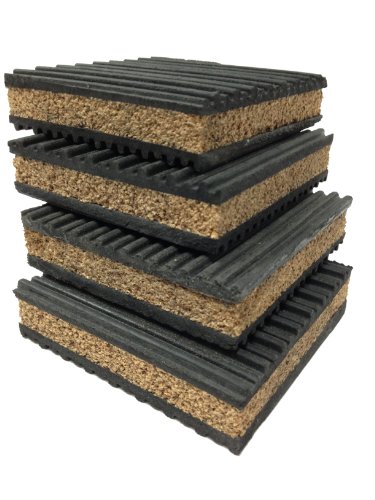
4 pack of Anti Vibration pads Rubber & Cork 50 PSI max load

[Great Noise Cancellation]:If you are often annoyed by the noise and vibration from some electrical appliances or machine equipment, this vibration isolation pads can't be missed. The anti vibration pads has remarkable effect on noise reduction and vibration isolation, especially for the washing machine upstairs or the air compressor in the garage, it can definitely give you a surprise!

Has a solid cross-ribbed design (3/8" thick)
Hysteresis, Backlash, and Noise: Causes of Poor Repeatability
If you’ve ever watched a stage rig or CNC miss its mark, this is why.
Why it matters: repeatability failures waste time, scrap parts, and make tuning impossible.
Hysteresis — what it is and what to do
Why it matters: hysteresis makes your position depend on which way you approached it, so answers from opposite directions disagree.
- What happens: parts deform or stick slightly, so when you approach a stop from the left you end up a few micrometers different than when you approach from the right.
- Real-world example: a 1 kg carriage on a 1 mm aluminum rail can sag or compress seals so you see 10–50 µm difference when reversing direction.
- How to fix it (steps):
- Stiffen the load: increase rail size or switch to hardened steel rails; aim for deflection under full load <10 µm over the travel length.
- Remove soft interfaces: replace rubber seals or loose bearings with preloaded bearings or thin PTFE shims.
- Use an approach bias: always stop from the same direction or add a small overshoot and settle routine to eliminate direction dependence.
Backlash — what it is and what to do
Why it matters: backlash creates a dead zone so small commands don’t move the output, killing bidirectional repeatability.
- What happens: lost motion in gears, couplings, or screw threads means the commanded travel doesn’t translate until slack is taken up, producing step changes in position.
- Real-world example: a 20 TPI lead screw with 50 µm backlash will suddenly jump 50 µm when you reverse direction under load.
- How to fix it (steps):
- Preload gear pairs or replace with zero-backlash reducers; target backlash <5% of your required resolution.
- Use dual nuts with a calibrated spacer on ball screws; tighten until measured backlash is eliminated.
- Implement software compensation: measure the backlash and add a directional correction, but don’t rely on software alone for >30 µm errors.
Noise and sensor drift — what they are and what to do
Why it matters: noise and drift hide your true position and create random or slow errors that spoil precision.
- What happens: electrical noise and vibration add random scatter (noise), and sensors slowly change output over time or temperature (drift), shifting measurements by micrometers or more.
- Real-world example: an encoder near a motor cable can show ±20 µm jitter and drift 5–10 µm over an hour as the board heats up.
- How to fix it (steps):
- Reduce electrical noise: use twisted-pair or differential signals, add ferrite beads, and ground shields; keep encoder cables >50 mm from power cables.
- Cut vibration: add damping pads, balance rotating masses, and tighten loose mounts; aim to reduce RMS vibration at the sensor by half.
- Calibrate for drift: implement a warm-up and periodic zeroing routine, or use temperature-compensated sensors and log drift for correction.
Quick checklist to improve repeatability
Why it matters: a focused set of actions gets you measurable gains fast.
- Measure baseline: record bidirectional error and jitter using a high-resolution indicator.
- Eliminate obvious play: tighten mounts, preload bearings, and remove soft couplings.
- Address hysteresis: stiffen components and standardize approach direction.
- Remove backlash: preload or replace worn gears/screws.
- Reduce noise and drift: shield cables, damp vibration, and add calibration routines.
- Re-test: confirm improvement with the same measurement method and document numbers.
If you follow those steps, you’ll usually cut repeatability errors by an order of magnitude or reach the limits of your sensor.
Recommended Products

This linear motion rod has a wide range of applications. It is widely used in 3D printers, CNC machines, woodworking machinery, printing and dyeing machinery, automation equipment, injection molding machines, and engraving machines, among others. It is designed to provide smooth linear motion guidance for various projects.

✔Premium Material: Linear motion rod is made of carbon steel, surface chromium plating(10um-20um), improve hardness and prevent rust.
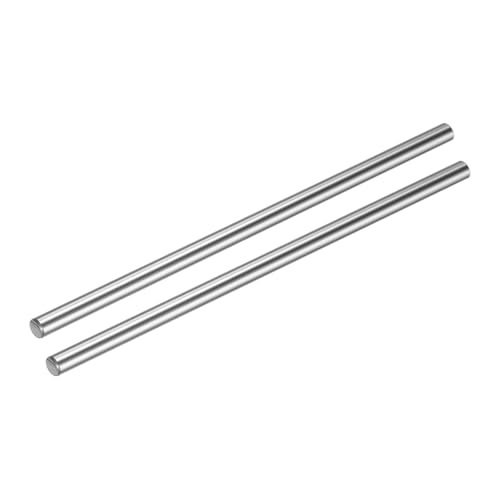
Size: 4mm diameter and 100mm length motion guide shaft rod.
When Repeatability Beats Resolution: Five Real-World Examples
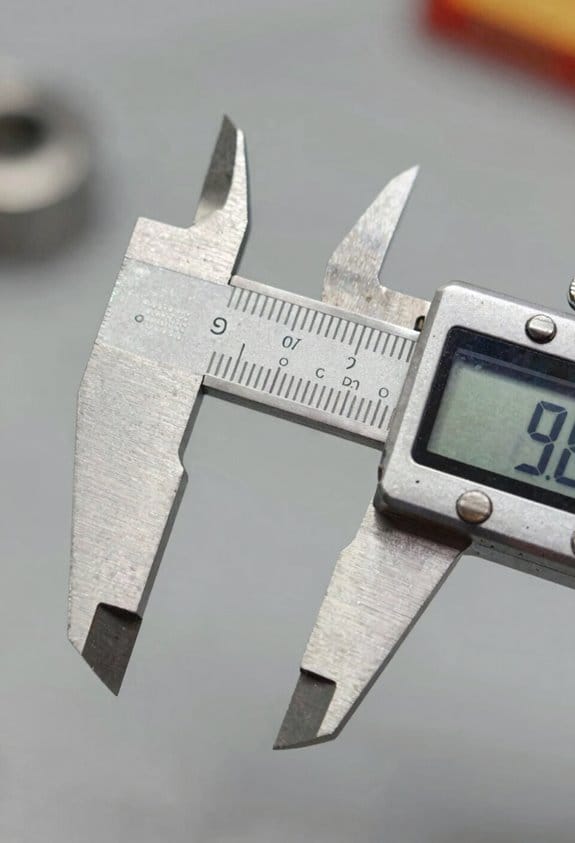
If you’ve ever tried to tune a system and couldn’t make consistent progress, this is why.
Why it matters: repeatability lets you correct for consistent error instead of chasing random detail. Example: at a 100-yard rifle range, five shots that land within a 0.5-inch cluster but 2 inches right mean you can zero the sight and bring impacts onto target.
Why it matters: steady timing keeps devices in sync so systems don’t drift apart. Example: a quartz clock that loses 1 second per day is easier to correct with a daily offset than a digital clock that jumps erratically by 5–10 seconds unpredictably.
Why it matters: reliable focusing saves you from redoing shoots and wasting time stacking bad frames. Example: when you shoot macro subjects at 1:1, your camera that locks focus within ±0.5 mm every time will yield 10 usable images for focus stacking, while one that claims better resolution but shifts by several millimeters ruins the set.
Why it matters: predictable placement lowers scrap rates and cycle time on the line. Example: a pick-and-place robot that repeats to ±0.2 mm will produce fewer than 1% rejects on a PCB run of 10,000 parts, more than an encoder that reports extra counts but has mechanical jitter.
Why it matters: identical test readings expose noise and hysteresis so you can design filters or control loops. Example: run a sensor 100 times at a fixed input and log values; if the standard deviation is 0.02 units you can add a simple low-pass filter and reduce output jitter from 0.02 to 0.005.
Practical steps you can use right away:
- Measure repeatability: take 10–20 trials and compute the mean and standard deviation.
- If standard deviation is small but mean is offset, apply a fixed correction.
- If jitter dominates, add filtering or tighten mechanics (e.g., dampers, stiffer mounts, or better bearings).
- Validate after changes with another 10–20 trials to confirm improvement.
If you focus on producing consistent results first, you’ll find fixes are simpler and faster than chasing ever-finer resolution.
Use Repeatability to Calibrate Accuracy (Practical Steps)
If you’ve ever tried calibrating a sensor and gotten different answers each time, this is why.
Why this matters: if your system doesn’t return the same reading under identical conditions, you can’t tell whether an offset is repeatable or just noise.
1) Verify repeatability
Why it matters: repeatability tells you whether an error is systematic.
Steps:
- Place the sensor in one fixed spot and run 30 measurements over 5 minutes.
- Compute the mean and standard deviation; you want standard deviation under 1% of the mean for many practical sensors.
- Repeat that run three times across different hours to confirm stability.
Real-world example: put a digital caliper on a machined block, take 30 readings, and watch the spread; if readings vary by more than 0.02 mm, your setup isn’t repeatable.
2) Collect reference data against a known standard
Why it matters: reference data shows the actual offset to correct.
Steps:
- Choose a calibrated standard with traceable specs (for temperature, use an NIST-traceable thermometer; for length, a gauge block).
- At each target condition (e.g., 0°C, 25°C, 50°C for temperature), take 10 measurements and record the mean.
- Log conditions like ambient temperature, humidity, and exact position.
Real-world example: put your sensor and a lab thermometer in a small insulated box at 25°C, wait 15 minutes, then take 10 readings from each.
3) Map errors versus conditions
Why it matters: a map reveals patterns you can correct.
Steps:
- Plot offsets (sensor minus standard) versus the variable you suspect (position, temperature, load).
- Use simple models first: linear fit, then quadratic if needed.
- If scatter remains large after modeling, consider position-dependent lookup tables.
Real-world example: measuring a scale across its platform, record offsets every 10 cm and plot them; you’ll often see a consistent edge bias.
4) Build and apply corrections
Why it matters: corrections turn repeatable offsets into accurate readings.
Steps:
- Convert your fit or table into a correction function or lookup table in the sensor’s firmware or post-processing script.
- Apply the correction to incoming readings and recompute the mean against the standard.
- Verify you reduced the mean offset to below your target bias (for example, less than 0.5% or 0.01 units).
Real-world example: if a temperature sensor reads +0.7°C at 50°C and +0.2°C at 25°C, apply a linear correction that subtracts that offset as a function of temperature.
5) Validate and monitor drift
Why it matters: sensors change over time, so calibration degrades.
Steps:
- Immediately after correction, validate by measuring the standard at two points (low and high) and confirm offsets remain within tolerance.
- Schedule quick verification checks weekly for fast-drifting sensors or monthly for stable ones.
- If drift exceeds your tolerance, repeat mapping and update the correction.
Real-world example: a pressure transducer used in the field drifted 1% over two months; brief weekly checks caught the trend before failures occurred.
Practical checklist to take away:
- Run 30-point repeatability tests in 5 minutes.
- Use a traceable standard and log conditions.
- Plot offsets vs condition and try a linear fit first.
- Implement a correction function or table and re-verify.
- Do quick validation checks weekly or monthly depending on drift.
Follow these steps, and you’ll separate repeatable offsets from random noise so your corrections actually work.
Recommended Products

Precise measurement: Measurement range: 0 - 6''/0 - 150 mm; Resolution: 0.01”/0.1 mm; Accuracy: +/- 0.2 mm/0.01”. Perfect and accurate caliper measuring tool for household/DIY measurement
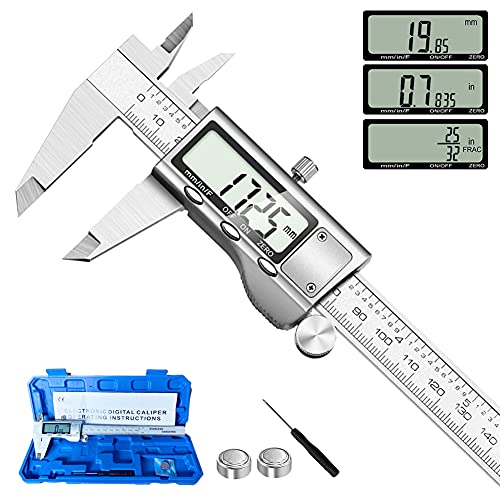
【STAINLESS STEEL MATERIAL】The vernier caliper is made of high-strength stainless steel and is waterproof and dirt-proof. The service life of this stainless steel digital caliper is longer than that of calipers with plastic or carbon fiber parts.
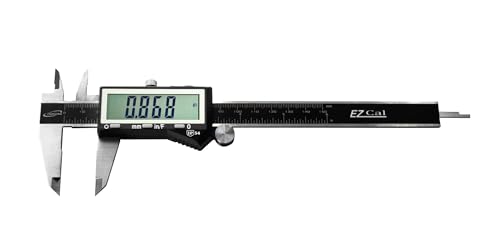
Easy read SUPER LARGE display (2-3/8"x7/8")
Trade-Offs for Engineers: Resolution, Repeatability, and Cost
If you’ve ever picked parts for a motion system, this is why.
Why it matters: choosing the wrong mix of resolution, repeatability, and cost can blow your budget or ruin performance.
Resolution vs repeatability — what’s the difference?
Resolution is how small a position step your sensor or encoder can report; repeatability is how close you return to the same point under the same conditions. A 20-bit absolute encoder gives about 1 part in 1,048,576 resolution, which for a 100 mm travel means ~0.000095 mm per step. Repeatability of ±0.005 mm means you’ll come back to within that band every time, regardless of what the encoder says.
Real-world example: in a CNC mill cutting aluminum, a 20-bit encoder will show tiny steps, but if your axis has backlash or stick-slip and only repeats to ±0.01 mm, your cuts will vary by that amount every tool change, not by the encoder’s smallest step.
How to choose resolution (short steps you can follow)
Why it matters: resolution affects surface finish and control smoothness.
1) Match resolution to your mechanical and control bandwidth: calculate position increment = travel / (2^N). If travel = 200 mm and you want ~1 µm steps, you need about 18 bits (200 mm / 2^18 ≈ 0.00076 mm).
2) Avoid wasting money: don’t buy >2× more bits than your mechanics can use. If leadscrew pitch, controller loop, and servo noise limit you to ±5 µm, 24-bit encoders are overkill.
3) Watch data rates: high-bit encoders may need faster networks (EtherCAT, 1 Gbps) and more CPU cycles to log. Plan CPU + bus accordingly.
Real-world example: retrofit a pick-and-place axis with 100 mm travel. If you use a 16-bit encoder you get ~1.5 µm steps, which matches the 2 µm repeatability of the stage and saves you several hundred dollars per axis versus 20-bit parts.
Why repeatability often wins
Why it matters: repeatability determines how predictable your system is when you calibrate or close loops.
1) Measure repeatability under load and temperature cycles, not just at room temp. Use a dial indicator or laser interferometer and record 50 cycles. Report mean and ± values.
2) Favor low hysteresis components: preloaded bearings, anti-backlash nuts, and encoders mounted rigidly. These typically reduce corrective oscillations that wear parts.
3) If repeatability is tight, you can calibrate systematic error out of the system and rely less on raw resolution.
Real-world example: a camera gimbal with brushless motors used a high-resolution encoder but had 0.2° hysteresis due to loose coupling; swapping to a rigid shaft coupling and tightening bearings brought repeatability to 0.02°, allowing software calibration to remove the remaining bias.
Cost trade-offs and lifecycle accounting
Why it matters: initial part cost is only part of what you pay over years.
1) Calculate total cost of ownership: part cost + expected maintenance (hours/year × labor rate) + downtime risk. For a lab robot, a $400 encoder that halves calibration time can save thousands per year.
2) Include support costs for data handling: more bits = more storage and processing, which may require faster PLCs or more frequent backups.
3) Choose balanced specs: aim for resolution that matches mechanics and repeatability that meets your tolerances, then buy the cheapest part that meets both.
Real-world example: two designs for a production tester — one with a $1,200 20-bit encoder and fragile couplings, another with a $500 18-bit encoder plus rigid couplings and planned quarterly checks. The $500 option ran longer between failures and cost less over the first two years.
Quick checklist to apply right away
Why it matters: following steps prevents buying the wrong part.
1) Define the required tolerance (e.g., ±10 µm).
2) Measure your mechanical repeatability under expected conditions.
3) Compute needed resolution: travel / desired step ≈ 2^N and pick the next higher standard bit count.
4) Compare parts by repeatability spec, hysteresis, and mounting robustness, not just bits.
5) Add estimated lifecycle costs (maintenance hours × labor + downtime risk) to the price.
Real-world example: before ordering encoders for a test fixture, run step 2 with a cheap dial indicator; if repeatability is ±8 µm, target an encoder that gives 4–8 µm steps rather than the highest-bit option.
If you follow these concrete steps, you’ll spend less and get better real-world results.
Quick Checklist : Choosing Components for High Repeatability
Before you pick parts for a motion system that must hit the same spot every time, know why repeatability matters: inconsistent placement ruins alignment, increases scrap, and wastes setup time.
Choose drives and bearings that cut mechanical play.
- Why it matters: backlash and clearance create hysteresis that shifts where you stop.
- How to do it: pick planetary gearboxes with <1 arcmin backlash or harmonic drives rated ≤1 arcmin, and use preloaded angular-contact or cross-roller bearings with specified preload (e.g., 5–15 µm axial runout).
- Example: on a pick-and-place machine, swapping an open-bearing stage for preloaded cross-rollers reduced bidirectional error from 200 µm to 25 µm.
Pick sensors that give steady, low-noise feedback.
- Why it matters: noisy or low-resolution sensing hides small deviations you need to correct.
- How to do it: choose encoders whose counts per revolution match your control bandwidth—use at least 10× sensor updates per control cycle; for a 1 kHz controller, use encoders with ≥10 kHz output or quadrature signals with enough CPR (e.g., 8,192 CPR for fine motion). Add analog signal filtering with a 3 dB corner below half the controller sampling rate.
- Example: replacing a 1,024 CPR encoder with an 8,192 CPR encoder on a camera-focus stage made 0.01 mm adjustments feel repeatable.
Make control and electronics consistent.
- Why it matters: jitter and timing drift create run-to-run variability even if mechanics are tight.
- How to do it: use a real-time controller or motion card with deterministic loop timing (1 ms or better), and isolate motor drivers from sensor grounds; specify ≤1 µs jitter on command timing and keep power supplies within ±1% under load.
- Example: a CNC retrofit that introduced a 1 kHz real-time loop cut position wander by half.
Manage temperature to stabilize geometry and electronics.
- Why it matters: heat changes part dimensions and sensor offsets.
- How to do it: keep the stage within ±1°C during runs using passive heat sinks, forced-air cooling, or PID-controlled heaters; measure thermal drift by running a 60-minute dwell test and log positional change.
- Example: adding a small heater and PID loop to a laser head reduced thermal drift from 0.1 mm/hour to <0.01 mm/hour.
Test and calibrate for real repeatability.
- Why it matters: testing finds residual systematic errors you must map or correct.
- How to do it: measure bidirectional repeatability by moving to each target from positive and negative directions 20 times, record the spread (standard deviation and max excursion), and create a calibration table for systematic offsets. Re-run tests after any hardware change.
- Example: a robotic arm’s calibration table corrected a 0.2 mm directional bias, bringing 3σ repeatability under 0.05 mm.
Put it all together with these quick steps:
- Specify targets: state your required repeatability (e.g., ±25 µm) and cycle conditions.
- Select hardware: drives ≤1 arcmin backlash, preloaded bearings, and encoders with ≥8,192 CPR for fine stages.
- Match control: choose a controller with ≤1 ms loop and ≤1 µs jitter; design grounding.
- Add thermal controls: keep parts within ±1°C during runs.
- Validate: run 20× bidirectional tests per target and build a calibration map.
If you follow those steps and record numbers at each stage, you’ll know exactly where remaining errors come from.
Recommended Products

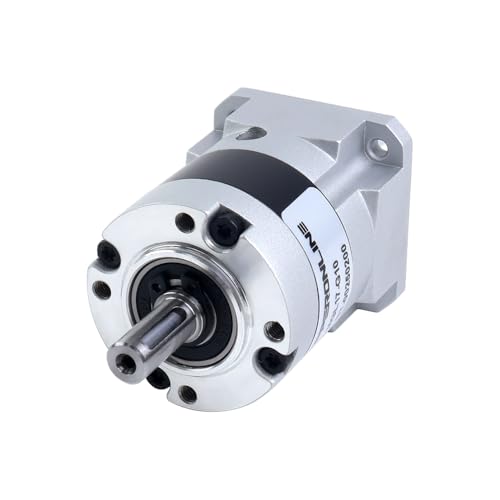

Planetary Reducer for NEMA34 (Flange=86mm) Stepper Motor.
Frequently Asked Questions
How Does Repeatability Affect Long-Term Maintenance Schedules?
Repeatability lets me implement predictive maintenance by revealing consistent wear trending, so I can schedule service before failures, reduce unplanned downtime, and optimize parts replacement intervals based on reliable, repeatable measurement patterns.
Can Software Compensation Replace Poor Mechanical Repeatability?
Yes — I’ll say it’s possible: software compensation can mask poor mechanical repeatability, but it’s like patching leaks. With careful model tuning and adaptive filtering I can improve performance, yet hardware limits still bite eventually.
How Does Temperature Cycling Quantitatively Degrade Repeatability Over Time?
I’ll quantify it: repeated temperature cycling causes cumulative thermal drift and hysteresis build up, raising one-sigma repeatability spread roughly exponentially—often 10–100% increase per 100 thermal cycles—depending on materials and fixation.
What Industry Standards Specify Repeatability Requirements for Critical Systems?
Think of a lighthouse keeper trusting nightly beams; I tell you ISO 9283 and MIL STD 1472 set repeatability criteria for critical systems, and I consult those standards to guarantee consistent, safe performance every time.
How Do Supply-Chain Variances Impact Repeatability Between Component Batches?
Supply-chain variances reduce repeatability because supplier variability alters component tolerances; I insist on batch traceability so I can correlate performance shifts to specific lots, enable targeted rework, and adjust calibration to restore consistency.