As an Amazon Associate, we earn from qualifying purchases. Some links may be affiliate links at no extra cost to you. Although our opinions are based on curated research, we haven't used these products. Articles generated with AI.

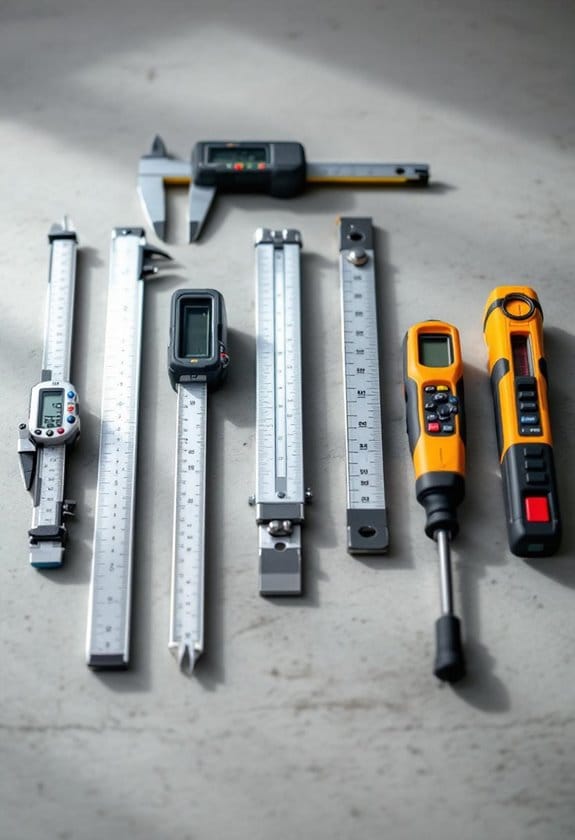
10 Best Digital Caliper Picks That Make Precision Easy

You’re hunched over a bike frame trying to fit a headset, squinting as a cheap gauge skips and reads differently each pass, or you’re in a dim garage watching a sliding jaw stick right when you need a smooth take. Those maddening half-millimeter swings and flaky seals turn a simple check into wasted parts and guesses.
What separates a good digital caliper from a bad one is repeatable accuracy, a solid build that resists chips and oil, and sensible data/output options—yet buyers often choose by price alone, pick the wrong length for their parts, or ignore resolution vs. tolerance. This guide gives you ten vetted digital calipers chosen for accuracy, build quality, range, resolution, sealing, and data features.
Read on and you’ll know which models suit specific tasks, how to match caliper specs to your workflow, and which compromises are worth it.
Key Takeaways
If you’re measuring small parts in a home workshop and don’t want to buy something oversized, pick a 0–6″ (0–150 mm) caliper; for bigger components like plumbing fittings or bike parts, go for 0–8″ (0–200 mm) instead. That gives you the range you’ll actually use.
For jobs where tight fits matter—like shaft tolerances or press-fit bearings—choose a caliper that states ±0.001″ (0.02 mm) accuracy and has a resolution about ten times finer than your tolerance so your reads aren’t the weak link. This keeps your measurements reliable.
If you’re tired of replacing cheap tools, favor stainless-steel jaws that are hardened and a strong frame so the caliper lasts and stays true over time. It will hold up to shop use.
10 Best Decibel Meters That Actually Get the Job Done
January 13, 2025
For workshop use where dust and occasional splashes happen, look for units with IP54–IP67 sealing, a shockproof case, and a secure lock plus a knurled thumb roller so settings don’t slip during use. These features stop little accidents from ruining a job.
If you want fast, frustration-free readings, choose a caliper with a large high-contrast LCD that switches between inch/mm/fractions, offers zero-at-any-point, and includes hold and differential functions so you can work quickly and read clearly. It makes measurements much easier.
| Housolution 6″ Digital Caliper with Large LCD |  | Best for DIYers | Measuring Range: 0–6 in / 0–150 mm | Material: High-strength stainless steel | Resolution: 0.0005 in / 0.01 mm | VIEW LATEST PRICE | Read Our Analysis |
| Starrett Stainless Steel Electronic Slide Caliper (0-6″) | 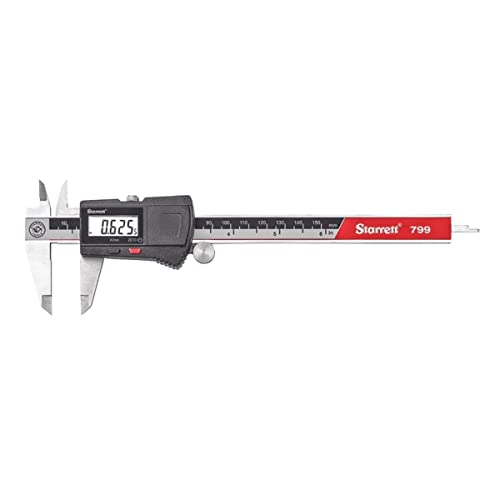 | Professional Grade | Measuring Range: 0–6 in / 0–150 mm | Material: Hardened stainless steel surfaces | Resolution: 0.0005 in / 0.01 mm | VIEW LATEST PRICE | Read Our Analysis |
| General Tools 8″ Digital Stainless Steel Caliper |  | Best for Long Reach | Measuring Range: 0–8 in / 0–203 mm | Material: Stainless steel (with some carbon-fiber/non-marring parts) | Resolution: (implied) 0.0005 in (stated accuracy); display supports decimal/fraction | VIEW LATEST PRICE | Read Our Analysis |
| Digital Stainless Steel Electronic Caliper 6-inch (150mm) |  | Budget-Friendly Pick | Measuring Range: 0–6 in / 0–150 mm | Material: High-strength stainless steel + metal/plastic | Resolution: 0.0005 in / 0.01 mm | VIEW LATEST PRICE | Read Our Analysis |
| iGAGING 0-6″ Absolute Origin Digital Caliper | 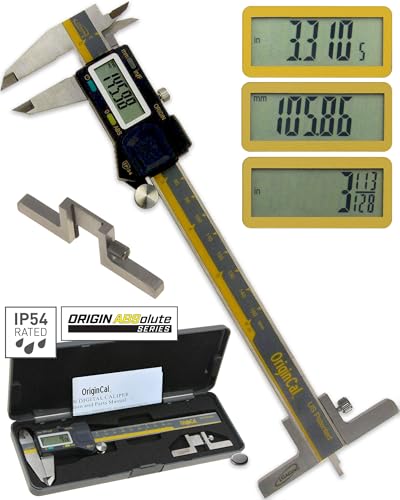 | Best for Data Logging | Measuring Range: 0–6 in / 0–150 mm | Material: Stainless steel | Resolution: (implied) 0.0005 in / 0.01 mm (standard for 0–6″) | VIEW LATEST PRICE | Read Our Analysis |
| Fowler Xtra-Value 0-6″ Digital Caliper (Blue) |  | Best Value | Measuring Range: 0–6 in / 0–150 mm | Material: Stainless steel body | Resolution: 0.0005 in / 0.01 mm | VIEW LATEST PRICE | Read Our Analysis |
| PEC Tools 6″ Absolute Digital Caliper with 16R Rule | 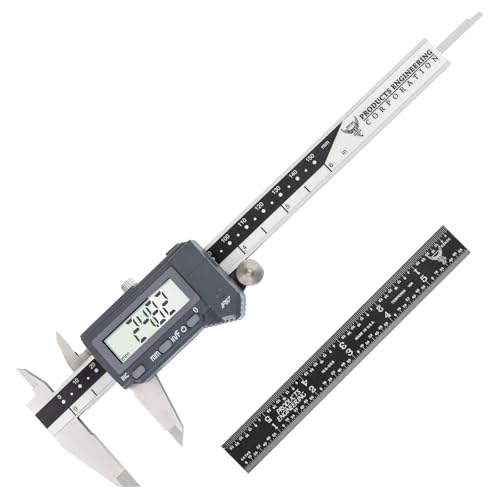 | Rugged/Industrial Pick | Measuring Range: 0–6 in / 0–150 mm | Material: Premium stainless steel | Resolution: (implied) similar high resolution (fraction, inch, mm modes) | VIEW LATEST PRICE | Read Our Analysis |
| Hardell Rechargeable Stainless Steel Digital Caliper |  | Best Rechargeable | Measuring Range: 0–6 in / 0–150 mm | Material: Stainless steel (polished) | Resolution: 0.0005 in (units implied) / 0.01 mm | VIEW LATEST PRICE | Read Our Analysis |
| Qfun 6″ Stainless Steel Digital Vernier Caliper |  | Best All-Purpose | Measuring Range: 0–6 in / 0–150 mm | Material: Stainless steel (finely polished) | Resolution: 0.0004 in / 0.01 mm | VIEW LATEST PRICE | Read Our Analysis |
| Kynup 6″ Digital Caliper Stainless Steel IP54 |  | Best for Harsh Environments | Measuring Range: 0–6 in / 0–150 mm | Material: Stainless steel construction | Resolution: 0.0005 in / 0.01 mm | VIEW LATEST PRICE | Read Our Analysis |
More Details on Our Top Picks
Housolution 6″ Digital Caliper with Large LCD
If you work between a cluttered shop bench and outdoor job sites and hate squinting at tiny screens, the large LCD makes readings easy to see in bright light so you can keep working without pausing. The caliper is stainless steel, so it stands up to knocks and won’t corrode like cheap plastic tools, and it’s also water- and dirt-resistant for rough conditions. It measures 0–6 in (0–150 mm) with ±0.001 in accuracy, giving you precise results for parts and fittings.
For anyone who needs quick unit changes or multiple measurement types, the one-click unit switch and modes for depth, step, outside and inside measurements save you time and frustration. You can zero it at any position when you’re setting up a reference, and the auto-off feature helps preserve battery life. Small battery changes are simple by hand.
What makes this digital caliper stand out for casual users and hobbyists is the mix of durability and clear display that doesn’t overcomplicate basic measuring tasks. The controls are straightforward, so you won’t need a manual every time you pick it up. It’s a solid, easy-to-use tool for projects around the house.
- Measuring Range:0–6 in / 0–150 mm
- Material:High-strength stainless steel
- Resolution:0.0005 in / 0.01 mm
- Measurement Modes / Functions:Outside, inside, depth, step
- Display / Readout:Large LCD screen (sunlight readable)
- Power / Battery:Batteries included (3) — user install
- Additional Feature:Precision thumb roller
- Additional Feature:Includes 32 steel rulers
- Additional Feature:Pressure-resistant case
Starrett Stainless Steel Electronic Slide Caliper (0-6″)


10 Best Fluke Multimeters That Pros Actually Swear By
January 13, 2025Professional Grade
View Latest PriceIf you need a reliable tool for quick, accurate measurements around the shop or at the bench, the caliper’s ±0.001″ (±0.02 mm) accuracy across the 0–6″ (0–150 mm) range gives you repeatable results. The hardened stainless steel jaws handle daily work without bending, and the 0.0005″ (0.01 mm) resolution helps you spot small differences. It feels light in your hand at 0.7 pounds.
For anyone who wants easy reading, you get a large, high-contrast LCD that switches between inches and millimeters so you won’t squint. The display remembers position and the auto-off saves battery when you forget to switch it off. The thumb-wheel gives smooth control for careful adjustments.
What makes this measuring tool stand out is the combination of durable construction and simple electronics that suit hobbyists and pros alike, and you don’t need special training to use it. You get a single, compact unit from Starrett that handles inside, outside, and depth measurements. It’s a practical choice for steady, repeatable work.
- Measuring Range:0–6 in / 0–150 mm
- Material:Hardened stainless steel surfaces
- Resolution:0.0005 in / 0.01 mm
- Measurement Modes / Functions:Outside, inside, depth (inch/mm conversion)
- Display / Readout:Large high-contrast LCD
- Power / Battery:Battery powered (included component: caliper; battery type not specified)
- Additional Feature:Fine adjustment thumb wheel
- Additional Feature:30-minute auto-off
- Additional Feature:Hardened measuring surfaces
General Tools 8″ Digital Stainless Steel Caliper
If you need quick, reliable measurements for shop projects or DIY repairs, the 0 to 8-inch range and ±0.0005″ accuracy give you the precision to fit parts right the first time. It reads in decimal, fractional, or metric units so you can switch to whatever your project or plans use. Easy to read.
For anyone who hates squinting at tiny numbers, the extra-large LCD and three-mode display make reading and switching modes fast and painless, which keeps your workflow moving. The extendable depth gauge reaches into small holes so you can measure depths and steps without guessing. Handy and practical.
10 Best Gas Leak Detectors That Keep Your Home Safe Without Fail
January 13, 2025What makes this digital caliper stand out for everyday use is the mix of stainless steel and carbon-fiber parts, which give you a strong tool that won’t easily mar delicate surfaces. The kit comes with a case, batteries, and a screwdriver so you can start using it right away. Comes with a 90-day warranty.
- Measuring Range:0–8 in / 0–203 mm
- Material:Stainless steel (with some carbon-fiber/non-marring parts)
- Resolution:(implied) 0.0005 in (stated accuracy); display supports decimal/fraction
- Measurement Modes / Functions:Outside, inside, depth, step (decimal/fraction/mm)
- Display / Readout:Extra-large LCD screen (3-mode)
- Power / Battery:2 batteries included (for battery replacement)
- Additional Feature:Fractional-inch mode
- Additional Feature:Extendable depth gauge
- Additional Feature:Free-wheeling friction roller
Digital Stainless Steel Electronic Caliper 6-inch (150mm)
If you need accurate measurements for small DIY, woodworking, or model projects, the 0.01 mm resolution gives you the precision to check fits and gaps without guesswork. For anyone who wants a tool that holds up in a messy garage or workshop, the stainless steel body is tough against water, oil, and stains and the ±0.02 mm accuracy keeps your readings consistent. What makes this digital caliper stand out for casual and light industrial use is the large LCD that’s easy to read, and you can flip between inches and millimeters with one button. You get smooth jaw control without fighting the tool because the thumb roller, locking screw, and fine-adjustment feature let you dial in measurements steadily. The Digital Stainless Steel Electronic Caliper solves the hassle of hunting for uncommon batteries by using two CR2 cells and it powers down after a period of inactivity to save them. Perfect for hobbyists and technicians, this 6-inch (150 mm) caliper measures internal, external, height, and depth dimensions so your projects come together right.
- Measuring Range:0–6 in / 0–150 mm
- Material:High-strength stainless steel + metal/plastic
- Resolution:0.0005 in / 0.01 mm
- Measurement Modes / Functions:Internal, external, height, depth
- Display / Readout:Large LCD screen
- Power / Battery:2 × CR2 batteries (included)
- Additional Feature:Thumb roller with lock
- Additional Feature:Waterproof/stain-proof/oil-proof
- Additional Feature:Uses CR2 batteries
iGAGING 0-6″ Absolute Origin Digital Caliper
If you need quick, reliable measurements for DIY builds or shop projects, the caliper’s 0–6″ (0–150 mm) range and ±0.001″ accuracy handle the job. It reads inches, millimeters, and fractions so you can work in whatever units your plans use. Compact and easy to hold.
For anyone who works in mixed environments and hates re-zeroing tools, the Absolute Origin retains zero after power-off so your reference points stay put. The high-contrast LCD makes readings easier in dim corners and bright benches alike. It’s simple to see.
What makes this digital caliper stand out for data-driven work is the SPC/USB port that sends measurements straight to CAD or spreadsheets, which cuts down on manual-entry mistakes. You’ll save time and reduce copy errors when logging dozens of measurements. That’s a real benefit if you repeat tasks.
You get everyday durability without feeling fragile by choosing a stainless steel body and IP54 protection that handles dust and splashes. A protective case adds convenience for storage and transport. It’s ready for workshop and outdoor tasks.
- Measuring Range:0–6 in / 0–150 mm
- Material:Stainless steel
- Resolution:(implied) 0.0005 in / 0.01 mm (standard for 0–6″)
- Measurement Modes / Functions:Inches, millimeters, fraction; depth base
- Display / Readout:High-contrast LCD screen
- Power / Battery:2 C batteries (included)
- Additional Feature:SPC/USB data output
- Additional Feature:Absolute Origin calibration
- Additional Feature:IP54 dust/moisture rating
Fowler Xtra-Value 0-6″ Digital Caliper (Blue)
If you need precise measurements for school projects or garage jobs, the stainless steel construction and 0–6″ (150 mm) range let you measure outside and inside diameters, depths, and steps with confidence. For anyone who wants clear readings fast, the LCD shows 0.0005″ (0.01 mm) resolution and 0.001″ (0.03 mm) accuracy, and you can switch between inches and millimeters. What makes this digital caliper stand out is the pair of jaw sets plus a depth rod, so you won’t have to hunt for extra tools. You get absolute and incremental modes plus a hold function for tricky reads. The Fowler Xtra-Value 0–6″ Digital Caliper comes with batteries, a case, and a manual. Perfect for students and hobbyists, this tool gives precise results without a steep price. The product includes a one-year warranty. Use it for class, crafts, or quick shop checks.
- Measuring Range:0–6 in / 0–150 mm
- Material:Stainless steel body
- Resolution:0.0005 in / 0.01 mm
- Measurement Modes / Functions:Inside, outside, depth, steps; hold/differential modes
- Display / Readout:LCD display
- Power / Battery:Two CR2032 lithium cells (included)
- Additional Feature:Hold/differential feature
- Additional Feature:Knurled lock screw
- Additional Feature:1-year warranty
PEC Tools 6″ Absolute Digital Caliper with 16R Rule
If you work around oil, coolant, or heavy shop dust and need measurements that keep up, the caliper’s IP67-sealed electronics and oil-resistant build let you keep measuring without frequent cleanups. The 6″ (150 mm) range handles most small projects, and you get ±0.001 in / 0.02 mm accuracy so your parts fit the way you expect. Reliable readings.
For anyone who hates zero drift or flaky digital calipers, the absolute, non-resetting inductive sensor retains zero and resists contamination so your numbers stay steady through a long day. The stainless steel frame is hardened and finely ground for durable, parallel jaws that stay true after repeated use. Tough construction.
What makes this measuring tool stand out to craftsmen who also like handy physical references is the included Made-in-US 16R rule that shows 32nds, 64ths, 50ths, and 100ths, so you can cross-check fast. It runs on a single C battery, so you won’t be hunting exotic cells between jobs. It ships in a sturdy eco case.
- Measuring Range:0–6 in / 0–150 mm
- Material:Premium stainless steel
- Resolution:(implied) similar high resolution (fraction, inch, mm modes)
- Measurement Modes / Functions:Inch / mm / Fraction; absolute measurement
- Display / Readout:Digital readout (absolute)
- Power / Battery:1 C battery (included)
- Additional Feature:IP67 fully sealed
- Additional Feature:Vacuum-quenched hardness
- Additional Feature:4th-gen inductive sensor
Hardell Rechargeable Stainless Steel Digital Caliper
If you need precise measurements for projects without fuss, the rechargeable cell with Type‑C charging reaches full in about 20 minutes and can last up to three months of regular use. That means you don’t have to hunt for tiny batteries during a long project.
For anyone who works with small tolerances, the 0–6 inch range and ±0.02 mm (±0.001 in) accuracy handle delicate fits and tight clearances, and the 0.0005 resolution shows very small differences. It’s great for model makers, woodworkers, and hobbyists.
What makes this digital caliper stand out is the stainless steel frame, polished edges, and precision glass grating that keep it tough and long‑lasting. It feels solid in your hand.
You get flexibility without extra complexity thanks to three unit modes and four measurement functions that cover most tasks you’ll do. Switch units and modes quickly when you move between parts.
- Measuring Range:0–6 in / 0–150 mm
- Material:Stainless steel (polished)
- Resolution:0.0005 in (units implied) / 0.01 mm
- Measurement Modes / Functions:Outer diameter, inner diameter, depth, step
- Display / Readout:Large easy-to-read LCD screen
- Power / Battery:Built-in rechargeable battery (Type-C charging)
- Additional Feature:Type-C fast charging
- Additional Feature:20-minute full charge
- Additional Feature:Rechargeable internal battery
Qfun 6″ Stainless Steel Digital Vernier Caliper
If you need precise measurements for small projects or parts, the Qfun 6″ Stainless Steel Digital Vernier Caliper gives you 0.02 mm accuracy and 0.01 mm resolution so your measurements are repeatable. It reads inside, outside, depth, and step dimensions with two jaw sets and a probe. Short and clear.
For anyone who works on DIY builds, model making, or light workshop tasks, the large LCD makes numbers easy to see so you spend less time squinting. The stainless steel body fights rust and stays usable in a garage or shed. Simple to use.
What makes this digital caliper stand out is the knurled thumb roller and locking screw, which let you move smoothly and lock measurements without fumbling. The waterproof design adds extra durability for messy jobs or damp environments. Handy to have.
You get reliable storage and portability without fragile packaging when it comes with a shockproof case, so the tool survives trips to job sites or classes. One button switches between metric and imperial units, which helps when you follow mixed plans. Practical and straightforward.
- Measuring Range:0–6 in / 0–150 mm
- Material:Stainless steel (finely polished)
- Resolution:0.0004 in / 0.01 mm
- Measurement Modes / Functions:Inside, outside, depth, step
- Display / Readout:Large LCD screen
- Power / Battery:Batteries included (not explicitly listed but implied with electronics)
- Additional Feature:Knurled thumb roller
- Additional Feature:Shockproof hard case
- Additional Feature:Zero at any point
Kynup 6″ Digital Caliper Stainless Steel IP54
If you need a splash‑proof caliper for messy shop jobs or quick jewelry checks, the IP54 rating and stainless steel body give the protection and feel you want for those tasks. It measures 0–6″ (0–150 mm) with ±0.001″ (0.02 mm) accuracy and 0.0005″ (0.01 mm) resolution so your cuts and fittings line up. Small and precise.
For anyone who works with small parts or woodworking projects and wants readable numbers, the large LCD shows measurements clearly so you don’t squint over tiny digits. It reads outside and inside diameters, depth, and steps using two jaw sets and a probe, which covers the usual measuring needs. Handy to have around the bench.
What makes this digital caliper stand out for casual use is the lockable head that keeps a measurement steady while you mark or transfer it. The head clicks in place so your reading won’t shift when you move the workpiece. Saves time and frustration.
You get reliable power management without fuss since it runs on lithium batteries and auto‑shuts off to save life between uses. That means fewer dead batteries when you reach for the tool. Low maintenance.
- Measuring Range:0–6 in / 0–150 mm
- Material:Stainless steel construction
- Resolution:0.0005 in / 0.01 mm
- Measurement Modes / Functions:External, internal, depth, step
- Display / Readout:Large LCD screen
- Power / Battery:3 lithium metal batteries (one installed, two spare)
- Additional Feature:Lockable head feature
- Additional Feature:Comes with spare batteries
- Additional Feature:Splash-proof IP54 protection
Factors to Consider When Choosing a Digital Caliper
If you need measurements that actually match the thing you’re checking, start with accuracy and resolution because accuracy shows how close readings are to the true value and resolution is the smallest change the caliper can display. Those two specs tell you whether your caliper will work for tight fits or rough cuts. Short answer: pick higher accuracy and finer resolution.
For anyone who works with metal parts or measures big stuff, check the build material and measuring range since stainless steel or hardened jaws last longer and a longer span lets you measure larger pieces. That durability matters if you drop the caliper in a toolbox or use it every day. Also think about how long the caliper will keep working before you need a new one.
What makes this tool stand out for quick checks is a clear display and reliable power, because a readable LCD or OLED helps you see numbers at a glance and long battery life or rechargeable options mean it’s ready when you are. That’s helpful when you’re on a job and don’t want to fumble for tiny buttons. Pick a model with simple buttons and a power-saving feature.
Measurement Accuracy And Resolution
If you need measurements you can trust for small parts or tight fits, pay attention to accuracy first and resolution second. Accuracy tells you how far a caliper’s reading can be from the true value, and quality tools list something like ±0.001 in (±0.02–0.03 mm), so pick one whose accuracy is tighter than the tolerances you work to. Choose a caliper with the right accuracy for your projects.
For anyone who wants finer detail on the readout, resolution is the smallest step the display shows, for example 0.0005 in or 0.01 mm, and that controls how finely you can read results even if the absolute correctness is limited. For precision work, aim for a resolution at least ten times finer than the feature tolerance so you can see meaningful differences. That gives you room to detect small changes.
What makes this measuring advice stand out is the practical reminder to check the manufacturer’s stated accuracy across the full 0–6 in (0–150 mm) range, not just at one point. Also note temperature effects and calibration needs, because those change readings over time and use. Calibrate regularly.
Build Material And Durability
If you measure parts all day in a gritty shop, pick a caliper body that fights rust and rough use: stainless steel holds up better than plastic or carbon-fiber, so your measurements stay trusted. For repeated clamping and sliding, choose jaws made from hardened or vacuum-quenched steel with higher HRC and a finely ground finish to keep the jaws parallel and cut down calibration drift. They last longer.
For anyone who works around dust, oil, or moisture, look for fully sealed electronics with an IP54–IP67 rating because those ratings protect the sensor from the shop environment. Also check for solid mechanical controls like knurled thumb rollers and fine adjustment wheels that let you dial in numbers without sloppy movement. Small details matter.
What makes this caliper style stand out for travel and rough handling is a sturdy, shock-resistant case that protects the tool during storage and transport. If you toss your tools in a bag or toolbox, a tough case keeps drops and knocks from ruining the readings. You’ll thank yourself later.
Measuring Range And Length
If you need to measure big parts without juggling tools, pick a caliper with a range that comfortably exceeds your largest pieces, because running a tool at the edge of its capacity makes handling awkward and can cut accuracy. For general shop work, a 0–6″ (0–150 mm) caliper usually fits most jobs, and 0–8″ (0–200 mm) works better when you tackle larger parts. Short beams are stiffer and easier to control.
For anyone who measures deep holes, steps, or long shafts, get a caliper with a depth gauge or a longer beam so you don’t strain or improvise. If your tasks are mostly fine-detail jobs, choose the smallest range that still covers your needs so you get better stability and precision. Buy two sizes if you switch between big and small work often.
What makes this tool type stand out is how range affects everyday use: longer calipers reach more, but they can be clumsier in tight benches and tougher to store. Match your caliper length to your workspace and storage limits so it fits your routine. Consider having a compact one for bench use and a longer one for big parts.
Display And Readability
If you struggle to read tiny numbers in bright sunlight or dim shop lights, pick a caliper with a large, high-contrast LCD so you can read measurements fast and with fewer mistakes. For anyone who swaps between inches and millimeters on the fly, look for a one-button inch/mm conversion so you don’t have to do mental math. What makes this measuring tool stand out is having a clear resolution like 0.0005 in or 0.01 mm when your work needs that level of precision, and that matching of display precision to tool accuracy keeps your measurements honest. You get useful on-screen modes like fractional readout, hold or differential, and zero-at-any-point without hunting through menus, which speeds common jobs. The caliper should power up reliably when you pick it up and power down to save batteries, so you get consistent responsiveness. Perfect for hobbyists and pros who use calipers daily, favor displays that stay readable from different angles and under mixed lighting.
Power Type And Battery Life
If you need a caliper that won’t leave you stranded mid-job, pick one based on how it’s powered: replaceable cells like CR2032, LR44, or C batteries let you swap quickly in the field, while built-in rechargeables cut ongoing costs but mean you need a charger. For everyday shop work, replaceables are simple and cheap to carry spares for.
For anyone who wants long runtimes between charges, check the stated battery life and standby auto-off times because longer life and short auto-off intervals reduce downtime. They save you from swapping or charging so often.
What makes this tool type stand out for busy hands is power management: look for auto-on when sliding and auto-off after inactivity since those features stretch usable life and stop accidental drain. They give you more measuring time without fiddling with buttons.
You get the convenience of field swaps without hidden costs if replacement cells are common and inexpensive, and you avoid surprises by verifying the charger type and fast-charge times for rechargeables. Carrying a spare CR2032 is easier than hauling a power brick.
Perfect for users who rely on measurement memory, choose models that retain zero or store readings without power so you won’t lose settings when you change batteries. That makes your workflow smoother.
Data Output And Connectivity
If you need to log measurements straight into a spreadsheet without typing, choose a caliper with USB, RS232, or SPC output so your readings go directly to your PC or QC system. For anyone who wants the option to move around the shop, pick a model with Bluetooth/BLE, but check the pairing stability, range, and how it affects battery life. What makes this tool stand out for data-hungry users is whether it sends absolute or incremental readings, since your software may only accept one format. You get smooth integration without drama when the connector and protocol—USB‑A, micro‑USB, proprietary, or serial TTL—match your setup or have available adapters and drivers. The caliper helps you cut manual-entry errors and speed up collection by streaming continuously or letting you trigger transfers that include timestamps and unit labels. Perfect for small QC teams, look for devices that support PCs, CMMs, or SPC systems so you and your coworkers can skip transcription.
Ergonomics And Handling
If you’re measuring lots of parts and your hand cramps, look for a caliper with a comfortable thumb roller or knurled wheel so you can scroll the jaws without strain and keep readings steady over time. For anyone who works in tight spaces or needs quick repeats, an ergonomic sliding beam profile helps the jaws glide smoothly for precise measurements and reduces hand fatigue. What makes this caliper stand out for everyday use is a large, well-placed LCD that stays readable in bright or dim light so you don’t have to twist your wrist to see numbers. You get reliable locking without juggling tools; prefer a knurled locking screw or a positive jaw lock so you can secure a measurement with one hand. The [stainless-steel] weight and balance matter when you’re holding it for minutes at a time, and a caliper around 0.6–1.0 lb usually feels stable without tiring your arm. Perfect for shop work and DIY, rounded edges and a low-profile beam stop the tool from digging into your palm.
Frequently Asked Questions
How Do I Recalibrate a Digital Caliper at Home?
If you want measurements you can trust when working on small projects, clean the caliper jaws first and wipe any grit off the sliding surfaces so your readings aren’t skewed. For anyone who checks parts or measures coins, close the jaws gently, press the zero button, and set the reference so your display starts from the right point. What makes this digital caliper stand out for everyday use is that you can verify accuracy with a known gauge block or something nearby like a coin and see if the numbers match.
You get better consistency by watching the slider move through its whole range while you measure, because that shows you whether it tracks smoothly or jumps. The [product name] solves battery-related drift by letting you swap in a fresh battery if readings wander, and that quick fix often brings the numbers back. Perfect for hobbyists and DIYers, repeat the cleaning and zeroing steps after a battery change to lock in the correct baseline.
If you notice a consistent offset in one direction, consult your manual for any model-specific calibration offsets and adjust accordingly, which keeps your tools aligned with your work. For anyone who cares about easy upkeep, a soft cloth and isopropyl wipe will remove grime without harming the display or scale. What makes using this caliper practical is that a few minutes of simple checks get you steady, repeatable readings.
Can a Digital Caliper Be Used for Depth Measurements Accurately?
If you need quick depth checks in a DIY project or for light shop work, a digital caliper’s depth rod gives you readable measurements without fuss, and it’s great for occasional use. You’ll set the caliper’s base flat on the reference surface, slide the depth rod down until it touches the bottom of the feature, and read the digital display; take care to keep the tool square to the surface so you don’t introduce error. Check zero before you measure, clean the contact faces, and don’t let debris or a tilted base throw off the reading.
For tighter tolerances or repeatable micrometer-level work, a depth micrometer or a dedicated depth gauge is the better pick because they’re built specifically for that task. They cost more and take up space, but they give steadier, more precise readings when you really need them.
What Battery Type and Lifespan Do These Calipers Have?
If you want a simple, low-fuss power source for occasional measuring, these calipers usually take a CR2032 button cell and that keeps the tool compact and light. For anyone who uses the calipers a few times a week, expect about 1–3 years of normal use depending on how often you leave the display on and how long each session lasts. What makes this caliper helpful for travelers or fieldwork is that some models instead use LR44 cells or even small rechargeable packs, which will change how long you go between swaps. You get a clear sign that the battery’s dying when the numbers dim or the display starts blinking. The caliper will last longer if you store it dry and switch it off after use. Perfect for casual hobbyists, this setup keeps battery maintenance simple and predictable.
Are Digital Calipers Safe to Use on Delicate Surfaces?
If you worry about scratching a delicate project, keep the jaws clean and use very light, even pressure so you don’t dent soft surfaces, and avoid sliding the caliper across the material. For anyone who measures fragile items regularly, consider thin protective pads or soft-jaw adapters so your parts stay unmarked, but remember those pads change the measurement offset and you should check zero calibration after adding them. What makes this tool stand out for hobbyists and woodworkers is that plastic-tipped or plastic-jawed calipers give you a gentler contact option, which helps when you handle veneers or soft plastics. You get accurate readings without risking cosmetic damage when you combine clean jaws, light pressure, and the right protective tips. The digital caliper solves the problem of accidental surface damage by letting you swap to softer jaws or add pads, just check and re-zero so your measurements stay correct. Perfect for careful users, this approach keeps your parts safe and your measurements reliable.
How Do I Store and Maintain a Digital Caliper Long-Term?
If you want your caliper to last and stay accurate, keep it in its case and store it somewhere dry and away from big temperature swings so the internal sensors stay stable. For anyone who wipes things down after use, clean the jaws and beam with a soft cloth and a little isopropyl alcohol, but don’t use harsh solvents that can eat seals. What makes this tool practical for long-term use is removing the battery when you’re not using it for months, which prevents nasty leaks. You get confidence back fast by checking the zero calibration now and then against a flat reference to make sure your measurements are still right. The caliper stays smooth if you lightly lubricate the sliding surfaces with a silicone-based oil; then close it up and keep it protected. Perfect for hobbyists and pros alike, these simple steps help your caliper stay reliable and ready. Short and easy.