As an Amazon Associate, we earn from qualifying purchases. Some links may be affiliate links at no extra cost to you. Although our opinions are based on curated research, we haven't used these products. Articles generated with AI.

10 Best Vernier Caliper Picks Every Workshop Should Own

You fumble with a tiny threaded spacer under a bench lamp, eyes straining as you hunt for the right contact point, then suspect your measurements after the part slips and dents. Or you’re squinting at a dial under bright shop lights, re-measuring a shaft because the reading jumps when the slide binds.
The difference between a tool that delivers and one that frustrates is often material and build quality, along with resolution and measurement range—buyers commonly pick the wrong size (too short or overkill) or ignore resolution and accuracy specs.
This roundup gives you 10 top caliper picks, chosen for accuracy, durability, and real-world usability across common ranges; by the end you’ll know which model fits hobby, pro, or large-part work and why each earns its spot.
Key Takeaways
If you work on small parts or general projects, pick a caliper that covers the range you use most, like 0–6″ for everyday tasks and 0–8″ or 0–12″ if you measure larger pieces. Those sizes match what you handle so you don’t run out of travel while measuring.
For jobs where parts have tight tolerances, go for a caliper whose accuracy is better than your part tolerance, for example ±0.02 mm or tighter for precision work. That way your tool doesn’t introduce doubt into measurements.
When you need fine control for small features, choose a resolution that matches the task: 0.01 mm works well for hobby and shop use, while 0.001 mm is better when you need high precision. Higher resolution helps you pick up subtle differences.
10 Best Cable Testers for Coax That Every Pro Swears By
January 14, 2025
If you want a tool that lasts and stays reliable, favor hardened stainless steel jaws, a splash-resistant digital body, and a smooth sliding action with a locking screw. Those choices keep the caliper working in tougher shop conditions.
If you like one tool that does many jobs, look for calipers with external, internal, depth, and step measurement modes, plus a zero-anywhere function and easy switching between units like inches, millimeters, and fractions. That versatility saves you from grabbing extra gauges.
| Starrett 0-6″ Vernier Caliper with Depth Rod | 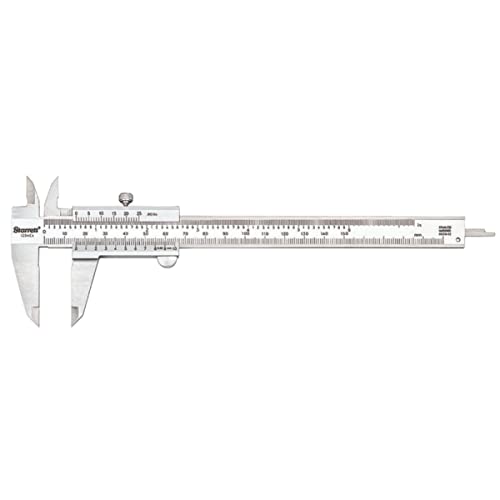 | Professional Grade | Measuring Range: 0–6″ (0–150 mm) | Materials: Hardened stainless steel | Measurement Functions: External, internal, depth (step via depth rod) | VIEW LATEST PRICE | Read Our Analysis |
| NEIKO 01407A 6″ Digital Stainless Steel Caliper | 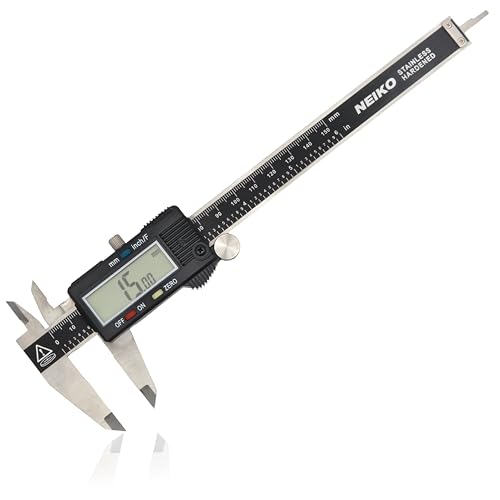 | Best Digital Value | Measuring Range: 0–6″ (0–150 mm) | Materials: Stainless steel | Measurement Functions: Inside, outside, depth, step | VIEW LATEST PRICE | Read Our Analysis |
| HDLNKAK 6″ Vernier Caliper Non-Digital High-Precision | 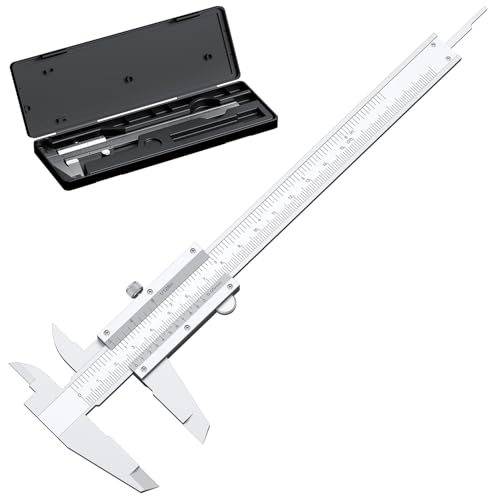 | No-Battery Reliability | Measuring Range: 0–6″ (0–150 mm) | Materials: Carbon steel | Measurement Functions: Inside, outside, step, depth | VIEW LATEST PRICE | Read Our Analysis |
| Clockwise Vernier Caliper 0-8in/200mm Stainless Steel | | Extended Reach | Measuring Range: 0–8″ (0–200 mm) | Materials: Stainless steel | Measurement Functions: External, internal, depth, step | VIEW LATEST PRICE | Read Our Analysis |
| Vernier Caliper 0-6″ (0-150mm) Stainless Steel | 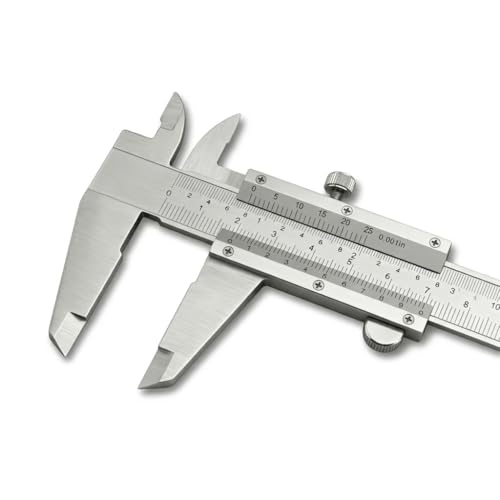 | Household Essential | Measuring Range: 0–6″ (0–150 mm) | Materials: Stainless steel | Measurement Functions: External, internal, depth, step | VIEW LATEST PRICE | Read Our Analysis |
| Vernier Caliper 6″ Dual Metric/Imperial Non-Digital |  | Fractional Precision | Measuring Range: 0–6″ (150 mm) | Materials: High-hardness steel / metal | Measurement Functions: OD, ID, depth, steps | VIEW LATEST PRICE | Read Our Analysis |
| Digital 6″ Stainless Steel Vernier Caliper with LCD | 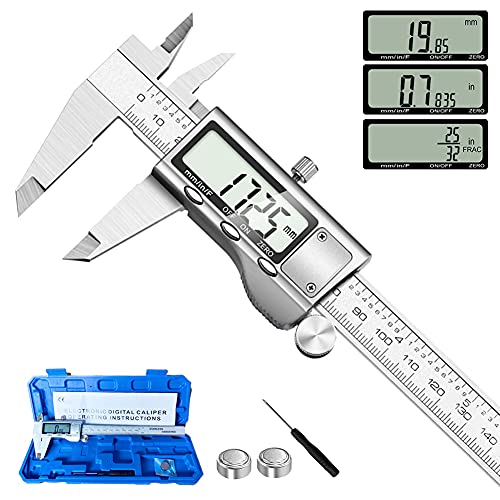 | Large-Display Digital | Measuring Range: 0–6″ (0–150 mm) | Materials: Stainless steel | Measurement Functions: Outside, inside, depth, step | VIEW LATEST PRICE | Read Our Analysis |
| Hardell 12″ Stainless Steel Digital Caliper | 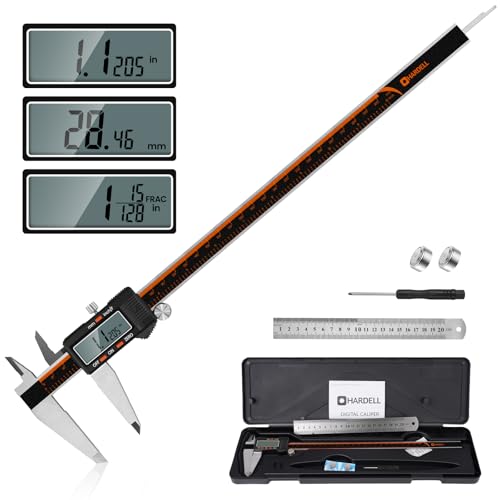 | Long-Range Pro | Measuring Range: 0–12″ (0–300 mm) | Materials: Stainless steel | Measurement Functions: External, internal, depth, step | VIEW LATEST PRICE | Read Our Analysis |
| Kynup 6″ Digital Caliper Stainless Steel IP54 | 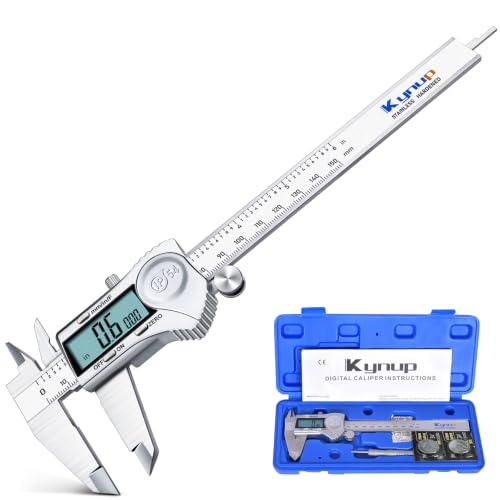 | Splash-Proof Digital | Measuring Range: 0–6″ (0–150 mm) | Materials: Stainless steel | Measurement Functions: External, internal, depth, step | VIEW LATEST PRICE | Read Our Analysis |
| 6-Inch Stainless Steel Digital Vernier Caliper with LCD | 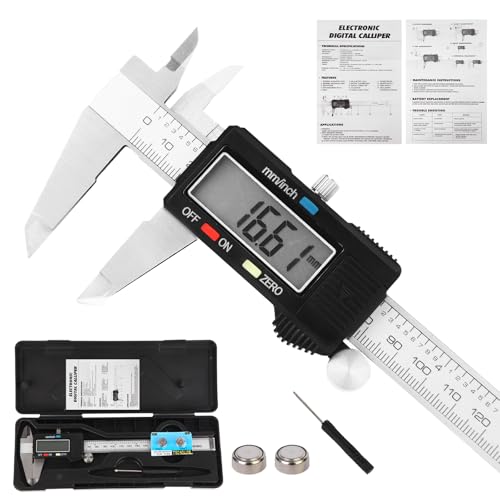 | Feature-Rich Digital | Measuring Range: 0–6″ (0–150 mm) | Materials: High-strength stainless steel | Measurement Functions: Internal, external, height, depth | VIEW LATEST PRICE | Read Our Analysis |
More Details on Our Top Picks
Recommended Products

The dial caliper is made of stainless steel, durable and wear-resistant
WATERPROOF & STAINLESS STEEL MATERIAL: The waterproof digital caliper is constructed of finely polished stainless steel, waterprof, anti-rust,which has knurled thumb roller and locking screw ensure smooth sliding and accurate positioning in use
VIEW LATEST PRICEAs an affiliate, we earn on qualifying purchases.
【Accurate Measuring Tools】: Aurdeayi digital caliper Measuring Range: 0 - 6 inch/ 0 - 150 mm; Accuracy: ±0.001 inch/ 0.02 mm and Resolution: 0.0005 inch/ 0.01 mm
Starrett 0-6″ Vernier Caliper with Depth Rod
As the only U.S.-brand pick in this list, the Starrett is a purely manual vernier caliper — no battery, no LCD, just a hardened stainless steel beam with a 0.001-inch graduation and a depth rod for step and depth work. That finer graduation gives you more precision than the 1/128-inch (roughly 0.05 mm) scale on the HDLNKAK and Clockwise picks below, though reading a vernier scale accurately takes more practice than glancing at a digital display. For shop or classroom use where you want brand reliability and don’t mind the learning curve, it’s a dependable choice.
- Measuring Range:0–6″ (0–150 mm)
- Materials:Hardened stainless steel
- Measurement Functions:External, internal, depth (step via depth rod)
- Accuracy / Resolution (reported):±0.001″ (graduation 0.001″)
- Power Type:Manual (no battery)
- Included Lock/Slide Control:Lock screw for sliding jaw
- Additional Feature:Hardened stainless steel
- Additional Feature:Satin finished bar
- Additional Feature:1-year warranty
Recommended Products
High Accuracy: Hardened construction vernier caliper with high accuracy for Industrial & Scientific where the highest accuracy is required. The 0-6Inch Imperial measurement accuracy is 0.001 inch ( 0-4" (+/-.001"), 4-6" (+/-.0015") ) while the Metric measurement accuracy is 0.02mm (+/-.025mm per 300mm)
VIEW LATEST PRICE
10 Best Carpenter Squares That Every DIY Pro Swears By
January 14, 2025As an affiliate, we earn on qualifying purchases.
High-Quality Material:Made from durable ABS plastic, this caliper is lightweight and odor-free, ensuring long-lasting use without breaking easily. The smooth surface design not only enhances comfort but also prevents any scratches or damage to the items being measured, providing peace of mind during use.

Absolute Origin Calibration: The iGAGING Absolute Origin Electronic digital caliper retains the zero reference point even after the caliper is off. This feature saves time, as well as ensures consistent and accurate inch/metric measurements.
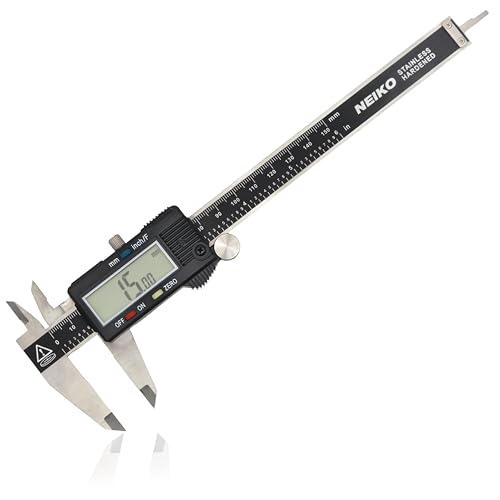
NEIKO 01407A 6″ Digital Stainless Steel Caliper
The NEIKO brings digital convenience to this list at a lower price than the Hardell or Kynup picks, with a 0.0005-inch resolution, a splash- and dust-resistant stainless body, and factory calibration out of the box. It runs on LR44 batteries like several other digital picks here, and adds a knurled roller and locking screw for steady readings. For anyone who wants an affordable digital caliper without stepping up to a 12-inch range or an IP-rated housing, this is a solid value pick.
- Measuring Range:0–6″ (0–150 mm)
- Materials:Stainless steel
- Measurement Functions:Inside, outside, depth, step
- Accuracy / Resolution (reported):Accuracy 0.001″ / Resolution 0.0005″ (0.01 mm)
- Power Type:Battery-powered digital (LR44 batteries included)
- Included Lock/Slide Control:Positioning lock / locking screw; knurled thumb roller
- Additional Feature:Extra-large LCD screen
- Additional Feature:Splash- and dust-resistant
- Additional Feature:Protective strong case
Recommended Products
MULTI-FUNCTION: This measuring tool has a quick-change button that changes between three measuring modes such as inch, fraction, and millimeter to make conversion a snap during measurement. Our metric caliper measuring tool is splash and dust resistant.
【STAINLESS STEEL MATERIAL】The vernier caliper is made of high-strength stainless steel and is waterproof and dirt-proof. The service life of this stainless steel digital caliper is longer than that of calipers with plastic or carbon fiber parts.
IP54 waterproof stainless steel : IP54 level strong waterproof, to solve the problem of ordinary digital calipers contact with water on the bad; fine polished stainless steel, so you digital calipers more hard, more durable than ordinary digital calipers
HDLNKAK 6″ Vernier Caliper Non-Digital High-Precision
This is a fully mechanical caliper with no electronics at all — a carbon steel build with a 1/128-inch (about 0.05 mm) vernier scale, which is coarser than the Starrett’s 0.001-inch graduation but still workable for general fitting and layout work. Reading the vernier scale takes some practice compared to a digital readout, but there’s no battery to die and no display to fail. For woodworkers, mechanics, or hobbyists who want a rugged, no-fuss tool, this is a straightforward option.
- Measuring Range:0–6″ (0–150 mm)
- Materials:Carbon steel
- Measurement Functions:Inside, outside, step, depth
- Accuracy / Resolution (reported):Resolution/accuracy listed as 1/128″ / 0.05 mm (also shows 0.01″)
- Power Type:Manual (no battery)
- Included Lock/Slide Control:Smooth slide; integrated depth rod (no explicit lock listed)
- Additional Feature:Carbon steel construction
- Additional Feature:No batteries required
- Additional Feature:Highly polished surfaces
Recommended Products
1. MEASUREMENT: the accuracy is 0.02mm / 0.001 inch, Measurement Range 0-150mm Metric Size, Accurate laser scribed.
[Accurate Measurement]: Measuring range: 0-6inch/0-150mm; Accuracy: ±0.001in/0.02mm.
✔ High Accuracy and Precision: The vernier and main scale zeros align perfectly when fully closed for precise measurements. Offers 1/128" imperial and 0.02 mm metric precision
Clockwise Vernier Caliper 0-8in/200mm Stainless Steel
Like the HDLNKAK, this is a manual caliper with a 1/128-inch (0.05 mm) vernier scale, but it extends to an 8-inch range — the only manual pick in this list that reaches beyond 6 inches. The stainless steel construction and improved depth groove make it a reasonable choice for larger parts, though you’re still reading a vernier scale rather than a digital display. For anyone who regularly measures parts too big for a standard 6-inch caliper and doesn’t want batteries, this is the pick built for that reach.
- Measuring Range:0–8″ (0–200 mm)
- Materials:Stainless steel
- Measurement Functions:External, internal, depth, step
- Accuracy / Resolution (reported):Resolution 1/128″ (0.05 mm) / Accuracy ±0.001″
- Power Type:Manual (no battery)
- Included Lock/Slide Control:Manual slide; advanced depth groove for smoother sliding (no battery)
- Additional Feature:0–8″ measurement range
- Additional Feature:Advanced depth groove
- Additional Feature:Manual operation (no battery)
Recommended Products
【3 Units Conversion】 You can switch 3 units with the calipers: inch, mm and fraction based on your habits with the push of a button. Press the on/off button, slide the digital caliper to anywhere, then you can read the values on the display. And you can reset it to zero by zero button.
Selected Stainless Steel: The digital caliper is made of high-strength stainless steel, which is waterproof and dirt-resistant. This callipers for measuring lasts longer than calipers with plastic or carbon fiber parts. Features precision thumb rollers and locking screws to ensure smooth sliding and accurate positioning when measuring. Battery powered, comes with 3 batteries.
Absolute Origin Calibration: The iGAGING Absolute Origin Electronic digital caliper retains the zero reference point even after the caliper is off. This feature saves time, as well as ensures consistent and accurate inch/metric measurements.
Vernier Caliper 0-6″ (0-150mm) Stainless Steel
This is a basic manual caliper aimed squarely at home and hobby use, with the same 0.02 mm (0.001-inch) accuracy class as several other picks here but none of the extra features — no digital display, no IP rating, no extended range. It covers the standard external, internal, depth, and step measurements you’d need for jewelry, model parts, or general household projects. If you just want an inexpensive, functional vernier caliper for occasional use, it covers the basics.
- Measuring Range:0–6″ (0–150 mm)
- Materials:Stainless steel
- Measurement Functions:External, internal, depth, step
- Accuracy / Resolution (reported):Primary accuracy 0.02 mm / 0.001″ (other specs listed)
- Power Type:Manual (no battery)
- Included Lock/Slide Control:Manual slide with clear markings (no explicit lock listed)
- Additional Feature:Household-focused design
- Additional Feature:Lightweight for home use
- Additional Feature:Manufacturer: Shenzhen Huiyimaoyi
Vernier Caliper 6″ Dual Metric/Imperial Non-Digital
This manual caliper pairs metric and fractional-inch scales on the same body, which is handy if you regularly switch between unit systems without a digital toggle button. The high-hardness steel construction is described as fireproof and waterproof, a durability claim none of the other manual picks here make, and it includes a storage case. For anyone who wants dual-scale readability in a manual tool, this is a reasonable pick, though like the other non-digital calipers here, reading the scale takes more practice than a digital display.
- Measuring Range:0–6″ (150 mm)
- Materials:High-hardness steel / metal
- Measurement Functions:OD, ID, depth, steps
- Accuracy / Resolution (reported):Precision 0.02 mm and 1/128″
- Power Type:Manual (no battery)
- Included Lock/Slide Control:Slider operable with thumb; non-digital sliding design (locking implied)
- Additional Feature:Fractional inch scale
- Additional Feature:Includes storage case
- Additional Feature:Fireproof and waterproof finish
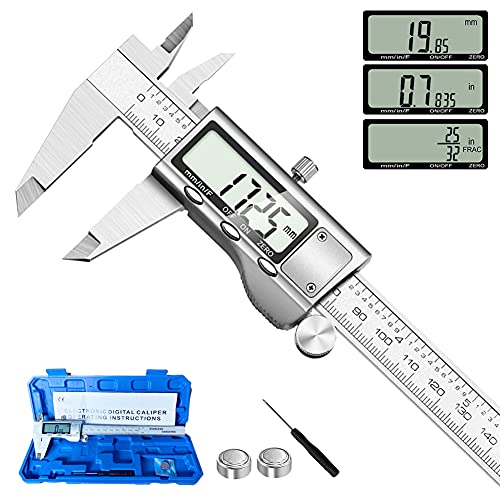
Digital 6″ Stainless Steel Vernier Caliper with LCD
This digital caliper matches the accuracy and resolution of the NEIKO and Kynup picks (±0.001 in / 0.02 mm accuracy, 0.0005 in / 0.01 mm resolution), but adds a waterproof, dirt-proof body and a sunlight-readable LCD with auto power-off — features that go further than the NEIKO’s splash resistance. It runs on a standard button-cell battery like most digital picks here. For anyone who wants a fully sealed digital caliper for outdoor or messy shop use, this is a strong option.
- Measuring Range:0–6″ (0–150 mm)
- Materials:Stainless steel
- Measurement Functions:Outside, inside, depth, step
- Accuracy / Resolution (reported):Accuracy ±0.001″ / ±0.02 mm; Resolution 0.0005″/0.01 mm
- Power Type:Battery-powered digital (LR44 included)
- Included Lock/Slide Control:Lockable head; knurled thumb roller
- Additional Feature:Waterproof and dirt-proof
- Additional Feature:Sunlight-readable LCD
- Additional Feature:Auto power-off (5 min)
Hardell 12″ Stainless Steel Digital Caliper
This is the only caliper in the entire list with a 12-inch (300 mm) range, roughly double the reach of every other pick here, though that extra range comes with a slightly looser accuracy spec (±0.03 mm) than the 6-inch digital picks’ ±0.02 mm. It includes a spare battery, ruler, and screwdriver in the box, and the stainless, waterproof build handles messy benches well. If you need to measure larger parts than a standard 6-inch caliper allows, this is the only pick here built for that job.
- Measuring Range:0–12″ (0–300 mm)
- Materials:Stainless steel
- Measurement Functions:External, internal, depth, step
- Accuracy / Resolution (reported):Accuracy ±0.03 mm / 0.001″; Resolution 0.01 mm / 0.0005″
- Power Type:Battery-powered digital (LR44 included)
- Included Lock/Slide Control:Locking screw; knurled thumb roller
- Additional Feature:0–12″ (300 mm) range
- Additional Feature:Includes ruler & screwdriver
- Additional Feature:Shock-resistant storage case
Kynup 6″ Digital Caliper Stainless Steel IP54
The Kynup matches the NEIKO and Digital 6-inch LCD picks on accuracy and resolution, but adds an IP54 splash-proof rating and ships with two spare batteries, giving you more backup power than most other digital picks in this list. The lockable head is a nice touch for holding a reading steady while you transfer it. For anyone who works around light moisture or wants extra battery backup on hand, it’s a practical pick.
- Measuring Range:0–6″ (0–150 mm)
- Materials:Stainless steel
- Measurement Functions:External, internal, depth, step
- Accuracy / Resolution (reported):Accuracy ±0.001″ / 0.02 mm; Resolution 0.0005″/0.01 mm
- Power Type:Battery-powered digital (lithium batteries included)
- Included Lock/Slide Control:Lockable head (lockable head listed)
- Additional Feature:IP54 splash-proof rating
- Additional Feature:Lockable head
- Additional Feature:Two spare batteries included
6-Inch Stainless Steel Digital Vernier Caliper with LCD
This digital caliper offers the same accuracy and resolution as several other picks here, running on three LR44 batteries instead of the single cell some competitors use, and adding an insulating sheet and screw-fastened battery cover. Unlike the waterproof Digital 6-inch LCD pick above or the splash-proof Kynup, the listing specifically notes this one is not oil- or liquid-resistant, so keep it dry and wipe it down after use. For anyone measuring in a clean, dry environment who wants simple digital readouts, it’s a reasonable pick, but not the one to reach for around moisture.
- Measuring Range:0–6″ (0–150 mm)
- Materials:High-strength stainless steel
- Measurement Functions:Internal, external, height, depth
- Accuracy / Resolution (reported):Accuracy ±0.001″ / 0.02 mm; Resolution 0.0005″/0.01 mm
- Power Type:Battery-powered digital (3×LR44 included)
- Included Lock/Slide Control:Locking screw; knurled thumb roller
- Additional Feature:Insulating sheet included
- Additional Feature:Screw-fastened battery cover
- Additional Feature:Not oil/liquid resistant







Factors to Consider When Choosing a Vernier Caliper
If you need precise measurements for small projects or hobby work, check the caliper’s accuracy and resolution first because that tells you how fine a difference it can pick up and let you trust your readings. For quick, easy reads pick a digital model since you get numbers on the screen instantly, and for heavy use choose a mechanical (dial or vernier) type because they’re tougher and don’t need batteries. You’ll want a range that covers the parts you usually measure and functions for inside, outside, and depth readings. Short and simple.
For anyone who works with metal or wood often, pay attention to the material and build quality so the tool won’t bend or wear quickly, and consider ergonomics so it sits well in your hand during long sessions. You’ll also want smooth sliding jaws and a clear scale or display so measurements are less frustrating. Think about the locking screw and thumb roller too. Easy to use.
What makes this caliper type stand out for shop or garage use is the measurement range, which decides whether you can handle large pieces or tiny components without switching tools, and having multiple modes covers most tasks. If you care about repeatable results, look for good tolerances and a solid zeroing function. Small features like an inch/mm switch or auto-off can save time. Useful details.
Measurement Accuracy And Resolution
If you need parts that fit precisely for assembly or repair, pick a caliper with accuracy tighter than your part tolerance so your measurements don’t miss the mark, and resolution that shows the small differences you care about. For anyone who measures fine details like grooves or thin walls, a 0.01 mm resolution lets you see smaller changes than 0.02 mm, and the stated accuracy tells you how close those readings are to the true size. What makes this measuring tool stand out for everyday work is that resolution and accuracy are different things: high resolution can still hide a systematic offset, so check the accuracy spec and plan on calibrating periodically. You get reliable readings without guessing when you account for temperature, dirt, wear, and how you handle the caliper, because those real-world factors shift results. Perfect for hobbyists and shop techs, choose a caliper that leaves a little margin beyond your tolerance so normal use doesn’t push measurements outside acceptable limits. The right choice helps you catch tiny errors before they become costly mistakes.
Digital Versus Mechanical
If you need quick, error-free readings during repetitive checks, a digital caliper’s instant numeric readout and unit switching make that easy, and they often show fractions and let you zero the display. They run on a battery and usually shut off automatically. They give fine displayed resolution like 0.0005″ or 0.01 mm, which helps when you’re comparing small differences.
For anyone who works where batteries or electronics might fail, a mechanical vernier keeps measuring simple because it runs without power and uses a scale you read by eye. It’s steady and dependable in rough conditions. You’ll need to read the scale carefully, though.
What makes this choice practical is that both types can hit about ±0.001″ accuracy when well made and calibrated, so pick based on how you work rather than accuracy alone. If you want speed and fewer reading mistakes, go digital. If you want battery-free reliability and don’t mind reading a scale, stick with a vernier.
Material And Build Quality
If you work with parts all day and hate calipers that wear out fast, pick one with hardened stainless or high-hardness carbon/alloy steel for the frame and jaws because those metals resist wear and corrosion and keep the mating surfaces true over time. Those materials matter when you need repeatable measurements for multiple jobs. They’ll last longer.
For anyone who gets frustrated by sticky movement or burrs, look for precision-ground jaws and a finely finished slide or depth groove since smooth movement cuts down stick-slip and measurement error. That finish makes a real difference when you’re trying to hit the same dimension twice. You’ll notice smoother readings.
What makes this measuring tool stand out is a strong locking screw plus a knurled thumb roller or fine-adjustment mechanism that secures settings and lets you make controlled readings without fumbling. That helps whether you’re setting a reference or transferring a measurement to a drawing. It’s easier to use.
You get corrosion-resistant satin or polished finishes and splash-resistant construction without sacrificing usability if you work near moisture or oils, so your caliper won’t degrade as quickly in greasy shops. Those features keep the tool usable in rougher environments. They protect the investment.
The caliper solves the problem of frame flex by balancing weight and stiffness: a stiffer frame reduces deflection while a lighter feel keeps handheld comfort, so you don’t tire during long measuring sessions. Think about how often you’ll carry and use it. Pick the balance that fits your workflow.
Range And Measurement Modes
If you need to measure big parts without swapping tools, pick a caliper with a range that covers the largest pieces you work on, like 0–6″ (0–150 mm) for most garage projects or 0–12″ (300 mm) for furniture and auto work. That way you won’t be stopping midsize jobs to guess or run back to the toolbox.
For anyone who measures different kinds of features, check that it handles external, internal, depth, and step measurements, because each mode fixes a specific task and saves you from improvising. You want jaws that get into tight bores, a clear depth probe for recesses, and a step surface that doesn’t slip.
What makes this caliper choice practical for hobbyists and pros is matching resolution and accuracy to your needs: hobby work is usually fine at 0.01 mm, while machine-shop tasks may need 0.001″ or ±0.02 mm. Get one with simple unit conversion or an easy-to-read vernier or fraction scale if you switch between metric and imperial often.
You get smoother handling and fewer measurement errors when the slide glides and there’s a locking screw to hold readings, so look for smooth action and a secure lock. And if you like convenience, pick a model with a fine set of internal jaws and a depth probe that extends cleanly.
Ergonomics And Ease Of Use
If you struggle to take steady measurements after long sessions, pick a caliper with a smooth, low-friction slider and a knurled thumb roller so your hand won’t tire. The fine, controlled adjustments come from that low friction and thumb screw, and they help you get repeatable reads. Small wrist strain disappears.
For anyone who squints at tiny markings, go for a clearly marked, high-contrast scale or a large LCD so your eyes don’t work overtime. A readable vernier or metric display also cuts mistakes when you’re measuring lots of parts. That makes repetitive tasks less painful.
What makes this tool stand out for workshop work is matching the jaws and depth rod to the parts you measure most, because awkward positions lead to sloppy readings. If your parts need deep reaches or narrow gaps, pick jaws and rods sized for those jobs. You’ll be faster and more accurate.
You get a secure locking screw without sacrificing speed, which means you can lock a measurement and move the caliper without losing the setting. That’s handy when you need to transfer a dimension to another tool. It saves time and frustration.
The caliper solves shaky hands by balancing weight against stiffness so it feels comfortable and steady in use, and the right weight reduces wobble without feeling flimsy. Pick one that feels right in your grip during real tasks, not just on spec sheets. You’ll want to try it before you commit.
Frequently Asked Questions
How Do I Calibrate a Vernier Caliper at Home?
Check your caliper against a known reference — a gauge block, a precision-ground bar, or even a calibrated micrometer — to see how far off it is before you rely on it for close-tolerance work. Clean the jaws, close them fully, and check that the zero mark lines up; if it doesn’t, note the offset so you can mentally correct for it, or look up your model’s calibration procedure if it has an adjustable zero. Move the slide through its full range while checking a few known lengths, since inconsistent errors across the range usually mean the slide or scale is worn and needs professional service, while a small, consistent offset is often fine to work around.
Can Vernier Calipers Measure Thread Pitch or Pipe Diameter?
Yes, within reason. For thread pitch, measure across several thread crests with the caliper and divide by the number of threads to estimate pitch, though a dedicated thread gauge is more precise if you need an exact match. For pipe or tubing, the external jaws give you outside diameter by spanning the widest point, and the internal jaws (or a probe, on models that include one) give inside diameter — just remember wall thickness affects how the two numbers relate. These techniques work fine for general DIY and hobby use, but a machinist doing precision thread work would still reach for purpose-built gauges.
What Maintenance Extends a Caliper’s Lifespan?
Wipe the jaws and sliding beam clean after each use, since grit under the slide is what usually causes sticking or uneven wear over time. A light coat of lubricant on the metal slide helps prevent corrosion, and storing the caliper in its case away from extreme temperatures or magnetic fields keeps the mechanism and (on digital models) the electronics stable. Periodically check accuracy against a known reference, and if you notice a screw or jaw wearing loose, address it before it affects your readings rather than after.
Are High-End Calipers Worth Repairing or Should I Replace Them?
It often comes down to cost: if repair — new jaws, a recalibration, or an electronics fix — runs meaningfully less than a comparable new unit, it’s usually worth it for a caliper you already trust and know the history of. Higher-quality calipers are more likely to have replaceable parts and be worth sending in for service. If the damage is severe, replacement parts aren’t available, or the repair quote approaches the cost of a new caliper, replacing it is the more practical choice.
How Do Temperature Changes Affect Measurement Accuracy?
Metal expands and contracts slightly with temperature, so letting both the caliper and the part reach room temperature before a precise measurement reduces one source of error. This matters most for tight-tolerance work — for general DIY and hobby measurements, small temperature swings usually won’t matter much. If you’re doing precision work, avoid holding the caliper in a warm hand for long periods and keep your workspace away from direct sunlight or drafts that cause uneven heating.