As an Amazon Associate, we earn from qualifying purchases. Some links may be affiliate links at no extra cost to you. Although our opinions are based on curated research, we haven't used these products. Articles generated with AI.

10 Best Combination Squares Every Toolbox Needs

You’re halfway through a kitchen remodel, and the new countertop sits unevenly, leaving a gap that shows every time you slide a cutting board across it. You grab a ruler, but the tiny misalignment is still obvious, and you realize the square you’re using can’t give you a reliable reference.
A good combination square stays rock‑solid while you check angles, and a bad one wobbles, fades, or lacks a clear scale, leading to costly re‑work. Most buyers pick a model based on price alone, ignore the importance of a deep‑etched scale, and overlook extra features like built‑in levels or reversible locks.
This guide reviews ten top‑rated combination squares, selected for durability, scale clarity, and added measuring tools, and explains how each meets the needs of both professional tradespeople and DIY enthusiasts. By the end you’ll know exactly which square fits your projects and why.
Key Takeaways
If you need a square that works on both big panels and tight corners, grab a 12‑inch model for versatile board work and a 6‑inch version that fits into your pocket. You’ll love the stainless‑steel or tempered carbon‑steel blades with deep‑etched, 4R or 4‑in‑1 scales because they stay accurate even after countless uses. Choose one with an integrated bubble/vial level—brands like Johnson, PEC, Accusize, Ryqoru, and WEN let you check plumb and level in a flash.
For anyone who hates the square slipping while you mark, look for a reliable locking mechanism such as a manual lock, reversible bolt, or spring‑loaded nut. These keep the blade steady during repeated layouts, saving you time and frustration. The weight and body material matter too; cast‑zinc or aluminum bodies give you durability without weighing you down, while zinc‑alloy heads add corrosion resistance.
What makes this combination square stand out is the balance of sturdiness and portability. You get a tough tool that fits comfortably in your toolbox and stays sharp for years. It’s a simple upgrade that makes your woodworking and framing tasks smoother.
| IRWIN 12″ Stainless Steel Combination Square (1794469) | 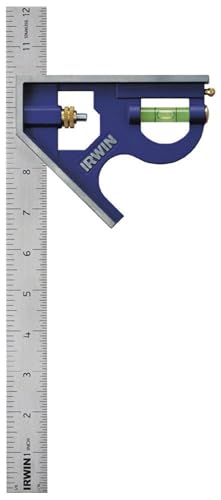 | Best Overall | Blade Length: 12 in | Material (Blade): Stainless steel | Angle Markings: 45° & 90° | VIEW LATEST PRICE | Read Our Analysis |
| Johnson Level 415EM 12″ Inch/Metric Combination Square |  | Best Value | Blade Length: 12 in | Material (Blade): Stainless steel | Angle Markings: 45° & 90° | VIEW LATEST PRICE | Read Our Analysis |
| PEC Tools 2-Piece Combination Square 12″ Blade (4R) USA |  Professional Grade Professional Grade | Blade Length: 12 in | Material (Blade): Tempered carbon steel | Angle Markings: 45° & 90° | VIEW LATEST PRICE | Read Our Analysis | |
| Accusize 12″ 4-In- Combination Square Set |  | Most Versatile | Blade Length: 12 in | Material (Blade): Alloy steel (hardened) | Angle Markings: 45° & 90° | VIEW LATEST PRICE | Read Our Analysis |
| 12″ 4‑in Combination Square Set Blue | 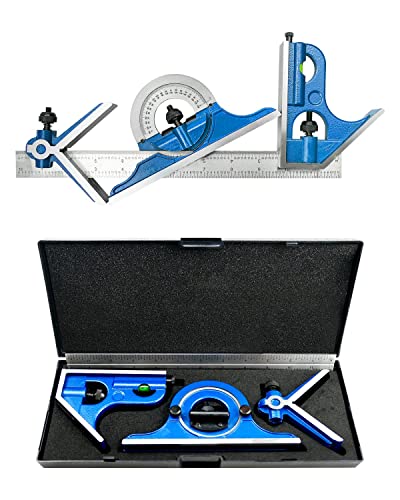 | Budget-Friendly Pick | Blade Length: 12 in | Material (Blade): Stainless steel | Angle Markings: 45° & 90° | VIEW LATEST PRICE | Read Our Analysis |
| 12-Inch Metric/Imperial Combination Square with Level | 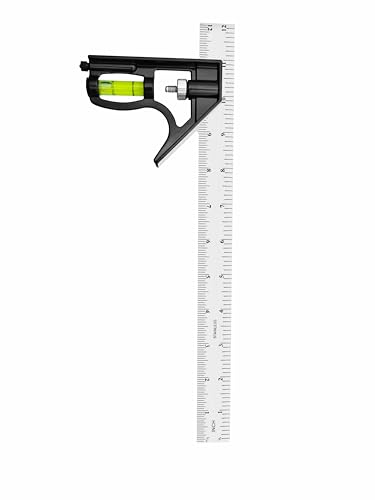 | Best For Beginners | Blade Length: 12 in | Material (Blade): 410 stainless steel | Angle Markings: 45° & 90° | VIEW LATEST PRICE | Read Our Analysis |
| DUEBEL 12″ Stainless Steel Multi-Function Carpentry Square |  | Heavy‑Duty | Blade Length: 12 in | Material (Blade): Hardened stainless steel | Angle Markings: 45° & 90° | VIEW LATEST PRICE | Read Our Analysis |
| Mecurate 6″ Stainless Steel Combination Square with Pencils |  | Compact Choice | Blade Length: 6 in | Material (Blade): Stainless steel | Angle Markings: 45° & 90° | VIEW LATEST PRICE | Read Our Analysis |
| IRWIN Tools Combination Square Metal-Body 6-Inch (1794468) Blue | 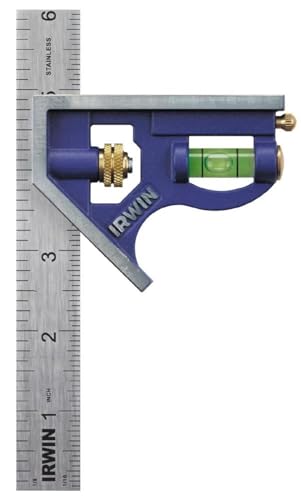 | Lifetime Warranty | Blade Length: 6 in | Material (Blade): Stainless steel | Angle Markings: 45° & 90° | VIEW LATEST PRICE | Read Our Analysis |
| WEN ME144L 12-Inch Aluminum Combination Square with Bubble Level |  | Precision Edge | Blade Length: 12 in | Material (Blade): Aluminum alloy (head) / stainless steel edge | Angle Markings: 45° & 90° | VIEW LATEST PRICE | Read Our Analysis |
More Details on Our Top Picks
IRWIN 12″ Stainless Steel Combination Square (1794469)
The IRWIN 1794469 keeps things focused: a 12‑inch stainless steel blade with 1/16‑inch graduations, locking 45° and 90° angle settings, and a T‑bevel head that doubles as a depth gauge. Unlike most of the other picks in this list, it skips a built‑in bubble level entirely, so you’ll want a separate level if that’s part of your workflow. Its cast‑zinc body keeps the tool at a manageable 0.9 lb, and IRWIN backs it with a limited‑lifetime warranty—the same coverage as its smaller 6‑inch sibling below. For straightforward angle marking and depth checks without extra features to fuss over, it’s a dependable choice.
- Blade Length:12 in
- Material (Blade):Stainless steel
- Angle Markings:45° & 90°
- Bubble Level:No built‑in level
- Graduation Precision:1/16 in
- Warranty:Limited lifetime
- Additional Feature:Cast zinc body
- Additional Feature:Rust‑proof stainless blade
- Additional Feature:Lifetime limited warranty
Johnson Level 415EM 12″ Inch/Metric Combination Square
The Johnson 415EM pairs its dual imperial/metric blade (1/32, 1/16, 1/8 inch, plus millimeters) with a built‑in acrylic bubble level, something the IRWIN 1794469 above doesn’t offer. At 6.3 oz it’s also the lightest square with a level in this entire list, and the high‑impact Structo‑Cast head resists denting from drops. The tradeoff is warranty length: Johnson backs it for one year, well short of IRWIN’s limited‑lifetime coverage. If you want both angle‑checking and leveling in a single lightweight tool, this is a strong value pick.
- Blade Length:12 in
- Material (Blade):Stainless steel
- Angle Markings:45° & 90°
- Bubble Level:Built‑in level vial
- Graduation Precision:1/32 in, 1/16 in, 1/8 in, metric
- Warranty:1 year
- Additional Feature:Acrylic yellow vial
- Additional Feature:Auto‑lock blade assembly
- Additional Feature:1‑year manufacturer warranty
PEC Tools 2-Piece Combination Square 12″ Blade (4R)
USA
PEC’s 2‑piece set brings USA manufacturing and a 60‑year tool‑making heritage to the table, with a tempered carbon‑steel blade offering the finest graduations in this list—4R markings down to 64ths of an inch—plus an integrated bubble level and reversible locking bolt for quick 45°/90° switching. At 2.01 lb, it’s also the heaviest square here, noticeably more than the 6.3 oz Johnson 415EM, so it’s built more for bench precision than all‑day pocket carrying. The compact carrying case helps offset that bulk for transport. For shops that prioritize graduation fineness and domestic manufacturing over portability, it’s a strong pick.
- Blade Length:12 in
- Material (Blade):Tempered carbon steel
- Angle Markings:45° & 90°
- Bubble Level:Integrated bubble level
- Graduation Precision:4R (8ths, 16ths, 32nds, 64ths)
- Warranty:Not specified (implied professional warranty)
- Additional Feature:Cast iron head
- Additional Feature:Integrated bubble level vial
- Additional Feature:Reversible locking bolt
Accusize 12″ 4-In- Combination Square Set
The Accusize set goes beyond a basic square, bundling a protractor head, level, and scriber point alongside the standard square head for genuine 4‑in‑1 versatility. Its hardened alloy‑steel blades hold the same fine 4R graduations as the PEC above, and the satin‑chrome finish keeps them easy to read. At roughly 1.55 kg, it’s the heaviest tool in this entire list, so it’s better suited to a bench or fixed toolbox than a belt pouch. For machinists who want one set that replaces several separate layout tools, the added functions are worth the extra weight.
- Blade Length:12 in
- Material (Blade):Alloy steel (hardened)
- Angle Markings:45° & 90°
- Bubble Level:Built‑in level
- Graduation Precision:4R (8ths, 16ths, 32nds, 64ths)
- Warranty:Not specified (manufacturer warranty)
- Additional Feature:Four‑piece set
- Additional Feature:Satin chrome finish
- Additional Feature:Hardened tempered blades
12″ 4‑in Combination Square Set Blue
This 12‑inch blue combination square set matches the Accusize above on core features—a 4‑in‑1 layout with protractor and center heads, a built‑in level, and 4R graduations—at what’s positioned as the more budget‑friendly price point of the two. The fully quenched, tempered steel blade stays rigid under pressure, and each unit reportedly passes a factory quality check before shipping. Its main gap compared to the IRWIN models in this list is warranty: no specific coverage is listed here, versus IRWIN’s limited‑lifetime promise on both its squares. For hobbyists who want 4‑in‑1 functionality without paying for the USA‑made PEC, it’s a reasonable budget alternative.
- Blade Length:12 in
- Material (Blade):Stainless steel
- Angle Markings:45° & 90°
- Bubble Level:Built‑in level
- Graduation Precision:4R (8ths, 16ths, 32nds, 64ths)
- Warranty:Not specified (manufacturer warranty)
- Additional Feature:Includes protractor head
- Additional Feature:Center head included
- Additional Feature:Fully quenched tempered steel
12-Inch Metric/Imperial Combination Square with Level
The Ryqoru‑branded 12‑inch square puts its metric and imperial scales directly on opposite sides of the blade—1 mm on one face, 1/16 and 1/8 inch on the other—which is simpler to read at a glance than the 4R fractional scales on the Accusize or PEC above. Its powder‑coated aluminum head keeps the tool light, and a built‑in bubble level and scriber round out the feature set. No warranty terms are listed for this one, unlike the IRWIN squares’ limited‑lifetime coverage. For beginners who find fractional graduations confusing, the simplified dual‑scale layout is the main draw.
- Blade Length:12 in
- Material (Blade):410 stainless steel
- Angle Markings:45° & 90°
- Bubble Level:Integrated bubble level
- Graduation Precision:1 mm, 1/16 in, 1/8 in
- Warranty:Not specified (manufacturer warranty)
- Additional Feature:Powder‑coated aluminum head
- Additional Feature:Dual‑scale metric/imperial
- Additional Feature:Integrated bubble level vial
DUEBEL 12″ Stainless Steel Multi-Function Carpentry Square
The DUEBEL square is the only one in this list to specify a full 0°–180° angle range with a stated ±0.08° accuracy, backed by a fine‑adjustment mechanism and roller knobs for smooth sliding. Laser‑engraved 4R markings match the finest graduations in this roundup, and a built‑in marking needle saves you from hunting for a pencil. At 13.4 oz it sits between the lighter Johnson 415EM and the heavier PEC and Accusize sets. DUEBEL offers 24‑hour after‑sale support rather than a stated warranty term, so if formal warranty coverage matters to you, the IRWIN models above are the safer bet. For anyone who needs precise angle adjustment beyond the standard 45°/90° stops, this is the strongest option here.
- Blade Length:12 in
- Material (Blade):Hardened stainless steel
- Angle Markings:45° & 90°
- Bubble Level:Built‑in horizontal bubble
- Graduation Precision:4R (8ths, 16ths, 32nds, 64ths)
- Warranty:Not specified (manufacturer warranty)
- Additional Feature:Detachable nut‑fixed body
- Additional Feature:Roller knobs for fine adjustment
- Additional Feature:Laser‑engraved tick marks
Mecurate 6″ Stainless Steel Combination Square with Pencils
At 6.7 oz, the Mecurate is one of the lightest squares in this list, and its cast‑zinc body includes a clever extra: two acrylic‑capped carpentry pencils that snap onto the side so you’re never hunting for a marking tool. Like the IRWIN 6‑inch below, it doesn’t include a built‑in bubble level, so angle and depth checks are its focus rather than leveling. The 1 mm graduation keeps readings simple, and a 12‑month warranty backs it. For a compact, no‑frills square with a built‑in pencil holder, it’s a genuinely practical option.
- Blade Length:6 in
- Material (Blade):Stainless steel
- Angle Markings:45° & 90°
- Bubble Level:No built‑in level
- Graduation Precision:1 mm
- Warranty:12 months
- Additional Feature:Includes two carpentry pencils
- Additional Feature:Clear acrylic components
- Additional Feature:Lifetime support
IRWIN Tools Combination Square Metal-Body 6-Inch (1794468) Blue
IRWIN’s 6‑inch 1794468 mirrors its 12‑inch sibling above in almost every way—cast‑zinc body, stainless blade, no built‑in level, and the same limited‑lifetime warranty—just in a smaller, more pocketable size. Its 1/16‑inch graduations are coarser than the 4R scales on the DUEBEL or PEC, so it’s built more for quick squareness checks than fine fractional readouts. For anyone who wants IRWIN’s warranty backing in a compact size rather than the full 12‑inch blade, this is the natural choice.
- Blade Length:6 in
- Material (Blade):Stainless steel
- Angle Markings:45° & 90°
- Bubble Level:No built‑in level
- Graduation Precision:1/16 in
- Warranty:Limited lifetime
- Additional Feature:Cast‑zinc metal body
- Additional Feature:Precision‑etched black scales
- Additional Feature:Limited lifetime warranty
WEN ME144L 12-Inch Aluminum Combination Square with Bubble Level
The WEN ME144L keeps weight down with a CNC‑machined aluminum alloy head, landing at 11 oz—heavier than the 6.3 oz Johnson 415EM but lighter than steel‑bodied sets like the PEC or Accusize. Laser‑engraved dual‑scale markings cover both 12 inches and 300 mm, and the built‑in bubble level, depth gauge, and scriber round out a well‑equipped feature set. Its main gap is warranty: WEN lists only a 30‑day return window rather than a stated manufacturer warranty, a step behind the lifetime coverage on the IRWIN squares in this list. For a lightweight, fully‑featured 12‑inch square at a reasonable weight, it’s a solid pick.
- Blade Length:12 in
- Material (Blade):Aluminum alloy (head) / stainless steel edge
- Angle Markings:45° & 90°
- Bubble Level:Built‑in bubble level
- Graduation Precision:Dual‑scale (imperial & metric)
- Warranty:30‑day return guarantee (manufacturer warranty not listed)
- Additional Feature:CNC‑machined aluminum alloy
- Additional Feature:Laser‑engraved markings
- Additional Feature:Spring‑loaded lock bolt
Factors to Consider When Choosing a Combination Square
If you need a square that won’t throw off your layout, start by checking the blade’s accuracy. A tiny error can ruin every measurement, so you’ll want a blade that stays true even after heavy use. For anyone who works on larger projects, a longer blade gives you extra reach without compromising precision. You get multiple angle settings, letting you tackle different cuts without swapping tools. The blade’s material should be tough enough to resist wear, and the head’s lock must stay firm while you’re marking or checking. This combination square solves the problem of drifting angles by keeping the head locked solidly in place. Perfect for DIY enthusiasts, this tool lets you trust each line you draw. Short and reliable.
Blade Blade Accuracy & Precision Accuracy
If you need to transfer tiny measurements onto a workpiece, the blade’s graduations and resolution are what let you mark the smallest increments reliably—most squares offer 1/16“, 1/32“, or 1 mm steps. Check the listed tolerance, like ±0.005”, so you know the maximum deviation you’ll see when checking squareness; tighter tolerances mean more dependable results. Choose a blade forged from hardened, tempered steel or a stable stainless alloy because it resists wear and keeps the etched or laser‑engraved markings clear over time. Deep‑etched or precision‑etched markings are far better than printed scales, as they won’t fade and will preserve accuracy. Finally, make sure the blade is flat and the edge is finely beveled or razor‑sharp; a true straight edge eliminates warps and burrs that could throw off your angle measurements. This attention to material and finish gives you confidence that every line you draw is spot‑on.
Length
If you need to work in tight spots on the shop floor, a short blade—around six inches—lets you lay out quick marks without crowding the workpiece. You’ll appreciate how easily it slides into a pocket, letting you keep your hands free for the next step. It’s perfect for cramped jobs.
For anyone who frequently tackles larger boards, a twelve‑inch blade extends your reach and lets you set straight edges and depth gauges across the whole surface without constantly moving the head. You can reference multiple points before repositioning, which cuts cumulative error and boosts accuracy. It feels solid in your hand.
What makes this combination square stand out is the balance between length and portability. You get the extra reach of a longer blade without the bulk of a full‑size tool, so you can stash it in most toolboxes. It’s a versatile compromise.
You get reliable markings without sacrificing comfort, because the longer blade adds a bit of weight but still fits comfortably in your grip. It’s easy to handle on the job site. You’ll notice the difference.
Perfect for the tradesperson who moves between shop and field, this tool offers the versatility you need for both quick, tight‑space jobs and broader, more demanding tasks. You’ll find it fits most toolboxes while still delivering solid performance. It’s a smart addition to your kit.
( Options
If you frequently switch between wood and metal projects, a combination square with both inch and metric scales saves you from constant conversion. The dual‑scale face lets you read measurements at a glance, so you can keep your workflow smooth. You’ll love the convenience.
When you need a compact tool that fits in a crowded toolbox, a 6‑inch blade is lightweight and easy to handle. It’s perfect for small parts and quick layout work. No extra bulk.
For larger workpieces, a 12‑inch blade reaches across and lets you lay out longer lines without juggling multiple tools. It gives you the reach you need for big jobs. Efficiency matters.
If you’re worried about rust in a workshop, choose a stainless‑steel body. It stays clean and resists corrosion, even after years of use. Durability pays off.
When you need a square that won’t bend under pressure, hardened steel holds its shape. It stays accurate after repeated tightening and heavy use. Consistency is key.
If you prefer a lighter tool for on‑the‑go jobs, an aluminum combination square reduces fatigue. It’s easy to carry and still feels solid in your hand. Comfort wins.
When budget is a concern, a cast‑zinc or iron square gives you basic functionality without breaking the bank. It gets the job done for occasional DIY tasks. Value is clear.
If you want to check horizontals without a separate level, a built‑in level vial adds that capability. You can quickly verify a surface while you’re marking. Time saved.
When you need to transfer angles, a protractor head lets you set and copy precise degrees. It’s great for carpentry, metalwork, and craft projects. Accuracy enhanced.
If you often need to locate midpoints, a center‑finding head makes that step effortless. It speeds up layout work on boards and pipes. Simplicity matters.
When you need flexibility for different angles, a reversible head lets you flip between 90‑degree and 45‑degree positions. It adapts to various tasks without extra tools. Versatility shines.
If you demand fine detail, look for a square with 1/32‑inch or 4R micro‑fine graduations. The finer markings give you higher accuracy on delicate work. Precision achieved.
When you want markings that stay readable, laser‑engraved numbers won’t wear off. They stay clear even after frequent use. Longevity assured.
Blade Material Durability
If you work in a damp workshop or outdoors where moisture shows a problem, a stainless‑steel blade will keep your square from rusting and stay accurate longer. You’ll appreciate how the steel resists corrosion compared with carbon steel, so you don’t have to worry about the metal pitting. The blade stays clear, and your measurements stay reliable.
For anyone who needs a blade that holds an edge through heavy use, a hardened carbon‑steel blade is a solid choice. It offers superior wear resistance, so you can cut and measure without frequent resharpening. Just remember to apply a protective coating or wipe it dry after each use to avoid rust.
What makes this square’s blade stand out is its satin‑chrome finish, which creates a barrier against oxidation while keeping the graduations visible. You’ll notice the etched markings stay legible far longer than printed ones, even after many projects. The coating also adds a slight slip‑resistance, helping you keep the blade steady.
You get a stiff, thick blade without sacrificing maneuverability, which means the square won’t twist under torque. This stiffness preserves squareness over time, so your angles stay true. The blade’s thickness also helps the etched graduations stay sharp.
Perfect for DIY enthusiasts who value durability, this square combines a rust‑resistant material with a tough coating. You’ll find the combination lets you work in wet or humid conditions without compromising accuracy. The result is a reliable tool that stays sharp and readable for years.
Head Locking Mechanism
If you’re tired of the blade slipping every time you try to scribe a clean line, a solid head‑locking mechanism is the answer. A positive‑lock or knurled‑nut design clamps the head securely without a wrench, so your blade stays exactly where you set it. Look for fine‑adjustment or micro‑adjustment locks, like a screw with travel, that let you move the blade in tiny increments and cut cumulative layout error. The locking parts should be made from hardened steel, brass, or zinc housings because durable materials resist wear and keep the clamping force repeatable. You’ll also want a lock that’s quick to loosen and tighten yet won’t loosen accidentally during frequent changes. Finally, verify that the head can slide or reverse while still holding accuracy when you use the square as a depth gauge, protractor, or transfer tool. This setup gives you confidence and precision without the hassle of extra tools.
Built‑in Level Accuracy
If you need a level that stays crystal‑clear even when you’re working at a slant, the built‑in vial in a combination square is the star. An acrylic or glass tube filled with high‑contrast fluid lets the bubble pop out, and the recessed design keeps it protected from knocks while staying perfectly aligned with the reference face. You’ll notice the difference because the bubble doesn’t wander when you glance from the side, cutting out that annoying parallax shift.
For anyone who does layout work on the job site, a tight tolerance like ±0.005 in/in (or the degree equivalent) means your cuts stay spot‑on. The vial should be fixed with almost no play; any wobble adds angular error that throws off your whole project. Choose a fluid that’s low‑viscosity and anti‑bubble, and it will stay stable across temperature changes, so you won’t end up with a drifting bubble in the middle of a job.
What makes this combination square stand out is the way the vial is embedded, protecting it from shock while keeping the reference face true. You get a reliable readout without having to constantly re‑calibrate, and the fluid’s temperature stability means repeatability day after day. The result is a tool that lets you trust every line you draw, whether you’re a DIY enthusiast or a seasoned carpenter.
Graduation Readability
If you need to read measurements quickly on a noisy job site, the graduations on a combination square become your first line of defense. Choose a tool with micro‑fine or deep‑etched marks; they stay legible after heavy use and resist fading, unlike printed scales that wear quickly. For anyone who switches between imperial and metric, dual‑sided blades keep both units on hand and clearly separated so you won’t mix them up. High‑contrast finishes such as satin chrome or black‑on‑silver boost visibility in low‑light or dirty conditions. Crisp, machine‑divided marks guarantee uniform spacing for reliable readings. You get finer granularity—1/16″, 1/32“, or 1 mm—without sacrificing durability, so you can measure smaller increments accurately. Perfect for DIYers who demand precision, this square lets you trust every read.
Weight & Portability
If you need a tool that won’t tire you out on a long day, look at the square’s weight and how it folds. Heavier models with metal heads and steel blades stay rock‑steady while you mark, but they can sap your energy when you’re carrying them around all day. Lighter versions use aluminum heads and thinner stainless blades, so they slip into a belt pouch and keep your wrist happy during repetitive work. Check the total weight of your kit; a lighter square will keep the load manageable if you already lug a bunch of measuring tools. Also think about dimensions—does the head detach or does the blade retract? A compact, secure package protects the tool and saves space. When you’re working on a roof or in a cramped corner, you want low weight without sacrificing the rigidity that keeps your markings accurate. This balance lets you move quickly and stay precise without feeling like you’re hauling a brick.
Frequently Asked Questions
Can I Use a Combination Square for Marking Angles on Curved Surfaces?
Yes, though you’ll want a steady hand. Rest the square’s straight blade against the curve at the point you need to reference, use the head’s angle setting to guide your pencil or scriber, and work in short sections rather than trying to follow the whole curve in one pass. None of the squares in this list are built specifically for curved layout, so pair yours with a flexible ruler or compass to fill in the curved portion.
How Often Should the Bubble Level Be Calibrated for Accuracy?
How often you’d calibrate depends on which square you own—several models in this list, including the Johnson 415EM, PEC 2‑Piece, Accusize set, and WEN ME144L, include a built‑in bubble level, while others like the IRWIN 1794469 and 1794468 skip a level entirely. For the ones with a vial, check it periodically against a known flat, level surface and any time it’s taken a hard drop, rather than on a fixed schedule. If the bubble doesn’t center on a surface you know is level, the vial may need adjustment or the tool may need replacing.
What Material Is Best for a Combination Square’s Ruler for Durability?
Stainless or hardened steel is the most common choice among the squares in this list, and for good reason: it resists corrosion, holds a straight edge under repeated use, and doesn’t warp the way softer metals can. Several models here, like the IRWIN squares and the DUEBEL, use stainless or hardened steel blades specifically for that durability. Aluminum‑bodied options, like the WEN ME144L’s head, trade some of that rigidity for lower weight, so the right choice depends on whether you prioritize maximum durability or portability.
Are There Ergonomic Benefits to Metal‑Body Versus Plastic‑Body Squares?
Every square in this list uses a metal body—cast zinc, cast iron, aluminum alloy, or steel—rather than plastic, so the comparison here is really about which metal. Heavier bodies, like the cast‑iron head on the PEC or the alloy‑steel Accusize set, feel more stable and resist wobble when you press the blade against a workpiece, but they add fatigue over a long day. Lighter aluminum bodies, like the WEN ME144L’s head, are easier to maneuver for extended use but can feel less rigid under heavy pressure. Choose based on whether your projects call for maximum stability or all‑day comfort.
Can a Combination Square Be Used as a Depth Gauge for Drilling?
Yes—the IRWIN 1794469 in this list specifically doubles as a depth gauge through its T‑bevel head. Lock the ruler blade in the head, rest the head against the workpiece surface, and let the blade extend into the hole or recess; the exposed length tells you the depth. This works best for shallow holes, since very deep holes can exceed the blade’s length and reduce accuracy.