As an Amazon Associate, we earn from qualifying purchases. Some links may be affiliate links at no extra cost to you. Although our opinions are based on curated research, we haven't used these products. Articles generated with AI.

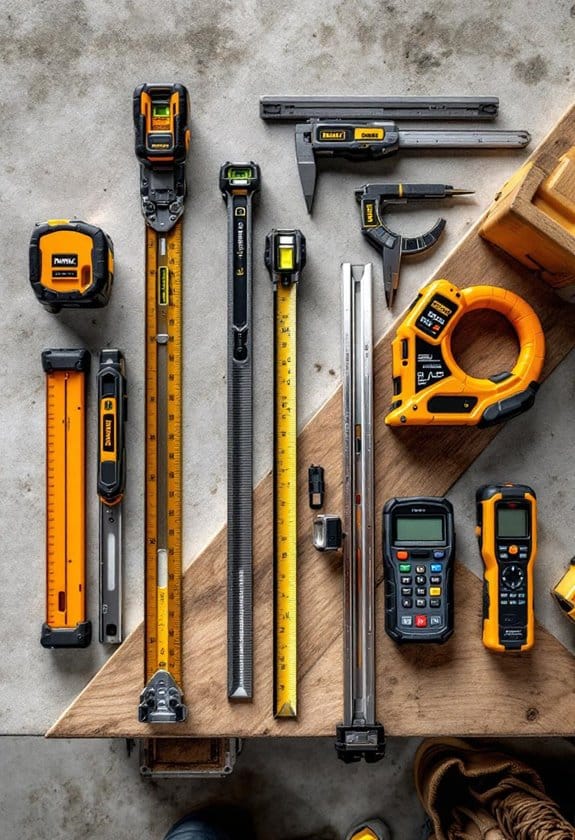
10 Best Framing Squares That Every DIY Pro Swears By

You’re standing in a cramped workshop, trying to line up a fresh set of rafters while the sun slants through the window, casting shadows that make every cut look off by a fraction. A mis‑aligned square means a wobbling frame, wasted lumber, and a growing sense of frustration.
What separates a reliable framing square from a cheap knock‑off is more than just material; it’s the tolerance level, the clarity of the graduations, and whether the tool stays true across temperature swings. Many DIYers pick a square based only on price, ignore the importance of a stable index, or overlook the need for dual‑scale markings.
This guide reviews ten framing squares that have earned the trust of seasoned builders. We evaluated each model on tolerance, durability, scale readability, and ergonomic features, so by the end you’ll know which square matches your material, accuracy, and workflow requirements.
Key Takeaways
If you’re constantly battling rust and scratches on the job site, a square made from durable steel or aluminum with a hardened, anodized finish will keep your tool looking sharp. You’ll appreciate how the tough coating resists wear, so you can focus on measuring instead of maintenance. No more rust worries.
For anyone who needs crystal‑clear readings, choose a model with laser‑etched or recessed graduations and dual‑scale imperial/metric markings. You’ll be able to switch between units on the fly, which saves time on mixed‑project jobs. It’s that simple.
What makes this framing square stand out is its wide, reinforced heel and built‑in rafter tables or scribe notches. You’ll get the extra stability you need for accurate roof and stair layouts, and the extra features help you stay precise without extra gadgets. Accuracy is built in.
10 Best Combination Squares Every Toolbox Needs
July 11, 2026
You get ergonomic grips and knurled zones, plus optional magnetic upgrades, so your hands stay comfortable during long sessions. You’ll notice the difference when you’re working all day, and the magnetic add‑on keeps the square firmly in place on metal surfaces. Comfort meets control.
The square includes high‑contrast markings like octagonal indexes and yellow‑filled graduations, making it readable in bright sunlight or dim workshop lighting. You’ll never squint to find the right line, and the clear visual cues keep mistakes to a minimum. Readability, guaranteed.
| POWERTEC 16×24 Steel Framing Square (80008) | 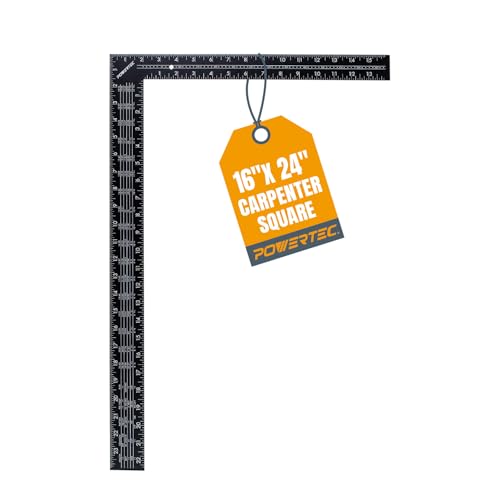 | Best Overall | Material: Carbon steel | Size (Leg Dimensions): 16 × 24 in (tongue × blade) | Graduation Scale: 1/8, 1/16 (front); 1/10, 1/12, 1/16 (back) | VIEW LATEST PRICE | Read Our Analysis |
| Starrett Professional Framing Square FS-24 |  | Professional Grade | Material: Tempered steel (alloy) | Size (Leg Dimensions): 16 × 24 in | Graduation Scale: 1/8 (face & back) | VIEW LATEST PRICE | Read Our Analysis |
| Swanson Tool TA123 Aluminum Carpenter Square 16-Inch X 24-Inch | 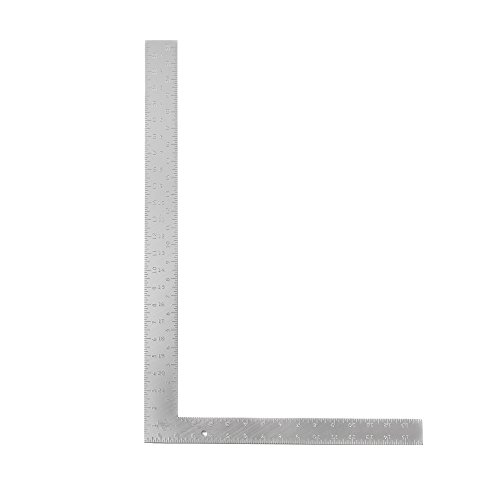 | Lightweight Champion | Material: Aluminum alloy | Size (Leg Dimensions): 16 × 24 in | Graduation Scale: 1/16, 1/100 (reverse) | VIEW LATEST PRICE | Read Our Analysis |
| Aluminum 12‑Inch Carpenter Square for Woodworking Measuring |  | Compact Power | Material: Aluminum | Size (Leg Dimensions): 12 × 12 in | Graduation Scale: Laser‑etched, 0–24 in, 1/16 & 1/100 | VIEW LATEST PRICE | Read Our Analysis |
| Professional 8×12 Inch Carbon Steel Carpenter Square |  | Precision Pro | Material: Carbon steel | Size (Leg Dimensions): 8 × 12 in | Graduation Scale: 1/16 (imperial) & 1 mm (metric) | VIEW LATEST PRICE | Read Our Analysis |
| Carpenter Square 8×12 Inch Laser Ruler Anodized Aluminum Red | 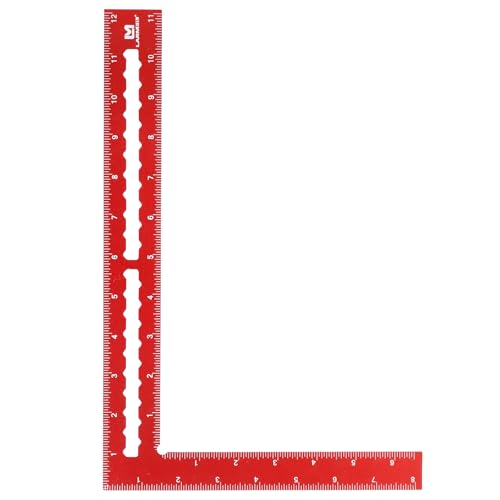 | Colorful Standout | Material: Aluminum alloy | Size (Leg Dimensions): 8 × 12 in | Graduation Scale: Laser‑engraved, 1/16 increments | VIEW LATEST PRICE | Read Our Analysis |
| Carpenter 8×12 Framing Square with Dual-Scale | 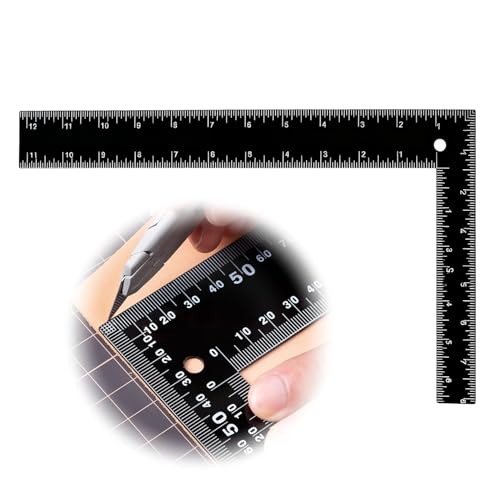 | Dual-Scale Expert | Material: Carbon steel (aerospace‑grade) | Size (Leg Dimensions): 8 × 12 in | Graduation Scale: 1/16 (imperial) & 1 mm (metric) | VIEW LATEST PRICE | Read Our Analysis |
| Spec Ops Tools Elite Fury 7.5” Rafter Square with Level Vial |  | Feature-Rich | Material: Stainless steel blade, hard‑anodized aluminum | Size (Leg Dimensions): 7.5 × 7.5 in (rafter square) | Graduation Scale: 1/16 & 1/4 (laser‑etched) | VIEW LATEST PRICE | Read Our Analysis |
| Johnson Level CS7 Aluminum Arc Angle Square 16″x24″ Black |  | Value Pack | Material: Aluminum (filled) | Size (Leg Dimensions): 16 × 24 in | Graduation Scale: 1/8, 1/10, 1/12, 1/16, 1/100 (laser‑etched) | VIEW LATEST PRICE | Read Our Analysis |
| Klein Tools 935SQVP 7″ Rafter & L-Shaped Framing Square Set | 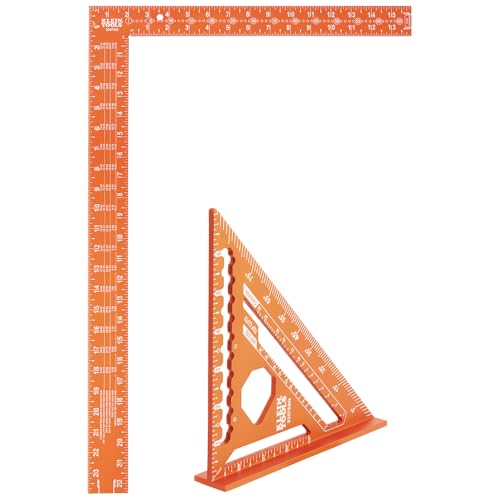 | Set Solution | Material: Aluminum | Size (Leg Dimensions): 7 × 16 in (rafter) & 16 × 24 in (framing) | Graduation Scale: Double laser‑etched, 0–90° and standard imperial graduations | VIEW LATEST PRICE | Read Our Analysis |
More Details on Our Top Picks
POWERTEC 16×24 Steel Framing Square (80008)
The POWERTEC 80008 pairs a full 16 × 24 in carbon‑steel body with four scale options (1/8, 1/16, 1/10, and 1/12), so it covers most framing and roofing layout tasks without switching tools. Despite the sizable footprint, it weighs just 1.2 lb—noticeably lighter than the similarly sized Starrett FS‑24 below—while the midnight‑black finish and octagonal index make it easy to read and orient quickly. Built‑in rafter tables save you from reaching for a separate calculator on roof‑pitch work. There’s no unique standout weakness here; it’s simply a well‑rounded, versatile steel square that suits general carpentry as a first purchase.
- Material:Carbon steel
- Size (Leg Dimensions):16 × 24 in (tongue × blade)
- Graduation Scale:1/8, 1/16 (front); 1/10, 1/12, 1/16 (back)
- Finish/Coating:Midnight black coating
- Weight (Approx.):1.2 lb
- Primary Use / Application:General carpentry, framing, roofing, stair & deck layout
- Additional Feature:Midnight Black finish
- Additional Feature:Octagonal index on face
- Additional Feature:Includes rafter tables
Starrett Professional Framing Square FS-24
The Starrett FS‑24 sticks to a single, precise 1/8‑inch scale on both faces rather than the multiple scale options you’ll find on the POWERTEC above, which keeps the layout simpler but less flexible for stair or rafter work. Its tempered‑steel body and clear rust‑resistant coating are built to resist warping through years of heavy use, and at 1.88 lb it has a noticeably more substantial feel in hand than the lighter POWERTEC, though that also makes it a bit more tiring to carry all day. For carpenters and metalworkers who value brand reliability and don’t need multiple scale conversions, it’s a dependable, no‑frills choice.
- Material:Tempered steel (alloy)
- Size (Leg Dimensions):16 × 24 in
- Graduation Scale:1/8 (face & back)
- Finish/Coating:Clear rust‑resistant coating
- Weight (Approx.):1.88 lb
- Primary Use / Application:Framing, carpentry, woodworking, metalworking
- Additional Feature:Clear coating protection
- Additional Feature:Precision 1/8″ stamps
- Additional Feature:Trusted brand reputation
Swanson Tool TA123 Aluminum Carpenter Square 16-Inch X 24-Inch
The Swanson TA123 trades steel for aluminum, and the tradeoff shows: it’s dramatically lighter than the steel squares in this list while still covering the full 16 × 24 in range with reverse‑reading 1/16 and 1/100 scales you can read from either edge. The permanently impressed graduations and anodized silver finish hold up well outdoors, and Swanson backs it with a one‑year warranty plus a 30‑day return window. The obvious limitation of an aluminum body is reduced rigidity under heavy leaning force compared to carbon‑steel squares like the POWERTEC or Starrett, so it suits general stud layout more than situations where you’re bearing down hard on the blade.
- Material:Aluminum alloy
- Size (Leg Dimensions):16 × 24 in
- Graduation Scale:1/16, 1/100 (reverse)
- Finish/Coating:Anodized silver finish
- Weight (Approx.):0.01 oz (negligible)
- Primary Use / Application:Stud layout, commercial construction, outdoor jobsite work
- Additional Feature:Reverse‑reading scale
- Additional Feature:Thermally fused paint
- Additional Feature:Ultra‑light weight
Aluminum 12‑Inch Carpenter Square for Woodworking Measuring
Unlike the fixed‑angle squares elsewhere in this list, the 12‑inch Matework square doubles as a rafter, try, miter, and protractor square, letting you mark angles up to 90 degrees with one compact tool. Its laser‑etched scale won’t wear off with repeated use, and the orange aluminum body resists corrosion indoors and out. The compact 12 × 12 in footprint is both its appeal and its limit: it’s easier to carry than the 16 × 24 in squares above, but it can’t span as wide a board or wall section in a single pass. For anyone whose work leans toward angle layout and stair stringers rather than long straightedge cuts, the multi‑function design is a genuine advantage.
- Material:Aluminum
- Size (Leg Dimensions):12 × 12 in
- Graduation Scale:Laser‑etched, 0–24 in, 1/16 & 1/100
- Finish/Coating:Anodized orange finish
- Weight (Approx.):1.43 lb
- Primary Use / Application:Woodworking, carpentry, angle drawing, rafter layout
- Additional Feature:Laser‑etched markings
- Additional Feature:Orange high‑visibility color
- Additional Feature:Multi‑function angle tool
Professional 8×12 Inch Carbon Steel Carpenter Square
This 8 × 12 in carbon‑steel square is built for tight spaces, with an 8‑inch leg for cramped corners and a 12‑inch leg that still reaches far enough for general layout. The forged 2 mm steel stays flat across a wide ‑4°F to 212°F range, and the dual imperial/metric scale is handy if you move between wood framing and metal work. A magnetic upgrade option lets you snap it to steel surfaces, a feature most of the aluminum squares here don’t offer. At 7.4 oz it’s also one of the lightest steel squares in this list. Its main tradeoff versus the 16 × 24 in squares above is reach—it’s built for compact precision work, not long wall or roof layouts.
- Material:Carbon steel
- Size (Leg Dimensions):8 × 12 in
- Graduation Scale:1/16 (imperial) & 1 mm (metric)
- Finish/Coating:Black electrophoretic coating, sandblasted matte
- Weight (Approx.):7.4 oz
- Primary Use / Application:Carpentry, framing, roofing, cabinetry, metal fabrication, drywall
- Additional Feature:Dual‑scale (imperial/metric)
- Additional Feature:Magnetic upgrade option
- Additional Feature:Reinforced 90° joint
Carpenter Square 8×12 Inch Laser Ruler Anodized Aluminum Red
The LARMEIL 8 × 12 in square leans into visibility, with an anodized red finish that stands out on a cluttered job site and a laser‑engraved scale that keeps sharp contrast after repeated use. The serrated groove along the L‑shape lets you lock a stair gauge in place for repeatable stair layouts, a nice touch for stair work specifically. Unlike the two other 8 × 12 in steel squares in this list, it doesn’t offer a metric scale, so it’s better suited to imperial‑only shops. Weight isn’t specified for this one, but its aluminum construction keeps it light. For stair gauge work and general scribing, it’s a solid, visually distinct option.
- Material:Aluminum alloy
- Size (Leg Dimensions):8 × 12 in
- Graduation Scale:Laser‑engraved, 1/16 increments
- Finish/Coating:Anodized red finish
- Weight (Approx.):Not specified (light aluminum)
- Primary Use / Application:Straight‑edge, scribing, stair gauge layout, DIY carpentry
- Additional Feature:Serrated positioning groove
- Additional Feature:High‑contrast laser engraving
- Additional Feature:Vibrant anodized red
Carpenter 8×12 Framing Square with Dual-Scale
This 8 × 12 in square shares its carbon‑steel build and ‑4°F to 212°F temperature range with the Professional 8×12 model above, but adds ASTM E897 certification and HRC 45 hardened steel, giving it a more rigorously specified pedigree for anyone who needs documented compliance. The triple heat‑treated, electrophoretic coating and sandblasted matte finish resist rust and glare, and the recessed white markings stay legible through repeated chalk‑line use. Like its sibling above, an optional magnetic attachment lets you use it hands‑free on metal. If certification and hardness rating matter for your work, this is the stronger of the two similarly sized 8×12 steel squares here.
- Material:Carbon steel (aerospace‑grade)
- Size (Leg Dimensions):8 × 12 in
- Graduation Scale:1/16 (imperial) & 1 mm (metric)
- Finish/Coating:Black sandblasted matte, electrophoretic coating
- Weight (Approx.):Not specified (light steel)
- Primary Use / Application:Framing, roof pitch, stair stringer, tile, metal fabrication
- Additional Feature:Aerospace‑grade carbon steel
- Additional Feature:Triple heat‑treatment
- Additional Feature:Optional magnetic attachment
Spec Ops Tools Elite Fury 7.5” Rafter Square with Level Vial
The Spec Ops Elite Fury stands apart with an integrated level vial and a QR code linking to a digital rafter calculator, features none of the other squares in this list include. Its 7.5‑inch stainless‑steel blade and hard‑anodized aluminum body hold laser‑etched marks every 1/16 and 1/4 inch, and the extra‑wide, 3/16‑inch‑thick heel is built for deck‑board spacing. Being sized at 7.5 × 7.5 in, though, it’s the smallest square in this roundup—well suited to rafter marking and quick angle checks, but not a substitute for the longer 16 × 24 in squares when you need to span a full board width. A lifetime warranty backs it, and a share of sales supports veterans and first responders.
- Material:Stainless steel blade, hard‑anodized aluminum
- Size (Leg Dimensions):7.5 × 7.5 in (rafter square)
- Graduation Scale:1/16 & 1/4 (laser‑etched)
- Finish/Coating:Hard‑anodized aluminum blade, black finish
- Weight (Approx.):16 oz
- Primary Use / Application:Rafter layout, level/plumb checks, deck spacing, quick layout
- Additional Feature:Integrated level vial
- Additional Feature:QR‑code digital calculator
- Additional Feature:Wide‑Scribe guides
Johnson Level CS7 Aluminum Arc Angle Square 16″x24″ Black
The Johnson Level CS7 packs the widest range of graduation options in this list—1/8, 1/10, 1/12, 1/16, and 1/100 inch—onto a 16 × 24 in aluminum frame that, at 7.2 oz, is lighter than any other full‑size square here, including the aluminum Swanson above. Scribe notches make it easy to lay out curves for arches or doorways, and the yellow‑filled, anti‑glare graduations stay readable in bright sun. Being aluminum rather than steel, it won’t feel as rigid under heavy pressure as the POWERTEC or Starrett, but for framing and stair layout where weight matters more than maximum stiffness, it’s a strong, well‑equipped value pick backed by a one‑year warranty.
- Material:Aluminum (filled)
- Size (Leg Dimensions):16 × 24 in
- Graduation Scale:1/8, 1/10, 1/12, 1/16, 1/100 (laser‑etched)
- Finish/Coating:Black anodized body, anti‑glare matte
- Weight (Approx.):7.2 oz
- Primary Use / Application:Framing, rafter work, arch scribing, piping layout
- Additional Feature:Arc‑angle scribe notches
- Additional Feature:Yellow‑filled graduations
- Additional Feature:EZ‑Read anti‑glare finish
Klein Tools 935SQVP 7″ Rafter & L-Shaped Framing Square Set
Rather than one square, the Klein 935SQVP set gives you two: a 7‑inch rafter square and a full 16 × 24 in L‑shaped framing square, both in anodized aluminum with laser‑etched markings. That combination covers roof rafter marking and general wall framing without buying two separate tools. It skips the extras some single squares in this list include, like a level vial or rafter tables, focusing instead on straightforward angle and length layout. For carpenters who split time between roof and wall framing and want both square types in one purchase, the set format is the main draw.
- Material:Aluminum
- Size (Leg Dimensions):7 × 16 in (rafter) & 16 × 24 in (framing)
- Graduation Scale:Double laser‑etched, 0–90° and standard imperial graduations
- Finish/Coating:Orange anodized aluminum
- Weight (Approx.):Not specified (aluminum set)
- Primary Use / Application:Rafter and framing layout, angle identification, scribing
- Additional Feature:Double laser‑etched markings
- Additional Feature:1/4″ scribe notches
- Additional Feature:Orange high‑visibility body
Factors to Consider When Choosing a Framing Square
If you need a square that can survive daily job‑site abuse, start by checking the material. A steel body gives you durability and a light weight, while an aluminum one keeps it easy to carry. The right material means the tool stays accurate longer.
For anyone who switches between metric and imperial plans, look at the measurement markings. Clear graduations and a built‑in rafter table let you flip between inches, fractions, or centimeters without guessing. You’ll never lose precision when you need to layout a new frame.
What makes this framing square stand out is the finish and extra features. Reinforced edges protect the blade from nicks, and a non‑slip surface keeps your hands steady. You’ll feel confident handling it all day on the site.
Material Material Reliability Material Accuracy Measurement Accuracy Scale Versatility
If you need a framing square that won’t bend or rust on a busy job site, choose one built from carbon steel, tempered steel, or an aluminum alloy. These metals stay light and resist wear, so you can keep working without the tool getting in the way. You’ll appreciate the heat‑treated or tempered body and the anodized finish because they keep the square square and stop warping.
For anyone who worries about precision, look at the tolerance rating. A ±0.5 % or 0.05 inch tolerance gives you confidence that every cut stays accurate. The permanently marked, recessed or laser‑etched graduations stay legible longer than painted numbers, so you won’t have to re‑mark the square.
What makes this framing square stand out is the variety of scales it offers. You get 1/8“, 1/16″, 1/10″, 1/12”, and metric conversions all on one tool, letting you switch between framing, rafter, and stair layouts without swapping equipment. This flexibility saves you time and keeps your workflow smooth.
Durability and Weight
If you need a square that won’t bend while you’re leaning on it, steel is the go‑to material. It stays true at a right angle even after heavy use, so you can trust your cuts. The extra weight is the price you pay for that rigidity.
For anyone who carries tools all day, an anodized aluminum square cuts the load you lug. It’s light enough to reduce fatigue on long jobs, yet still feels solid in your hand. Look for a 1/16‑inch thickness and a strong joint to keep flex at bay.
What makes this framing square stand out is the surface treatment. Anodizing or electrophoretic coating protects the graduations from rust and scratches. Recessed or laser‑etched markings stay readable, so you won’t lose accuracy over years of demanding work.
Construction Material and Finish
If you need a square that won’t warp under heavy pressure, choose a steel framing square. Carbon or tempered steel gives you the rigidity to keep your cuts true, and the hard surface resists wear. It does add weight, so you’ll feel a solid heft in your hand.
For anyone who works outdoors and hates rust, an aluminum square is a smart pick. It’s lightweight, so you can carry it all day, and it won’t corrode even in the rain. Look for a high‑grade alloy with a reinforced junction to keep it from bending when you push hard.
What makes this framing square stand out is the finish you pick. A hard‑anodized or clear‑coated surface adds hardness and protects the etched graduations, while laser‑etched or permanently impressed markings stay legible longer than painted numbers. You get a durable, readable tool without the hassle of frequent re‑marking.
Scale Types and Graduation
If you’re laying out stair stringers or rafter cuts, you need a square that lets you read tiny increments without guessing. A finer graduation like 1/16″ or 1 mm gives you the tight tolerances you crave, and the laser‑etched marks stay clear even after years of chalk. This makes your layout faster and more reliable.
For anyone who does rough framing, a coarser scale such as 1/8″ or 1/10″ speeds things up by letting you estimate dimensions at a glance. The larger increments mean you spend less time hunting for the exact line, so you can move on to the next job quicker. You’ll finish projects faster.
What makes this steel square stand out is its dual‑scale face, offering imperial marks on one side and metric or specialty scales on the other. You can switch between systems without swapping tools, which is handy when you’re juggling different plans. The built‑in octagon index and rafter tables simplify pitch calculations, saving you from pulling out a separate chart.
You get permanent, recessed graduations that resist chalk and abrasion, so your measurements stay accurate season after season. No more smudged lines that force you to re‑measure. Your confidence in every cut grows.
The product solves the problem of inconsistent layouts by combining a tough, laser‑etched surface with handy scribe notches for repetitive marks. You can line up multiple cuts quickly, keeping your work tidy and precise. Your workshop runs smoother.
Perfect for DIY enthusiasts and professional carpenters, this square lets you handle both fine detail and quick rough‑in work without juggling multiple tools. You’ll appreciate the versatility and durability on every job. Your toolbox feels lighter.
Rafter and Layout Tables
If you’re constantly calculating roof pitch on the job site, a framing square with etched rafter and layout tables saves you a lot of guesswork. It lets you transfer pitch measurements instantly, so you spend less time on math and more on cutting. The tables list rise‑run values for the most common pitches, letting you slice rafters without pulling out a calculator each time. For anyone who works with different measurement conventions, a square that offers several scales—1/8″, 1/10″, 1/12″, and 1/16″—makes reading rafter lengths, seat cuts, and plumb cuts a breeze. You get board‑foot and brace tables right on the steel, giving you quick material estimates while you work. The layout also covers octagon/hip and valley rafters, or shows a clear method to derive those values, so you’re never stuck on a tricky cut. Choose a model with permanently engraved or laser‑etched, contrast‑filled tables; they stay legible even after heavy job‑site use. Perfect for the busy carpenter, this square lets you work faster and more accurately without extra tools.
Ergonomic Design and Grip
If you spend hours marking roof pitch, you’ll quickly notice how the square feels in your hand. A comfortable, non‑slip grip with knurled zones on the legs keeps your hand steady and cuts fatigue during repetitive marking. Lighter aluminum frames lower wrist strain for long jobs, while heavier steel offers steadiness but can tire you faster.
For anyone who works in tight or elevated spaces, the rounded, burr‑free edges and reinforced 90° junction protect your fingers and keep the square stable against the workpiece. Choose a scale layout with high contrast so you can read measurements without squinting or awkward hand positions. Look for ergonomic details like finger recesses, balanced weight distribution, or compact, shorter‑leg options that enable one‑handed use.
What makes this carpenter’s square stand out is the mix of comfort and control. The design lets you work longer without sore hands, and the sturdy construction means the tool stays accurate. You get a reliable, easy‑to‑read square without sacrificing durability.
Frequently Asked Questions
Can I Use a Framing Square for Non‑Carpentry Projects?
Yes. A framing square’s right angle and ruled edges are useful well beyond carpentry—think picture framing, tile layout, or checking a bookshelf for square. Every square in this list, whether steel or aluminum, works the same way for these tasks: use one leg as a reference edge and the ruled markings to transfer measurements. Just be mindful of the material you’re squaring against, since abrasive surfaces can dull the edge over time.
How Often Should I Calibrate My Framing Square?
There’s no fixed schedule—check your square whenever you suspect it’s taken a hard drop or a corner has been bent, and it’s good practice to spot‑check it periodically against a known accurate reference, such as a factory‑machined edge or another trusted square. Sight along the blade for any visible warp, and if the tongue and blade no longer meet at a true right angle, it’s time to replace the square rather than try to bend a one‑piece steel or aluminum body back into shape.
Do Framing Squares Work on Curved Surfaces?
Yes, with some adaptation. Placing a straight‑edged square against a curved surface only gives you a single point of contact, so you’ll use that contact point as a reference and pair it with a flexible ruler or curve to trace the rest of the radius. None of the squares in this list are designed specifically for curved work, but the scribe notches on models like the Aluminum 12‑Inch Carpenter Square or the arc‑angle notches on the Johnson Level CS7 make marking arcs and curves easier than a plain straight edge would.
What’s the Best Way to Store Multiple Framing Squares Together?
A magnetic strip or wall‑mounted rack is the most space‑efficient way to store multiple squares—it keeps the metal edges flat, prevents them from scratching each other in a drawer, and lets you grab the right size at a glance. Mount the strip at a comfortable working height and align the squares’ blades against it. A traditional toolbox works too, but padding between squares helps protect their edges and graduations.
Are Digital Framing Squares More Accurate Than Analog Ones?
None of the squares in this list are digital—they’re all mechanical steel or aluminum squares that rely on laser‑etched or stamped graduations rather than electronic sensors. In general, a well‑made digital angle finder can offer finer resolution than reading a ruled scale by eye, but it also introduces battery dependency and calibration drift that a solid one‑piece steel or aluminum square doesn’t have. For most DIY framing and layout work, a quality mechanical square like the ones reviewed here is accurate enough and has fewer failure points.