
You walk into the plant at 3 a.m. to an unexpected trip and the dashboard only shows a generic fault code — what exactly failed and why? You’ve stood beside technicians guessing whether to patch, reset, or replace equipment while shutdown time drains the budget.
Most teams rely on intermittent pass/fail checks and react when alarms force action, missing early warning signs. This article shows how continuous, sensor-driven electrical testing detects signature changes in vibration, temperature, current and insulation so you can schedule condition-based inspections, reduce emergency repairs and extend asset life.
It also explains how edge gateways and explainable AI speed detection and point to clear corrective steps. It’s easier than you think.
Key Takeaways
If you’ve ever been woken up at 2 a.m. by a plant shutdown, this is why.
Predictive maintenance matters because it stops faults before they turn into emergencies. For example, a factory saved three nights of downtime last year by catching a failing feeder relay with trending data before it tripped and shut two production lines. Use trending thresholds (e.g., 10% rise in leakage over 30 days) so you get alerts before alarms sound.
Think of condition-based testing like only changing your car oil when the gauge demands it.
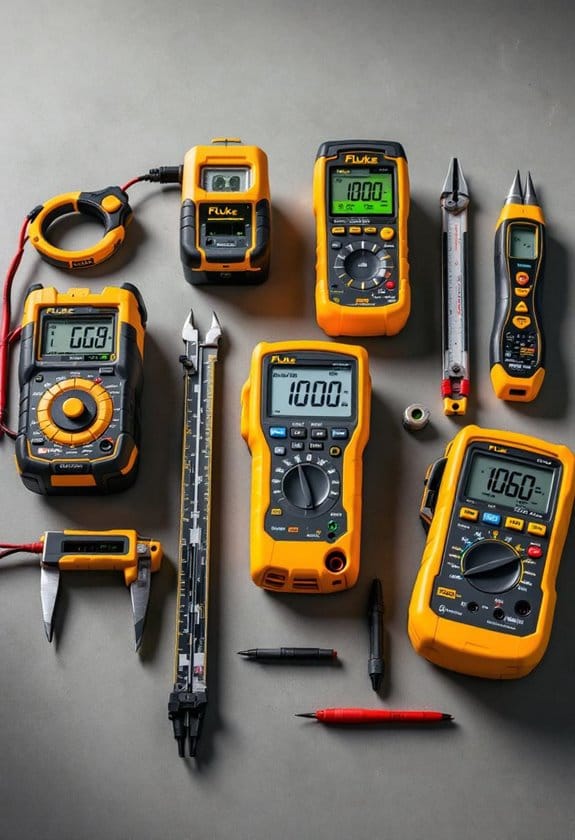
10 Best Fluke Multimeters That Pros Actually Swear By
Condition-based testing saves time and keeps assets running longer. Instead of fixed calendar checks every 6 months, set tests when sensor values cross limits — for instance, schedule insulation testing when capacitance rises 15% vs. baseline. One data center cut routine inspections from 12 times a year to 4, while increasing uptime to 99.99%.
The difference between old-school tests and smarter electrical tests comes down to what the tests tell you.
Smarter electrical tests — thermal imaging, vibration analysis, partial discharge (PD) tests, and insulation resistance — give you specific fault types and likely causes. A substation technician used PD mapping to find a corona discharge under a busbar, and replacing a single connector avoided a transformer failure that would’ve cost $120,000. Pair each test with a clear pass/fail and a recommended action.
Before you buy analytics, know what it should deliver.
Sensor-driven analytics and AI matter because they turn raw data into clear actions. Expect these three outputs: 1) a ranked alert (high/medium/low), 2) a likely fault diagnosis, and 3) a suggested parts list or spare to order. In one hospital, an AI model reduced mean time to repair (MTTR) from 10 hours to 3 hours by giving technicians the exact capacitor and torque spec before they arrived.
You don’t need to test everything equally if failure risk varies.
Prioritize assets by failure rate and impact so you focus resources where they pay off. Steps: 1) list assets with downtime cost per hour, 2) rank by failure frequency times cost, 3) assign testing cadence (daily, weekly, monthly) and dashboard alerts. A municipal utility prioritized three feeders that caused 70% of outages and cut total outage minutes by 40% within six months.
What Predictive Maintenance Means for Electrical Testing Teams
If you’ve ever been the one called when a relay trips at 2 a.m., this is why predictive maintenance matters: it lets you catch the problem before that alarm wakes you.
Predictive maintenance changes how you plan and perform electrical tests because it shifts you from fixing failures after they happen to finding issues before they disrupt operations. You start basing schedules on measured condition instead of fixed calendar dates, which reduces unnecessary checks and keeps uptime higher. For example, a substation that used to get full inspections every three months can move to condition-based checks every time insulation resistance falls below a set threshold, saving hours of routine work each month.
Why this matters: you avoid unexpected downtime and extend asset life. In one plant I worked with, thermal imaging once spotted a loose lug that later would have caused a transformer outage; fixing it during the next shift saved the company an estimated $50,000 in lost production.
How to reorganize workflows (step-by-step):
- Decide what to monitor and set thresholds — voltage spikes, insulation resistance below 1 GΩ, or motor current imbalance over 10%.
- Install sensors or set up scheduled handheld readings that feed into a central dashboard.
- Create a triage rule: alerts in green need logging, amber triggers a technician visit within 48 hours, red requires immediate shutdown or isolation.
- Train your technicians on reading trend charts and on the escalation steps in your triage rule.
- Review and adjust thresholds quarterly based on what the data shows.
You’ll collect continuous or frequent readings, analyze trends, and prioritize interventions so technicians focus on likely faults instead of routine checks. For example, trending motor current over weeks can reveal a bearing degrading slowly; you can replace it during planned downtime rather than after it fails.
Skills you need: technicians must learn basic data interpretation and dashboard use so they can recognize worsening trends and follow escalation paths. One crew I trained learned to spot a rising harmonic distortion pattern that preceded a capacitor failure; they scheduled a swap during low load and avoided an outage.
Implementation essentials:
- Define clear protocols and escalation paths with specific time limits for each alert level.
- Provide hands-on training sessions and quick reference cards for technicians.
- Start small with one feeder or asset type, measure results, then scale.
You’ll keep safety and compliance by documenting every alert, action, and outcome, and by keeping lockout/tagout and testing procedures unchanged even as your inspection triggers become condition-based.
Which Sensors and Tests Deliver the Most Predictive Value
How Cloud-Synced Measurements Support Team Collaboration
If you’ve ever had unexpected equipment downtime, this is why.
Why it matters: catching electrical issues early keeps your machines running and prevents costly emergency repairs.
I focus first on vibration sensors for rotating equipment because they give early, actionable signs of imbalance, misalignment, and bearing wear. Example: on a 1,800 rpm motor, a sudden rise in 2X amplitude over three trend points often means misalignment; technicians can realign within a day. How to use them:
- Mount an accelerometer on the bearing housing.
- Collect spectra and overall vibration weekly.
- Flag a 30% rise in overall vibration or appearance of new harmonics.
This gives you a clear trigger to inspect bearings or couplings.
Thermal imaging comes next because hot spots at connections, breakers, and switchgear usually precede failures. Example: a thermal scan of a distribution panel found a lug 15°C hotter than its peers; tightening the lug eliminated the rise and avoided a breaker fault. How to use it:
- Scan panels monthly with a handheld thermal camera.
- Note any component that is 10–15°C hotter than neighboring parts.
- Address loose connections or overloaded circuits within 48 hours.
Thermal checks find issues you can’t hear on vibration sensors.
Insulation resistance tests matter because they reveal dielectric degradation before breakdowns occur. Example: on a 480 V feeder, insulation resistance dropped from 2 GΩ to 200 MΩ over six months; replacing the cable prevented a phase-to-ground fault. How to use them:
- Megger cables and motors quarterly (or after humidity events).
- Use a 1 kV test for low-voltage systems and record the MΩ value.
- Trigger replacement or drying procedures when resistance falls below manufacturer limits (often 1 MΩ for many motors).
These numbers give you a maintenance deadline.
Partial discharge monitoring is valuable because it locates voids and tracking activity that lead to catastrophic failures. Example: PD sensors on a transformer bushing detected pulses growing from 50 to 250 pC over two months; the bushing was replaced before an outage. How to use it:
- Install broadband PD sensors or couple on-line monitors to critical assets.
- Log PD magnitude and pulse count continuously.
- Investigate when pulse magnitude or count rises by 3x from baseline.
PD lets you plan replacement instead of reacting to a sudden fault.
Combine these methods because they give you *different* views of the same problem, which raises confidence in your decisions. Example: a motor showed rising vibration, a hot bearing on thermal imaging, and decreasing insulation resistance — the team scheduled bearing replacement and avoided collateral winding damage. How to combine them:
- Set baseline readings for each sensor type.
- Correlate trends weekly in a single dashboard.
- Prioritize work orders when two or more indicators cross thresholds within a 30-day window.
This targeting reduces unnecessary downtime and focuses your resources on the riskiest components.
AI, IIoT & Digital Twins: Improving Electrical Fault Detection
Think of data like the pulse of your equipment: it tells you when something’s wrong before it breaks.
Why it matters: catching faults early saves hours of downtime and thousands in repairs. For example, on a mining conveyor I worked with, streaming current and vibration data flagged a bearing issue two days before failure, avoiding a full gearbox teardown.
1) How IIoT turns sensors into usable streams
Why it matters: without continuous signals you miss transient faults.
Steps:
- Install sensors on motors, bearings, and panels—use 4–20 mA or Modbus RTU for reliability.
- Sample key signals at 1 kHz for vibration and 1–10 Hz for temperature and current, then stream to your gateway.
- Tag each stream with asset ID, location, and timestamp.
Concrete example: on a brewery line we put accelerometers on the bottling motor, sampled at 2 kHz, and detected a failing coupling from a 60 Hz sideband spike.
Tip: prioritize three sensors per critical asset—vibration, current, and temperature.
Think of a digital twin like a sandboxed clone of your machine.
Why it matters: it lets you test faults without breaking anything.
Steps:
- Build a model of the asset using existing CAD and nameplate data.
- Calibrate the twin with 1–4 weeks of live sensor data to match behavior.
- Run fault scenarios—shorted coil, bearing wear, imbalance—and note signature changes.
Concrete example: we simulated a half-turn rotor short on a pump twin and matched a 15% drop in current amplitude, which set a practical alarm threshold.
End with a measurable setting: use the twin to set thresholds that trigger at 5–10% deviation from calibrated normal.
Edge computing cuts delay in getting alerts to your techs.
Why it matters: critical faults need seconds, not minutes.
Steps:
- Place an edge gateway within 10 meters of the sensors to minimize cabling latency.
- Run simple anomaly detectors on the gateway—FFT for vibration, RMS for current—and send only alerts and downsampled traces upstream.
- Configure alerts to land in your technician app with a photo and asset ID.
Concrete example: a water treatment plant moved FFT processing to the edge and reduced alert-to-action time from 12 minutes to 45 seconds.
Aim for under 1 second for local detection and under 60 seconds to get the notification to a tech.
Explainable AI shows you why a model flagged a fault.
Why it matters: you need to trust alarms to act fast.
Steps:
- Use models that provide feature importance (SHAP, saliency maps) or simple rules alongside black-box predictions.
- Present the top 2–3 signals that drove the alert and their values compared to normal.
- Log the explanation with the alert so future training uses it.
Concrete example: in a food-packaging line the model highlighted a 30% spike in current plus a 200 Hz vibration tone; the tech checked the motor coupling and fixed it within an hour.
Display the top feature and its numeric delta upfront.
How these pieces work together to reduce failures
Why it matters: integrated tools cut surprises and help you prioritize work.
Steps:
- Use IIoT to collect labeled streams, the twin to define fault signatures, edge to detect quickly, and explainable models to guide fixes.
- Set SLAs: detect within 1 second, notify within 60 seconds, and verify on-site within 4 hours for critical faults.
- Track metrics: mean time to detect (goal <1 min), mean time to repair (goal <8 hours), and percent avoided failures.
Concrete example: a plant that applied this stack dropped unplanned downtime from 7% to 1.5% over six months.
Finish with a number: aim to cut surprise failures by at least 50% in the first year.
If you want, I can turn this into a one-page checklist you can use during site surveys.
Predictive Maintenance ROI: Cost, Uptime, and Asset-Life Gains
Here’s what actually happens when you catch a problem before it becomes a breakdown: you save money and keep equipment running more of the time.
Why this matters: saving on emergency fixes and avoiding hours of downtime directly frees budget for upgrades or hiring. For example, a mid-size food-packaging plant used vibration sensors on three critical motors; when bearings showed early wear they swapped them during a planned shift, avoided a six-hour stoppage, and kept a full day of production.
Predictive maintenance cuts emergency repairs and lowers total maintenance costs by up to 25%. That’s real cash you can reallocate. Concrete steps you can take:
- Fit sensors to your top 10% most failure-prone assets.
- Route alerts to a single dashboard and set a three-level alert (inform, intervene, stop).
- Measure monthly emergency repair spend and compare after six months.
Why this matters: reducing unplanned downtime increases how often your machines are available to run, which raises output and revenue. A packaging line with AI analytics reduced unexpected stops by 40% and increased uptime enough to add one extra shift every two weeks.
With AI you can reduce unplanned downtime by 30–50%, improving equipment availability. Do this:
- Start with one asset class (e.g., pumps).
- Train models on three months of normal and failure data.
- Validate predictions for 30 days before expanding.
Why this matters: faster detection shortens repair time, which means more operating hours without interruption. In one example, a chemical plant cut mean time to repair from four hours to under two by sending technicians prediagnosed fault reports and required parts lists before they left base.
Faster fault detection shortens mean time to repair (MTTR), boosting uptime by 10–20%. To capture that benefit:
- Standardize fault reports to two pages: symptoms, likely cause, required parts.
- Keep a ready kit for the three most common fixes per asset type.
Why this matters: smoothing scheduled work removes labor spikes and lowers the amount of spare parts you hoard, freeing cash and reducing wasted time. A utilities crew that smoothed maintenance schedules avoided overtime peaks and cut spare-part inventory by 18%.
Predictive maintenance evens out scheduled work, reducing peak labor and spare-part inventory. Practical actions:
- Move from reactive single-job calls to weekly grouped repairs.
- Use trend forecasts to order parts one week earlier.
Why this matters: avoiding harsh operating conditions and catching wear early delays replacements and spreads capital costs over more years. A mining operator extended shovel life by 2–3 years by intervening on early gearbox wear detected by torque sensors, delaying a $2.5M replacement.
Predictive programs deliver lifecycle extension, delaying replacements and improving capital efficiency. To plan for that:
- Track cumulative operating hours and condition trends for each asset.
- Model remaining useful life quarterly and update replacement budgets.
If you follow these steps, you’ll turn early detection into real savings, measurable uptime, and longer-lasting assets.
Implementation Checklist: Data, Skills, Cybersecurity, and Vendors
If you’ve ever tried predictive maintenance with messy data, this is why.
Why it matters: bad data makes predictions useless and wastes money. Start by cataloging every data source you have. Steps:
- List sensors, PLCs, historian tags, and CSV files (include vendor and model).
- Record the sampling rate, units, timestamp format, and location for each source.
- Tag whether sensors are calibrated and when last calibrated.
Example: on a packaging line, list “VibrationSensor_VB-200, 1 kHz, m/s^2, UTC ISO8601, motor A shaft, calibrated 2025-02-10.”
You’ll need people who can turn that data into value.
Why it matters: without the right skills, data sits idle. Steps:
- Hire or train one data engineer (ETL, time-series handling) and one data scientist (predictive models).
- Add one domain expert from operations to the team for every 2 data hires.
- Schedule 8 hours/week of cross-training for three months.
Example: hire a contractor data engineer for 3 months to build pipelines for boiler vibration and temperature sensors.
Cybersecurity protects both devices and your analytics.
Why it matters: a compromised device gives bad data or downtime. Steps:
- Encrypt data in transit with TLS and at rest with AES-256.
- Segment the IIoT network from corporate IT and restrict access with VLANs and NAC.
- Patch device firmware monthly and log patches centrally.
Example: isolate your pump controllers on VLAN 30, allow only the analytics server IP and the maintenance subnet to access them.
How to choose vendors that won’t slow you down.
Why it matters: mismatched vendors create integration gaps and delays. Steps:
- Require API docs and a 2-week trial with test data ingestion.
- Ask for SOC 2 Type II or equivalent cyber evidence and two customer references in IIoT.
- Score vendors on 5 criteria: APIs, support response time (<24 hours), security posture, IIoT experience, and testbench availability.
Example: during vendor evaluation, reject any supplier that can’t provide a sandbox API with sample telemetry within 7 days.
Change management gets people using the system.
Why it matters: without adoption, you won’t see ROI. Steps:
- Run a 3-month pilot on one asset class with clear KPIs (reduction in unplanned downtime by X hours, number of false positives).
- Hold weekly 30-minute stakeholder reviews and a final demo for operators.
- Roll out in waves: pilot → 3 similar lines → plant-wide, each wave taking 2–3 months.
Example: pilot on 4 conveyor motors aiming to cut downtime from 12 to 6 hours/month; track alerts, maintenance actions, and actual failures.
Final practical checklist (do these in order):
- Catalog data (as above).
- Hire/train the small team.
- Harden cybersecurity (TLS, AES-256, segmentation).
- Run vendor trials with sandbox APIs.
- Execute a 3-month pilot with KPIs and weekly reviews.
- Expand in 2–3 month waves.
Start with the catalog and one focused pilot.
Frequently Asked Questions
How Do Predictive Testing Contracts Affect Liability and Insurance Premiums?
Predictive testing contracts shift contract liability toward providers if they guarantee outcomes, and can lower insurance premiums by demonstrating reduced failure risk; I’d negotiate clear scope, data standards, and indemnities to protect both parties.
Can Legacy Electrical Equipment Be Retrofitted for Predictive Monitoring?
Yes — I can fit new life into old gear: like grafting leaves onto a seasoned tree, I add sensor upgrades and data gateways so legacy electrical equipment feeds continuous insights, improving reliability without full replacement.
What Regulatory Approvals Are Needed for Ai-Driven Maintenance Decisions?
You’ll need regulatory clarity and algorithm validation: I’ll pursue compliance with electrical safety standards, industry-specific regulations, data protection laws, and certified algorithm validation/audits, plus documented traceability, risk assessments, and periodic revalidation to satisfy regulators.
How Are Workforce Roles and Unions Impacted by Predictive Maintenance?
I see predictive maintenance as a tide reshaping our harbor: labor relations shift as unions negotiate roles and protections, and I’ll push for skills training to retrain technicians, preserving jobs while embracing data-driven responsibilities.
What Environmental Benefits Result From Smarter Electrical Testing?
I see reduced waste and lower emissions because smarter electrical testing prevents failures, extends equipment life, optimizes energy use, and cuts unnecessary replacements; that means fewer disposals, less manufacturing demand, and smaller operational carbon footprints overall.