As an Amazon Associate, we earn from qualifying purchases. Some links may be affiliate links at no extra cost to you. Although our opinions are based on curated research, we haven't used these products. Articles generated with AI.

10 Best FLIR Thermal Cameras That Capture Heat Like a Pro

You’re on a rooftop at dusk, trying to locate a faulty pipe behind the wall, but the darkness and glare make every spot look the same. You grab your phone, switch to a thermal app, and end up with a blurry, noisy image that leaves you guessing.
A good thermal camera delivers crisp detail and reliable temperature data, while cheap models often suffer from low resolution, high noise, and limited range. Buyers frequently overlook pixel count, NETD sensitivity, and the importance of a robust temperature span, ending up with gear that can’t handle real‑world conditions.
This guide reviews ten FLIR thermal cameras, selected based on resolution, NETD, temperature range, and connectivity options. By the end, you’ll know which model fits your workflow, budget, and performance needs.
Key Takeaways
If you need razor‑sharp detail for professional inspections, prioritize resolution and sensor size. The FLIR T540‑EST’s 464 × 348 array and Breach PTQ136’s 320 × 256 sensor give you finer thermal images that make subtle hot spots pop. You’ll see every nuance without squinting.
For anyone who wants clearer context in their thermal shots, look for MSX or super‑resolution. Cameras like the FLIR TG267, Tadeto Infrared, and F2W blend visual detail with heat data, so you can interpret what you see faster. The overlay is a real time‑saver.
What makes this thermal camera stand out is its ability to detect tiny temperature shifts. Low NETD under 50 mK means you catch subtle differences that other models miss. The BSIDE 240×240 and F2W even dip below 60 mK and 40 mK, giving you confidence in critical measurements.
10 Best Combination Squares Every Toolbox Needs
July 15, 2026
You get rugged durability without sacrificing battery life. IP‑rated bodies—IP67 on the Breach PTQ136 and IP54 on the TG267—keep the unit safe in harsh environments, and the batteries last long enough for a full day’s work. No need to pause for charging.
The FLIR E8‑XT, E6 Pro, and K33 solve connectivity headaches by offering built‑in Wi‑Fi and cloud integration. You can instantly upload images, share them with teammates, and start remote analysis. Data moves as quickly as you do.
Perfect for field technicians, this FLIR TG267 brings strong protection and visual clarity together. Its tough housing handles dust and moisture, while the MSX overlay helps you spot issues at a glance. You stay focused on the job, not the gear.
| FLIR TG267 Thermal Imaging Camera with Bullseye Laser | 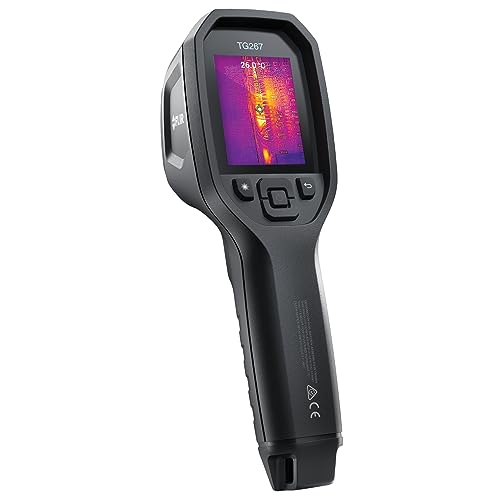 | Professional Grade | Temperature Range: -25 °C – 380 °C | Resolution (Thermal Pixels): 19,200 pixels (120 × 160) | Frame Rate: ≤ 9 Hz | VIEW LATEST PRICE | Read Our Analysis |
| Tadeto Infrared Thermal Camera with Laser Pointer and LCD Screen | 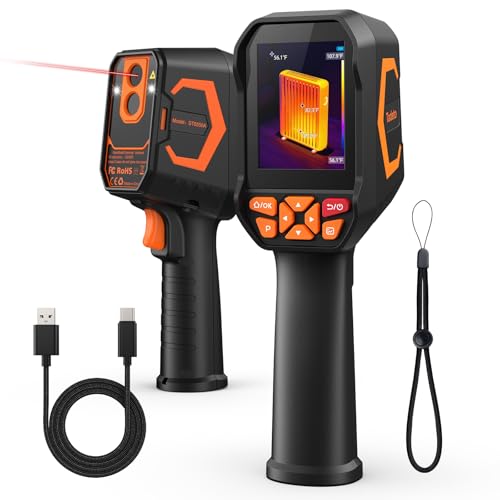 | Best Value | Temperature Range: Not specified (typical HVAC range) | Resolution (Thermal Pixels): 120 × 90 (native) – upscaled to 320 × 240 | Frame Rate: 25 Hz | VIEW LATEST PRICE | Read Our Analysis |
| BSIDE Thermal Imaging Camera 240×240 Handheld IR with TFT Display | 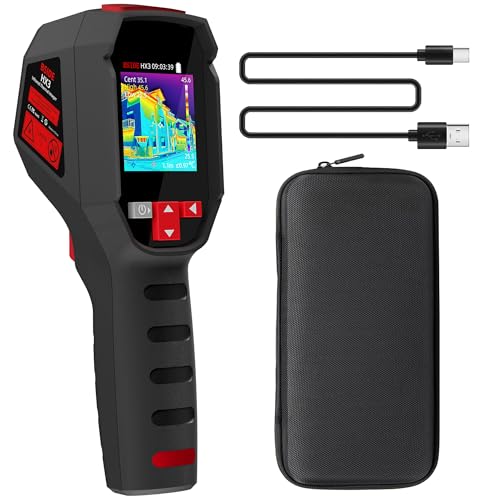 | Budget-Friendly Pick | Temperature Range: -20 °C – 550 °C | Resolution (Thermal Pixels): 240 × 240 | Frame Rate: 25 Hz | VIEW LATEST PRICE | Read Our Analysis |
| FLIR T540-EST 464×348 Thermal Screening Camera with 24-Degree Lens |  | Editor’s Choice | Temperature Range: 15 °C – 45 °C | Resolution (Thermal Pixels): 464 × 348 | Frame Rate: ≤ 9 Hz | VIEW LATEST PRICE | Read Our Analysis |
| FLIR K33 240 x 180 Thermal Camera Kit | 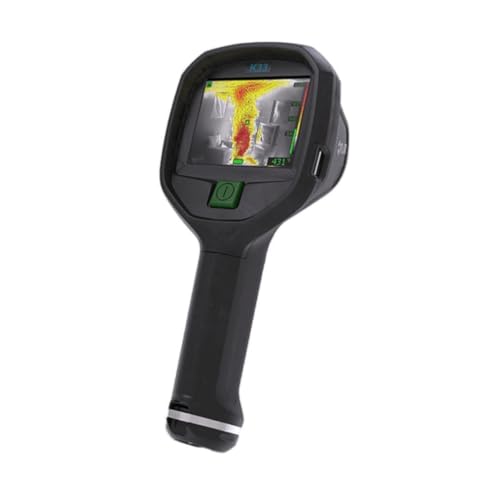 | Most Popular | Temperature Range: Not specified (typical building range) | Resolution (Thermal Pixels): 240 × 180 | Frame Rate: > 9 Hz (60 Hz) | VIEW LATEST PRICE | Read Our Analysis |
| FLIR E6 Pro Commercial Thermal Imaging Camera with Wi‑Fi | 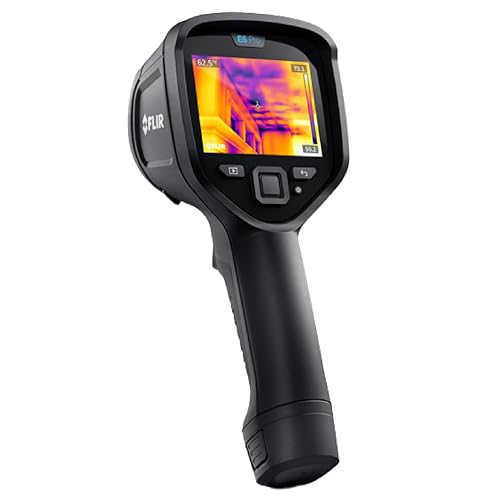 | Best For Beginners | Temperature Range: -20 °C – 550 °C | Resolution (Thermal Pixels): 240 × 180 | Frame Rate: ≤ 9 Hz | VIEW LATEST PRICE | Read Our Analysis |
| FLIR E8-XT Commercial Thermal Imaging Camera Wi‑Fi |  | Advanced Performance | Temperature Range: -20 °C – 550 °C | Resolution (Thermal Pixels): 320 × 240 | Frame Rate: ≤ 9 Hz | VIEW LATEST PRICE | Read Our Analysis |
| FLIR C5 Compact Thermal Imaging Camera with Wi‑Fi | 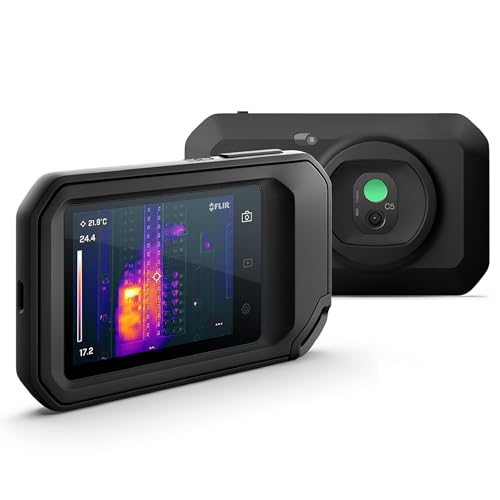 | Compact Power | Temperature Range: -20 °C – 400 °C | Resolution (Thermal Pixels): 160 × 120 (19,200 pixels) | Frame Rate: Not specified (standard) | VIEW LATEST PRICE | Read Our Analysis |
| FLIR Breach PTQ136 Thermal Monocular for Law Enforcement & Hunting |  | Tactical Elite | Temperature Range: Not specified (Boson core) | Resolution (Thermal Pixels): 320 × 256 | Frame Rate: 60 Hz | VIEW LATEST PRICE | Read Our Analysis |
| F2W Thermal Camera 640×480 with 3.2″ Screen | 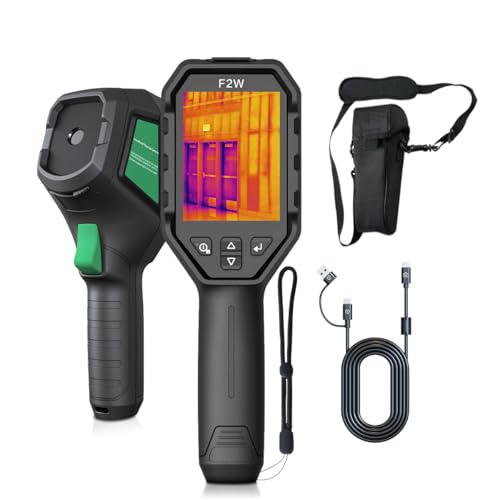 | High Resolution | Temperature Range: -4 °F – 1022 °F | Resolution (Thermal Pixels): 256 × 192 (enhanced to 640 × 480) | Frame Rate: 25 Hz | VIEW LATEST PRICE | Read Our Analysis |
More Details on Our Top Picks
FLIR TG267 Thermal Imaging Camera with Bullseye Laser
The TG267 pairs FLIR’s MSX image enhancement with a built-in bullseye laser, so you get a thermal picture with visible edges and a precise point to aim at, rather than just a blurry heat blob. At 19,200 thermal pixels it is on the lower end of resolution for this list, but the trade-off is a genuinely compact, single-AA-battery design that keeps the unit light.
The IP54 rating means it can handle dust and light moisture on a job site, though it is not built for heavy water exposure. Its 2.4-inch screen is smaller than some of the higher-end FLIR models further down this list, so fine detail is easier to review later on a phone or computer. For quick HVAC and electrical spot-checks, it is a solid, no-frills starting point.
- Temperature Range:-25 °C – 380 °C
- Resolution (Thermal Pixels):19,200 pixels (120 × 160)
- Frame Rate:≤ 9 Hz
- Display Size:2.4‑inch
- Battery Type:1 AA (included)
- Connectivity:USB Type‑C
- Additional Feature:MSX visual embossing
- Additional Feature:Bullseye laser pointer
- Additional Feature:IP54 rugged enclosure
Tadeto Infrared Thermal Camera with Laser Pointer and LCD Screen
As the value pick here, the Tadeto relies on a lower native 120×90 sensor and then upscales the image to 320×240 through software, which works well enough for spotting obvious hot spots but will not match the native-resolution detail of pricier FLIR units on this list. The nine on-device color palettes and optional Windows software give you more ways to interpret readings than some of the simpler cameras here.
The LED fill light is a genuinely useful extra for working in dim spaces, and the rechargeable battery means no disposable cells to keep on hand. One thing to note: Tadeto does not publish a specific operating temperature range for this camera, so if you need guaranteed performance at temperature extremes, check with the seller first. For general household and light automotive use, it is an affordable way into thermal imaging.
- Temperature Range:Not specified (typical HVAC range)
- Resolution (Thermal Pixels):120 × 90 (native) – upscaled to 320 × 240
- Frame Rate:25 Hz
- Display Size:2.8‑inch
- Battery Type:1 Li‑Ion (rechargeable)
- Connectivity:USB Type‑C (charging)
- Additional Feature:Super‑resolution upscaling
- Additional Feature:LED fill light illumination
- Additional Feature:Offline analysis software
BSIDE Thermal Imaging Camera 240×240 Handheld IR with TFT Display
The BSIDE stands out on this list for its wide -20°C to 550°C range, which covers most HVAC, electrical, and home-inspection work in one device, plus a 240×240 sensor that is sharper than several other budget options here. Fifteen selectable palettes give you more ways to visualize a scan than the simpler cameras in this guide.
Storage is generous at up to 30,000 images internally, so you are unlikely to run out of space mid-job, and the high/low alarm is a handy feature for continuous monitoring tasks. The IP54 rating covers dust and light splashes but is not a substitute for a fully sealed housing on wet job sites. For the price, it covers a broad range of professional use cases.
- Temperature Range:-20 °C – 550 °C
- Resolution (Thermal Pixels):240 × 240
- Frame Rate:25 Hz
- Display Size:2.4‑inch
- Battery Type:2500 mAh Li‑Ion (rechargeable)
- Connectivity:USB (data)
- Additional Feature:15 selectable palettes
- Additional Feature:High/low temperature alarm
- Additional Feature:30,000‑image internal storage
FLIR T540-EST 464×348 Thermal Screening Camera with 24-Degree Lens
Unlike the general-purpose cameras elsewhere in this guide, the T540-EST is purpose-built for skin-temperature screening, with a narrow 15°C to 45°C range tuned specifically for that job rather than for HVAC or electrical work. Its Screen-EST mode automates the process by averaging several readings and showing a simple pass/fail result.
The 180-degree rotating optical block and laser-assisted autofocus make it easier to aim at a face or forehead without repositioning the whole unit, and the 4-inch touchscreen is the largest display among the cameras in this list. Because it is built around this one use case, it is a poor fit if you need general building or electrical diagnostics—for that, look to one of the wider-range FLIR models in this guide instead.
- Temperature Range:15 °C – 45 °C
- Resolution (Thermal Pixels):464 × 348
- Frame Rate:≤ 9 Hz
- Display Size:4‑inch
- Battery Type:2 Li‑Ion (included)
- Connectivity:USB (data)
- Additional Feature:AutoCal interchangeable lenses
- Additional Feature:Laser‑assisted autofocus
- Additional Feature:180° rotating optical block
FLIR K33 240 x 180 Thermal Camera Kit
The K33 is built around firefighting and search scenarios rather than general inspection work, with FSX scene enhancement that sharpens contrast through smoke and a 60Hz frame rate fast enough to track moving heat sources without the choppiness you would get from a 9Hz camera. Wi-Fi lets you share footage with a team in real time.
Because it targets a specialized use case, FLIR does not publish a standard operating temperature range or display size for this unit the way it does for its inspection-focused cameras elsewhere in this guide. If your work is structural firefighting or search and rescue, the ruggedized kit and glove-friendly single-button control are real advantages; for everyday building diagnostics, one of the other FLIR models here is a better match.
- Temperature Range:Not specified (typical building range)
- Resolution (Thermal Pixels):240 × 180
- Frame Rate:> 9 Hz (60 Hz)
- Display Size:Not specified (camera only)
- Battery Type:1 Li‑metal (included)
- Connectivity:Wi‑Fi, USB
- Additional Feature:FSX Flexible Scene Enhancement
- Additional Feature:Wi‑Fi connectivity
- Additional Feature:Firefighting‑focused kit
FLIR E6 Pro Commercial Thermal Imaging Camera with Wi‑Fi
The E6 Pro is a straightforward entry point into FLIR’s commercial lineup, with MSX overlay for easier interpretation and Wi-Fi syncing to FLIR Ignite Cloud so you can review and share images without cables. Its -20°C to 550°C range is as wide as the BSIDE’s, though at a lower 240×180 resolution.
OTA firmware updates and a drop-tested housing add some long-term durability, which is reassuring for anyone new to thermal cameras and still learning to handle one carefully. The main trade-off compared to the E8-XT below is a lower resolution and fewer on-device palette options. For beginners who want FLIR’s ecosystem without the higher price of the more advanced models here, it is a sensible starting point.
- Temperature Range:-20 °C – 550 °C
- Resolution (Thermal Pixels):240 × 180
- Frame Rate:≤ 9 Hz
- Display Size:Not specified (camera only)
- Battery Type:1 Li‑Ion (included)
- Connectivity:Wi‑Fi, USB
- Additional Feature:FLIR Ignite Cloud integration
- Additional Feature:OTA firmware updates
- Additional Feature:Drop‑tested plastic housing
FLIR E8-XT Commercial Thermal Imaging Camera Wi‑Fi
Stepping up from the E6 Pro, the E8-XT doubles the resolution to 320×240 while keeping the same -20°C to 550°C range, which makes for a noticeably clearer image on smaller hot spots like a failing HVAC coil or a loose wire connection. Fifteen on-device palettes give you more flexibility than the E6 Pro’s simpler set.
FLIR Tools Mobile lets you build reports on-site rather than exporting images elsewhere first, which is a genuine time-saver for anyone doing paid inspection work. The trade-off for the extra resolution and features is a higher price point than the E6 Pro above. For electricians, HVAC techs, and building inspectors who need sharper detail, it is worth the step up.
- Temperature Range:-20 °C – 550 °C
- Resolution (Thermal Pixels):320 × 240
- Frame Rate:≤ 9 Hz
- Display Size:Not specified (camera only)
- Battery Type:1 Li‑Ion (included)
- Connectivity:Wi‑Fi, USB
- Additional Feature:15‑palette selection
- Additional Feature:FLIR Tools Mobile compatibility
- Additional Feature:Auto‑sampling Screen‑EST mode
FLIR C5 Compact Thermal Imaging Camera with Wi‑Fi
The C5’s main appeal is portability—at a compact size and running on two AAA batteries rather than a proprietary rechargeable pack, it is easy to keep a spare set on hand, which none of the other Wi-Fi-enabled FLIR cameras in this guide offer. Direct upload to FLIR Ignite makes emailing a quick report simple.
Its 160×120 sensor and -20°C to 400°C range are more limited than the E6 Pro or E8-XT above, so it is better suited to quick spot-checks than detailed diagnostic work. If grab-and-go convenience matters more than resolution or an extended temperature range, the C5 is a reasonable trade-off.
- Temperature Range:-20 °C – 400 °C
- Resolution (Thermal Pixels):160 × 120 (19,200 pixels)
- Frame Rate:Not specified (standard)
- Display Size:Not specified (camera only)
- Battery Type:2 AAA (included)
- Connectivity:Wi‑Fi, USB
- Additional Feature:Compact 5.4‑inch form factor
- Additional Feature:AAA battery power
- Additional Feature:Direct cloud upload
FLIR Breach PTQ136 Thermal Monocular for Law Enforcement & Hunting
If you need a reliable night‑vision tool for law‑enforcement or hunting, the FLIR Breach PTQ136 gives you clear heat images even in total darkness, smoke, or fog. Unlike every other camera in this guide, it is a handheld monocular rather than a display-based imager, built for law enforcement and hunting use. Its 320×256 sensor at 60Hz keeps moving targets smooth, and the IP67 rating is the highest water and dust protection of any product on this list.
The trade-off for its compact, helmet-mountable form factor is that it runs on a single CR123A battery rather than a rechargeable pack, so you will want spares for long patrols. FLIR does not publish a standard operating temperature range for the Boson core in this configuration. For tactical or hunting use where discretion and ruggedness matter most, it fills a different niche than the inspection-focused cameras here.
- Temperature Range:Not specified (Boson core)
- Resolution (Thermal Pixels):320 × 256
- Frame Rate:60 Hz
- Display Size:Not applicable (monocular)
- Battery Type:1 CR123A (included)
- Connectivity:USB‑C (data)
- Additional Feature:1–4× digital zoom
- Additional Feature:Helmet‑mount rail
- Additional Feature:IP67 waterproof rating
F2W Thermal Camera 640×480 with 3.2″ Screen
If you need a portable thermal imager that delivers clear, high-resolution images without a bulky setup, the F2W offers the widest temperature range in this guide by far, reaching up to 1022°F, which makes it the only camera here suited to high-heat work like furnace or industrial equipment inspection rather than typical building diagnostics. Its native 256×192 sensor is upscaled to 640×480 through software, similar in approach to the Tadeto but with a larger 3.2-inch screen.
Sixteen gigabytes of onboard storage is more than any other camera on this list specifies, so you can log a full day of images without offloading them. The IntellFault feature for flagging anomalies is a useful extra, though as with the other software-upscaled camera in this guide, the enhanced resolution is not the same as native optical detail. For high-temperature industrial work, it is the clear choice among these ten.
- Temperature Range:-4 °F – 1022 °F
- Resolution (Thermal Pixels):256 × 192 (enhanced to 640 × 480)
- Frame Rate:25 Hz
- Display Size:3.2‑inch
- Battery Type:1 Li‑Ion (included)
- Connectivity:Wi‑Fi, USB (data)
- Additional Feature:Super‑Resolution algorithm
- Additional Feature:16 GB eMMC storage
- Additional Feature:IntellFault intelligent scene detection
Factors to Consider When Choosing a Flir Thermal Camera
If you need to spot tiny temperature changes on a pipe or a circuit board, start by looking at resolution and sensitivity. Higher pixel counts and lower noise let you see finer temperature differences, so you’ll catch issues before they become costly failures.
For anyone who works in environments that swing between extreme hot and cold, make sure the temperature range matches your setting. A camera that can handle the full span you’ll encounter saves you from having to switch gear mid‑job.
What makes this thermal camera stand out is its smooth video playback. A higher frame rate keeps moving objects clear, so you won’t miss a fleeting hot spot.
You get laser‑guided targeting without sacrificing connectivity. A built‑in laser pointer helps you aim precisely, while the right ports and software let you export data in the formats you already use.
Perfect for field technicians, this camera integrates easily into your workflow. The software tools let you tag, analyze, and share thermal images on the spot, keeping your reports accurate and timely.
Resolution Resolution & Sensitivity
If you need to spot tiny hotspots on a circuit board, a high‑resolution FLIR sensor will give you the detail you crave. More pixels mean you can see defects that a low‑resolution camera would blur, so your diagnostics stay spot‑on. The camera’s NETD, measured in millikelvins, tells you how subtle a temperature change it can catch; a lower NETD (under 40 mK) reveals faint heat signatures that a higher NETD (around 60 mK) might miss. Frame rate matters too—25–60 Hz keeps the video smooth when you’re tracking moving equipment, while slower rates are fine for static inspections. Remember, effective accuracy isn’t just about pixel count; it also depends on optics and IFOV, because a large IFOV can average temperatures and hide hotspots. Choose a pixel count and NETD that fit your task: high resolution and low NETD for electronics work, lower specs for broad building surveys. This balance lets you capture the right detail without overpaying for unnecessary performance.
Temperature Range Compatibility
If you need to monitor scorching furnace walls or icy freezers, you’ll want a camera that can handle the extremes without cutting off data. Choose a FLIR thermal camera whose temperature range comfortably exceeds the highest and lowest temperatures you expect, so you never have to guess the true temperature of hot or cold objects.
For anyone who works with a variety of scenes, the camera’s NETD (thermal sensitivity) should be low enough to catch tiny temperature differences, even when the range is already adequate. A lower NETD lets you see subtle ΔT changes that matter for quality control or troubleshooting.
What makes this FLIR thermal camera stand out is its automatic range adjustment and emissivity control, which keep measurements reliable across different materials and distances. You’ll also appreciate the distance settings that let you stay accurate whether you’re close‑up or far away.
You get precise temperature readings without having to constantly recalibrate, because the accuracy specs stay tight in the part of the range you use most. Errors tend to rise at the extremes, so a camera that stays accurate throughout its span saves you time and headaches.
Perfect for DIY hobbyists and professionals alike, this camera balances sensitivity, range, and ease of use so you can focus on the job, not the gadget.
Short sentence: It’s ready for any temperature challenge.
Frame Rate & Export Controls
If you need to capture fast‑moving heat sources like a welding arc or a cooling engine, you’ll want a camera that can keep up with rapid temperature swings. A higher frame rate—think 25–60 Hz—delivers smooth footage and lets you see every spike, while a lower 9 Hz setting can miss those brief moments and look choppy. For anyone who ships cameras internationally or needs them for tactical use, picking a model above the 9 Hz threshold helps you sidestep export‑control headaches and avoid licensing restrictions. Check the spec sheet for the exact Hz and any export notes before you order. This way you get the performance you need without legal complications.
Laser Pointer & Targeting
If you need to locate a hot spot fast, a built‑in laser pointer makes it effortless. It shines a visible dot exactly where the thermal sensor is measuring, so you can center the region of interest without guessing. The result is far less parallax error and quicker inspections.
For anyone who struggles with misaligned spots, choose a camera whose laser shows the actual measurement‑area size or spot location. You’ll always know the exact field of view being sampled, which saves time and frustration.
What makes this thermal camera stand out is the ability to verify the laser’s effective range before you start. A narrow field of view can cause the dot to drift at longer distances, so checking range keeps your readings reliable. Add an LED fill light or visual overlay in dim or reflective settings to keep the spot visible. This simple tweak ensures consistent targeting and speeds up your workflow.
Connectivity & Software Integration
If you need to pull thermal images and video straight into your workflow, a reliable connection is essential. Look for a camera that offers Wi‑Fi, USB‑C, or wired Ethernet so you can stream without extra adapters. You’ll avoid extra cost and complexity when the device talks directly to your computer, cloud service, or mobile app.
For anyone who wants hassle‑free file handling, the companion app should auto‑upload, let you edit palettes, and share radiometric JPEG or TIFF files. Choose software that runs on Windows or macOS and gives you emissivity controls, temperature calculations, and easy report generation. Firmware updates should be simple—either over‑the‑air or via USB—so you stay secure without a headache.
What makes this thermal camera stand out is its flexible storage options. Check the internal memory, external SD slot, or USB support to match your archiving or reporting needs. Short and sweet: keep it simple.
Durability & IP Rating
If you’re setting up a camera in a workshop that gets a little spray from a hose, you’ll want an IP54 rating to keep dust out and handle splashes. For anyone who works outdoors in rain or needs to survive a quick jet‑clean, aim for IP65‑to‑IP67, which blocks direct water jets and brief immersion. You get strong impact protection without adding bulk, thanks to reinforced plastics or a magnesium alloy frame. The drop‑test specs show how many times and from what height the camera can survive, so check that they match your handling routine. Keep an eye on the temperature range, and make sure the sealed battery compartment and gasketed joints stay watertight while you still can service the lens. This tough enclosure gives you peace of mind when you’re moving equipment around.
Battery Life & Portability
If you need to stay on the job site for hours without hunting for an outlet, check the camera’s battery type and runtime before you buy. You’ll want a rechargeable lithium‑ion pack because it holds more charge and refills quickly, unlike disposable cells. Look for a continuous operation time of four to six hours and see if you can swap the battery yourself; sealed units force you to lug a charger or power bank.
For anyone who works long shifts or remote locations, a user‑replaceable battery is a lifesaver. A larger capacity will keep you shooting longer, but remember it adds weight and bulk that can make handheld work tiring. Make sure the camera includes a USB‑C or standard port so you can top up with a portable charger or power bank in the field.
What makes this camera stand out is the ability to hot‑swap spare batteries, keeping downtime to a minimum. If you carry a spare or an extra pack, you’ll never be caught off‑guard during a multi‑hour inspection. The balance of capacity, weight, and charging flexibility lets you focus on the job, not the power source.
Frequently Asked Questions
Can I Use These Cameras for Night‑Vision Video Recording?
Yes, you can use those FLIR cameras for night‑vision video recording because they detect infrared heat rather than visible light, so they work in total darkness. The sensor captures temperature differences and translates them into a grayscale or colored image, which the camera then records as video. Just make certain the model supports video output and has adequate frame rate for your needs, and remember that atmospheric conditions like fog or rain can reduce clarity.
Do They Support External GPS Tagging of Thermal Images?
GPS tagging support varies by model, and none of the cameras featured in this guide list built-in or external GPS tagging as a confirmed feature. Some FLIR commercial cameras in the broader lineup do support accessory GPS modules, but you should check the specific product listing or manual for the model you are considering rather than assume the capability is included.
What Is the Battery Life Under Continuous High‑Resolution Streaming?
Battery life depends heavily on the camera and how you use it. Among the models in this guide, capacities range from small AA or AAA cells in compact units like the TG267 and C5 to rechargeable lithium-ion packs like the BSIDE’s 2500mAh battery, with the F2W’s manufacturer figures suggesting several hours of use on a charge. Continuous streaming at higher resolutions or with Wi-Fi enabled will drain any of these faster, so lowering resolution or turning off wireless features when you do not need them is a reliable way to extend runtime.
Are Firmware Updates Available for Improving Image Accuracy?
Firmware updates can sharpen your camera’s image accuracy. Yes, FLIR releases periodic firmware that refines sensor calibration, reduces noise, and improves temperature mapping. You’ll download the update from FLIR’s support site, install it via USB or Wi‑Fi, and the device will reboot with enhanced algorithms. These patches often adjust pixel‑level correction curves, which help the camera interpret heat signatures more precisely, especially in challenging lighting or temperature ranges.
Can the Devices Integrate With Third‑Party Drone Control Software?
Drone integration is not a confirmed feature for the handheld and monocular cameras covered in this guide—these are designed as standalone inspection or tactical tools rather than drone payloads. Some other FLIR product lines are built specifically for aerial integration, but if that is a requirement for your project, look at FLIR’s dedicated drone-payload cameras rather than the models reviewed here.