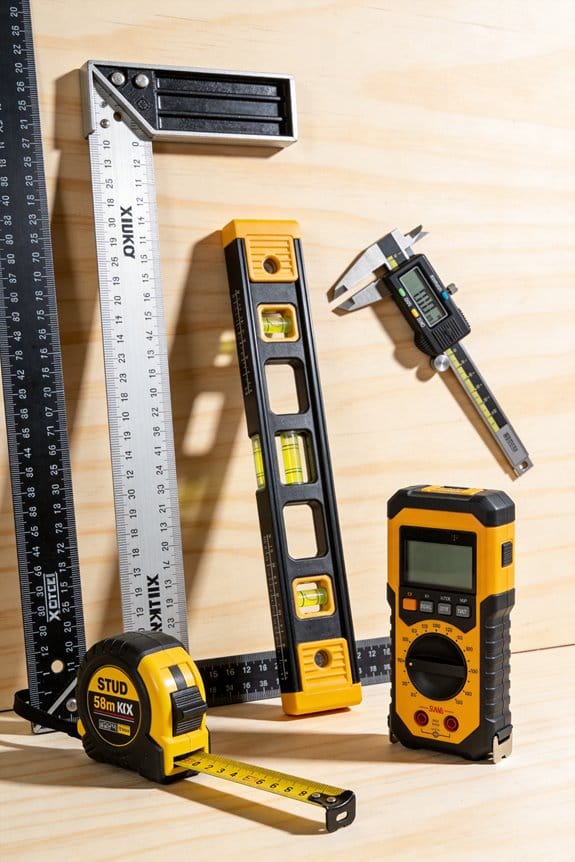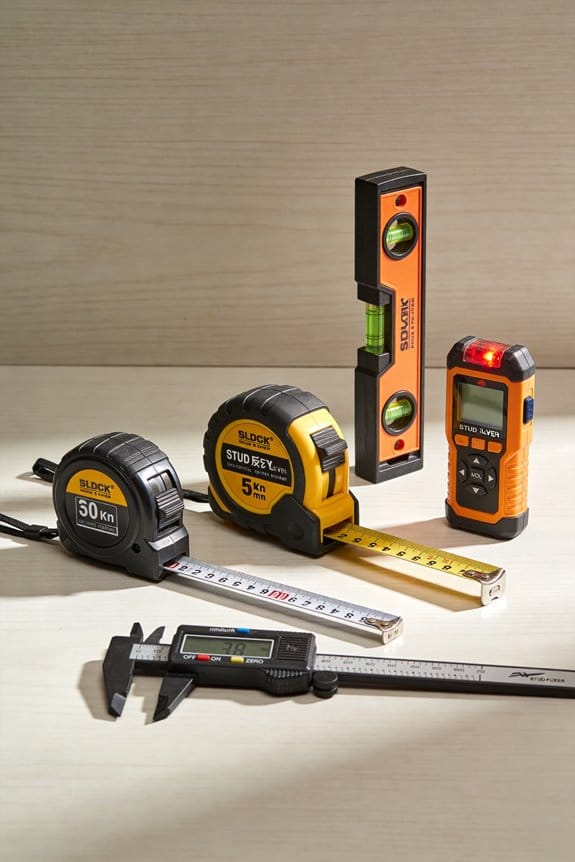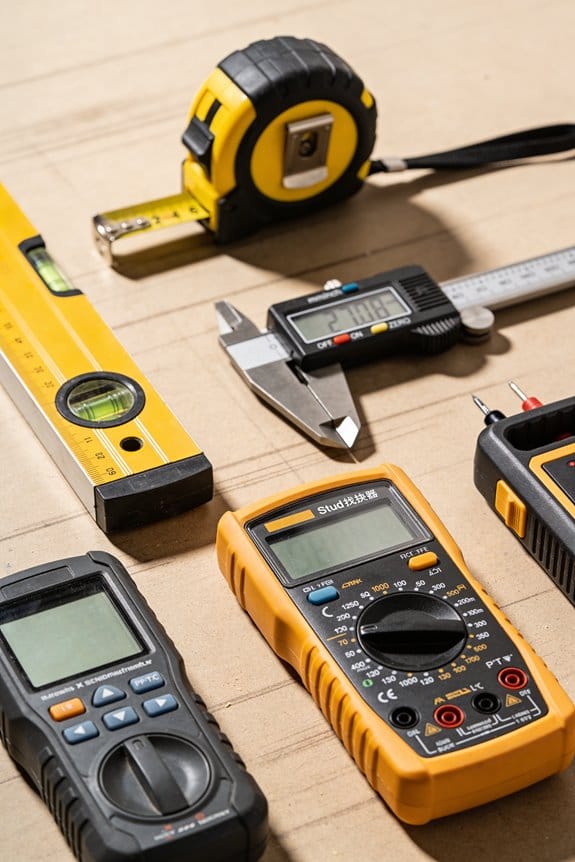
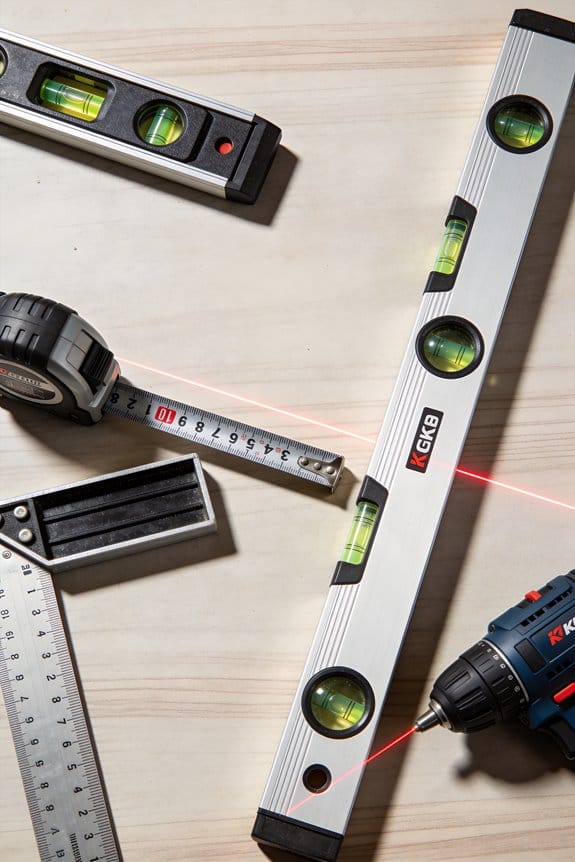

You line up a cabinet face against the wall, step back, and the laser dot drifts across the trim — is the cabinet tilted against the wall or is the laser playing tricks?
The exact problem is deciding whether the tool reading reflects the piece’s true local tilt where it contacts the surface. Most people assume a laser reading is automatically more accurate and ignore quick contact checks. This introduction will show you when a handheld spirit level beats a laser for short, practical jobs and how to use it to get ±1–2 mm true local alignment for cabinets and trim.
You’ll also learn when to pair a level with a laser for larger layouts. It’s easier than you think.
Key Takeaways
If you’ve ever set up a laser and thought the line looked fine but the shelf still tilted, this explains why a spirit level still helps.
Why a spirit level matters in bright light
Why it matters: lasers can wash out in sunlight, leaving you guessing.
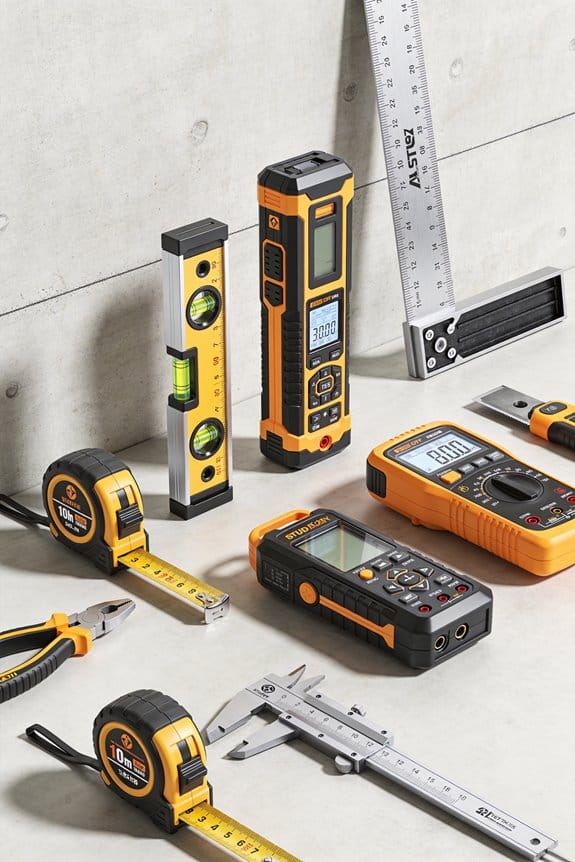
Real-world example: installing a floating shelf on a sunny porch at noon where the laser line disappears against the siding.
1) Put the spirit level against the shelf edge.
2) Read the bubble immediately — no battery, no screen glare.
A spirit level gives an instant, reliable local reading you can trust when the laser is invisible. Use a 24-inch box level for shelves and a 6-inch torpedo for small trim.
Why a spirit level saves time for quick checks
Why it matters: setting up a tripod and calibrating a laser takes minutes you might not have.
Real-world example: double-checking cabinet doors during a 30-minute kitchen install stop.
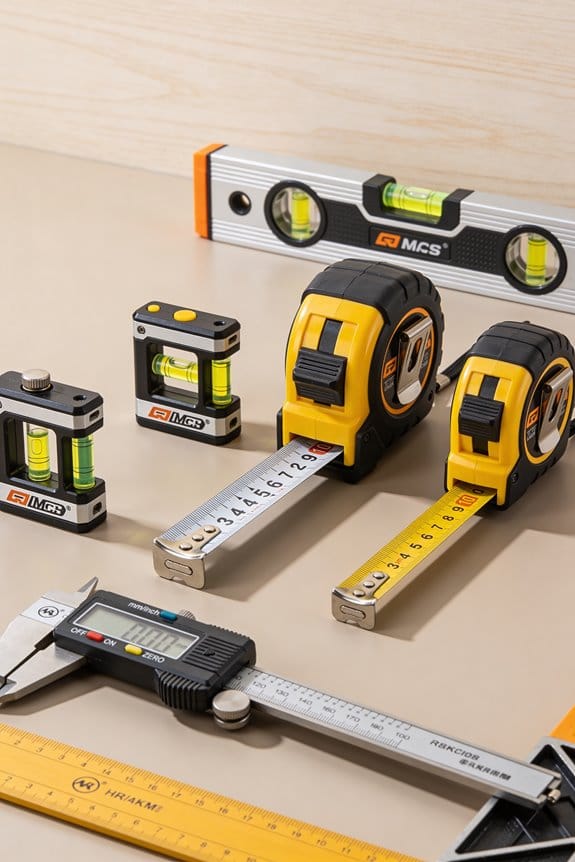
1) Grab a 9-inch torpedo level.
2) Place it on the cabinet face, check the bubble, and adjust the hinge by 1/16 inch if needed.
You’ll finish the quick checks in under 30 seconds instead of re-positioning a laser.
Why direct contact catches surface problems lasers miss
Why it matters: lasers show a line in space, but they can’t tell you if the actual surface bows or dips.
Real-world example: hanging a long coat rack on drywall that looks level to the laser but has a subtle bow between studs.
1) Lay a 48-inch level along the rack location.
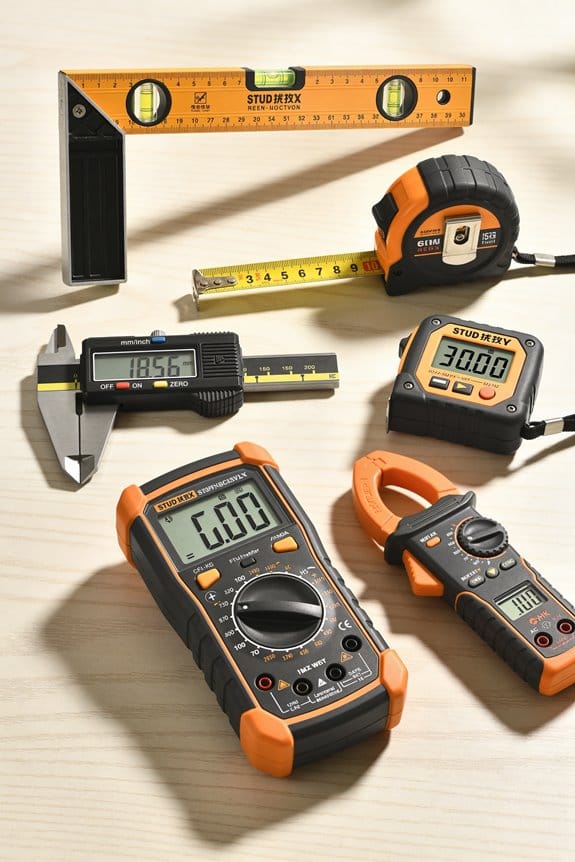
2) Observe any gap under the level — measure the gap with a feeler or ruler.
Direct contact reveals local high or low spots that require shimming or a different fastening point.
Why small torpedoes reach where lasers don’t
Why it matters: compact levels fit tight spots behind hinges and inside cabinets where tripods can’t go.
Real-world example: aligning a piano hinge inside a narrow door stiles.
1) Use a 4–6 inch torpedo level.
2) Slide it into the hinge mortise and adjust until the bubble centers.
A small level gets into tight spaces and gives a true local plane.
How to use a spirit level to verify a laser setup
Why it matters: lasers can be misaligned or tilted; a spot-check prevents repeating mistakes down the run.
Real-world example: running a laser line across a long run of baseboard while hanging moldings every 4 feet.
1) Set your laser and mark the line.
2) Every 3–5 meters, place a spirit level on the surface and check the bubble.
3) If the bubble is off by more than 1/8 inch over 48 inches, re-calibrate the laser.
This practice catches setup or beam errors before you fasten dozens of pieces.
Practical level-buying and care tips
Why it matters: choosing and maintaining the right level keeps your checks accurate.
Real-world example: swapping a cheap plastic level for an aluminum one after noticing repeated 1/8-inch errors on long runs.
1) Buy at least one 48-inch and one 6–9 inch level; pick aluminum bodies if you drop tools often.
2) Store levels flat and check them every 6 months by flipping them end-for-end on a flat surface; the bubble should return to the same position.
A properly cared-for level stays reliable for years.
Quick Decision: When to Choose a Spirit Level
Before you pick a tool, know why a spirit level matters: it gives a fast, visual check of small angles so you won’t hang a shelf crooked.
Use a spirit level when you need one quick check that doesn’t rely on batteries, power, or apps. For example: on a house visit, I set a 24-inch level on a mantel to confirm it’s plumb and slightly tweak the shims until the bubble centers; that takes under a minute. Pick a length that matches the job: 9–12 inches for cabinet doors, 24–48 inches for shelves and mantels, and a torpedo level (6–9 inches) for tight spots.
Before you place the level, follow three quick steps so your reading is reliable:
- Clean the surface and the level’s vial with a rag.
- Lay the level flat and steady it with both hands.
- Read the bubble at eye level; rotate the level 180° and check again to confirm.
For narrow or awkward spots, why ergonomic fit matters: it reduces slip and reading error when you’re holding the tool in one hand. A rubber-grip torpedo level with a finger groove works well for a recessed cabinet hinge; try one around 7 inches long so it fits between trim and studs.
If you want short-distance precision, use the spirit level for jobs where ±1–2 millimeters over 24 inches is acceptable. For example, when installing a row of bathroom towel bars, a 24-inch level keeps spacing visually straight and consistent. If you need accuracy better than that or long spans, switch to a laser level.
Keep your level functional with minimal care: wipe it dry after use, store it flat or hanging, and check the vial by comparing readings on a known flat surface once every few months. A metal or high-quality aluminum frame survives drops; cheap plastic ones can warp and lose accuracy.
Use a spirit level when speed, simplicity, and reliability beat automation or range. It takes seconds to place, gives an immediate visual read, and won’t die mid-job.
Why Choose a Spirit Level in a Laser-First World
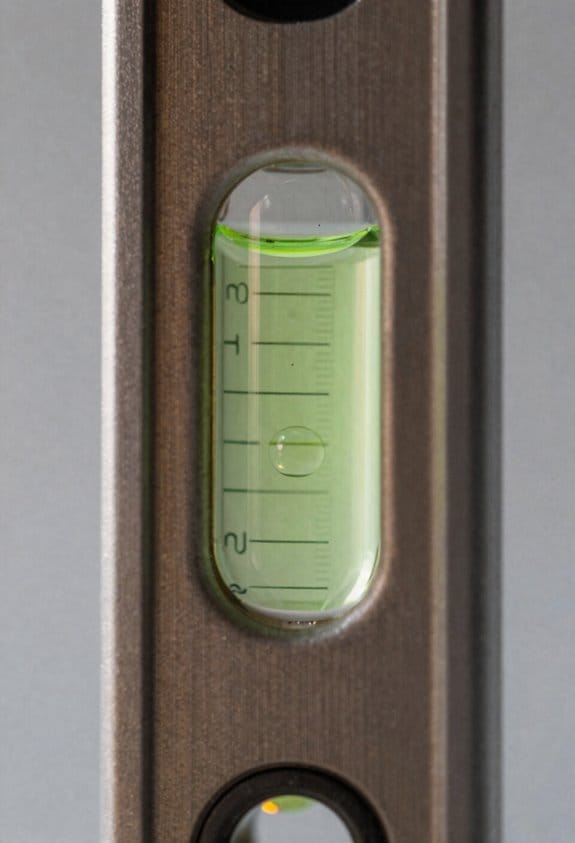
Here’s what actually happens when you need a quick level check on the job: a spirit level gives you an immediate reading with no setup. You can hold a 24-inch level across a cabinet face and see the bubble settle in seconds; no batteries, no tripod, no waiting. For a real-world example, when I hung a floating shelf in a rental kitchen, I used a 24-inch torpedo level and got the shelf straight in under two minutes.
Why this matters: you won’t be stuck when power fails or your laser needs calibration. A 9-inch torpedo tucked in your toolbox will save you a wasted trip back to the hardware store.
Before you rely on a laser for every layout, consider how a spirit level fits into simple jobs. Place the level on the edge of a countertop, then shift the countertop until the bubble centers — usually within a few millimeters if you use a 24-inch level. For instance, when installing a bathroom vanity, I leveled the cabinet with a 24-inch level, shimmed the low side with plastic shims, and tightened the mounting screws; the vanity was level and plumb within one bubble width.
Why you should keep one in every basic toolkit: they’re cheap and maintenance-free. A typical 24-inch level costs $10–$25 and will last years if you don’t drop it on concrete.
How to use a spirit level correctly (short, clear steps). Why this matters: using it wrong gives you bad measurements.
- Place the level flat on the surface you want to check.
- Read the bubble — center it between the marked lines.
- If not centered, adjust the surface and recheck.
- For longer runs, move the level along and compare positions.
Example: when aligning fence posts, set the level on a temporary crosspiece, move it post to post, and mark the lowest points for shimming.
When a laser still makes sense for bigger jobs: you need continuous, long-distance reference lines. Lasers give a consistent plane across a room and speed up framing or tile layouts over 20 feet. I used a rotary laser to set basement floor slope over a 30-foot run; the laser let me check multiple points quickly.
Why that matters: lasers cut time on large layouts but don’t replace quick checks. Bring both tools: use a spirit level first for a fast check, then use a laser for the overall plane if the space is large.
Final practical tips you can use today. Why this matters: small habits keep readings accurate.
- Store your level flat or hanging to avoid warping — a warped level can be off by several millimeters over a foot.
- Verify periodically against a known straight edge or another level; flip the level end-for-end and recheck to confirm accuracy.
- Match level length to task: 9–12 inches for tight spots, 24 inches for cabinets and trim, 48 inches or longer for framing.
Example: on a remodel, I keep a 9-inch torpedo for behind fixtures, a 24-inch for cabinets, and a 48-inch for door jambs.
You’ll find that using a spirit level first saves time, money, and frustration on small to medium jobs. Keep one handy, know which size to use, and verify it now and then.
Recommended Products

Accuracy & Readability: The Mecurate Digital Level utilizes a large backlit digital display to intuitively present numerical values of the level position. No more struggling to determine if the bubble is precisely centered between two lines like with conventional levels. The digital level significantly reduces human errors. With higher measurement accuracy, the Mecurate Digital Level provides more precise measurement results. The Mecurate Digital Level provides an accuracy of ±0.1° at 0° and 90°, and ±0.2° at other angles, with a resolution of 0.05°.

Patented Verti-site TM Vial design vial can be read from side in confined space

Torpedo Level Magnetic: Featuring a magnetic base, Firecore spirit level attaches securely to metal surfaces for a variety of needs.
Short-Distance Precision: How Spirit Levels Outperform Lasers
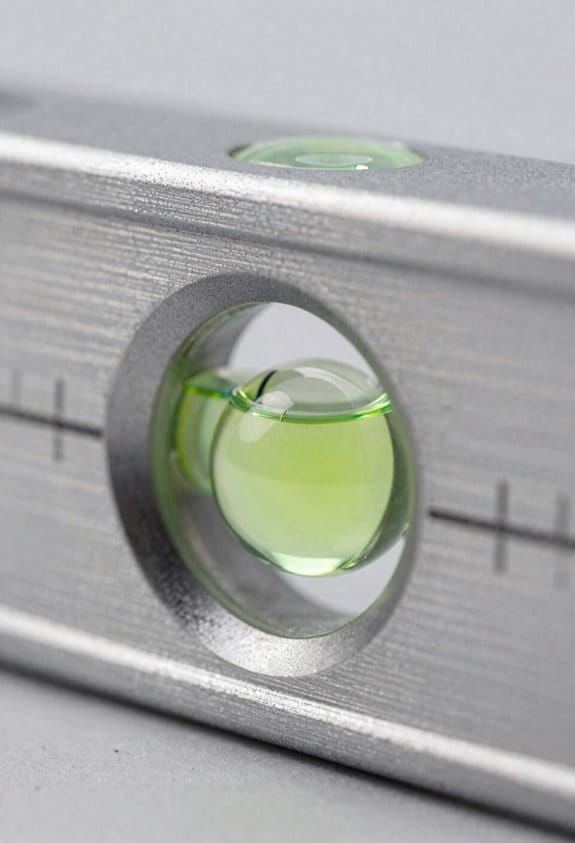
Think of a spirit level like a tiny inclinometer that sits where you work.
Why it matters: you get the actual tilt at the contact point, not a projected line that can lie. For example, when you level a 60 cm kitchen cabinet top, the vial shows the tilt right on the surface so you can shim under one end and see the bubble settle.
You’ll prefer a spirit level for short distances under a few meters because the bubble vial measures tilt directly at the contact point and isn’t affected by beam spread or setup errors. A laser line can spread or be misaligned over 1–3 meters, especially on small surfaces where a few millimeters matter. Use the level on tabletops and appliance installs when you need direct feedback; place it on the surface and read the bubble.
Why it matters: direct contact removes variables that add error. When you’re installing a washing machine, you’ll set the level on the machine base, adjust the feet, and watch the vial until the bubble centers.
How to use it—three simple steps:
- Place the level on the surface you want to check (long edge for lengthwise, short edge for across).
- Read the bubble; if it’s off-center, adjust shims or feet in 1–2 mm increments.
- Recheck in at least two perpendicular directions.
If you want numbers: a typical 60 cm torpedo level will resolve about 0.5–1 mm over that length, which is often better than an untracked laser over the same span without a calibrated setup. For woodworking, set the level on the board, clamp, plane or sand until the bubble centers, and then remove the clamps to confirm the surface stayed flat.
Why it matters: you’ll avoid tripod alignment and beam wobble that can fool you at close range. For a small tile backsplash, lay the level directly on the tiles and adjust each row; that direct read is repeatable and quick.
Quick tip: keep the vial clean and check the level against a known flat surface every few months to confirm accuracy.
Recommended Products

3 Acrylic Vials - plumb, level, and 45 degree provide the necessary jobsite measurements.

With 3 different bubbles for leveling level, plumb and 45 degree. Pack of 2.

High accuracy 9-inch spirit level for easy leveling
Fast Checks: Using a Spirit Level Without Setup
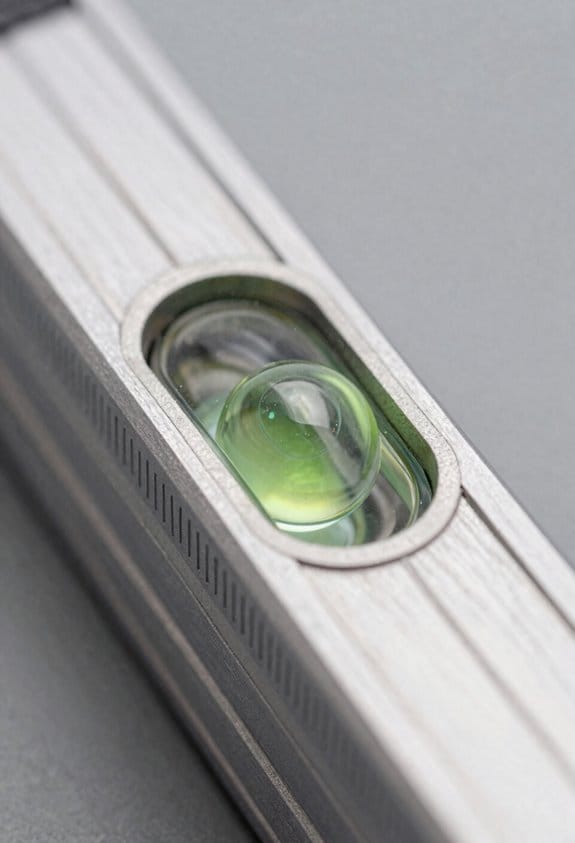
If you’ve ever grabbed a level and wanted a quick answer, this shows why it works for fast checks.
Why this matters: a spirit level gives you an instant, reliable reading so you can decide on the spot whether something needs fixing. I use a short torpedo level when I’m checking a shelf or pipe; you can see the bubble move as you shift by as little as 1–2 mm over a 30 cm span.
How to do a fast contact check
Why this matters: you want a result right away without setup.
- Place the torpedo level flat on the surface you’re checking—frame, shelf, or pipe.
- Look at the vial and note whether the bubble sits between the marks.
- If it’s off, nudge the object and recheck until the bubble centers.
Example: I once checked a 60 cm closet shelf with a 30 cm torpedo level; the bubble was a hair off center, so I raised the right support by about 3 mm and the bubble centered.
Why this matters: you need to know what the bubble actually tells you.
How to read tiny shifts
Why this matters: small changes are easy to miss unless you know what to look for.
- Use a level with clear marks; cheaper ones can be harder to read.
- For a 30 cm level, a half-bubble shift usually means roughly 2–4 mm tilt across that length.
- Reposition and check from both ends if the surface is long.
Example: On a 2-meter pipe, I place the level at three points—ends and middle—and saw the middle was about 4 mm lower than the ends. I shimmed the support by 4 mm at that spot.
Why this matters: tool care keeps readings trustworthy.
Keeping your level trustworthy
Why this matters: a damaged vial gives wrong answers.
- Keep the level dry and free of dents.
- Store it flat; don’t drop it.
- Replace it if the bubble is sluggish or the marks are worn.
Example: I kept a level in a toolbox that got dropped; the bubble stuck and the level started showing a tilt of about 1°, so I swapped it out for a new torpedo.
Quick checklist before you use it
Why this matters: a fast pre-check prevents wasted effort.
- Wipe the surface clean.
- Lay the level flat and confirm the bubble moves smoothly.
- If the bubble doesn’t center on a known flat surface, don’t trust the reading.
Example: Before installing a bracket, I wipe the area, test the level on a countertop I know is flat, and then use it on the bracket.
This is a hands-on, place-read-adjust routine you can do in under a minute per check, giving you practical alignment results without setup.
Recommended Products

PATENTED MAGNET TRACK: Level features a patented magnet track that prevents powerful Rare-Earth magnets from falling out during use

SECURE MAGNET TRACK: Patented design prevents Rare-Earth magnets from falling out, ensuring durability and reliability

VERSATILE VIALS - The 12" Torpedo Level has 4 vials for quick and accurate readings: Vertical, Horizontal, 45 Angle, and Multi-Pitch Vial. The multi-pitch vial reads slope in 1/8'' per foot increments
How Spirit Levels Save Money Versus Laser Levels

If you’ve ever balanced a shelf or checked a window frame, this is why a spirit level often saves you money.
Why it matters: you want a quick, reliable reading without extra costs. A good 24-inch vial level costs about $15–$40, while a decent rotary laser kit starts around $300. For a real-world example, imagine hanging three picture ledges around a room: you’ll spend five minutes with a spirit level and a pencil, not 20 minutes setting up a laser and tripod.
Before you decide, compare total costs and time over a year.
How spirit levels cut costs
Why it matters: lower purchase and running costs affect your budget every time you use the tool. A basic list:
1) Purchase price: a quality 24″ spirit level — $20. A beginner laser — $300.
2) Running costs: a vial level uses no batteries; a laser uses AA or a rechargeable pack that can cost $10–$50 for replacements.
3) Downtime and setup: spirit levels are instant; a laser often needs tripod setup and calibration, adding 10–15 minutes per short job.
Example: if you hang cabinets twice a year and fix small shelving five times, you’ll save roughly $200–$400 over two years by using a spirit level because you avoid battery purchases and less setup time.
How maintenance differs
Why it matters: maintenance time is still money when you’re working. With a spirit level, you’ll:
1) Rinse and dry it after a messy job.
2) Check vial alignment against a known flat surface every year.
That’s it. Example: after staining a deck, wipe the level with a damp cloth and dry it; it’s ready tomorrow.
Lasers need firmware checks, battery replacements, possible recalibration, and occasional service if dropped. A single replacement battery or charger can erase most of the initial savings for casual users.
When to pick a spirit level versus a laser
Why it matters: choosing the right tool prevents wasted time and money. Use a spirit level if:
1) Your work is under 30 feet or confined to a single room.
2) You do occasional layout or hanging tasks (a few times per month or less).
3) You want near-instant readings and zero battery fuss.
Example: installing a bathroom vanity or aligning outlet boxes — a 24″ level gets you accurate results in minutes.
Use a laser if you regularly need long-distance layouts, stake lines over yards, or you work on large commercial jobs where time saved per job justifies the higher upfront cost.
Practical buying tips
Why it matters: the right model lasts longer and reduces replacement costs. Steps:
1) Buy a 24″ box-beam level with three vials for $20–$40.
2) Check vial accuracy by flipping the level on a flat surface; the bubble should return to the same mark.
3) Store it flat or hang it; avoid leaving it in a hot truck bed.
Example: a $30 level kept in a garage toolbox will still be accurate three years later if you follow those steps.
Bottom line: for casual, short-range jobs you save money and time with a spirit level — lower purchase price, no batteries, and almost zero maintenance.
Recommended Products

EASY-TO-READ VIALS: Large, high-visibility vials provide accurate readings at level and 90-Degree

VISIBLE - Vivid, cylindrical vials reach <0.001"/" accuracy. Three vials set at horizontal, vertical, and 45 degrees.

Delivers high accuracy of 0.029° (0.5mm/m), ideal for precise leveling, alignment, and measuring over longer distances in construction and professional applications
Field Durability: Why Spirit Levels Won’t Fail You
If you’ve ever dropped a tool off a scaffold or left it in mud, this is why.
You want a measuring tool that keeps working when the job gets messy, and a spirit level does that better than most electronics because its parts are simple and sealed. For example, I once left a 24-inch aluminum level on a muddy site overnight; after a rinse and a wipe it still read true, because the vials were sealed against grit and water.
Before I tell you how to care for one, here’s why that care matters in one sentence: a little maintenance prevents small misalignments that can throw off a build.
How to keep your spirit level accurate (steps):
- Rinse off mud or concrete with a hose within 24 hours of exposure, then dry with a cloth.
- Wipe the frame with a solvent-free cleaner every month if you use it daily.
- Check vial alignment quarterly by placing the level on a flat surface, note the bubble position, flip the level end-for-end, and confirm the bubble returns to the same mark; if it doesn’t, the vial needs realignment or replacement.
- Store the level flat or hanging by a single hook to avoid warping; avoid leaning it against hot surfaces.
A real-world example: on a rainy deck job I dropped a 48-inch torpedo from a ladder and it landed on packed dirt; after I washed it and ran the flip test described above, the bubble matched within one small division — good enough to set joists.
Why the design survives rough use matters in one sentence: sealed vials and a rigid frame absorb shocks and keep out contaminants so you can get a quick, reliable read. The frames spread impact forces so the glass or plastic vial doesn’t crack under a hit, and you won’t be stopped by dead batteries.
Quick checks you can do on-site:
- Visually inspect the vial for hairline cracks or clouding.
- Tap the frame; if the bubble sticks, the liquid may be contaminated.
- Use a known-flat surface or a calibrated straight edge for a spot check.
Example: while setting a fence post you can place the level against the post, flip it, and if both readings match within one small bubble division you can proceed to pour concrete.
If a vial fails, here’s what to expect in one sentence: replacing a vial is usually cheaper and faster than repairing an electronic inclinometer. Steps to replace:
- Remove screws or adhesive holding the vial.
- Order the correct replacement vial (length and curvature must match).
- Install and calibrate using the flip test.
You don’t need a gadget with fragile electronics if you want reliable short-distance precision outdoors; a well-made spirit level gives repeatable results with simple upkeep and no batteries.
Use Both: Combining Spirit Levels and Laser Levels Effectively
Before you start, know why using both matters: a laser saves time across a room while a spirit level catches small tilt errors that a beam can miss.
Here’s how I use them together so you get repeatable, accurate results.
- Set the laser first to lay out your main lines across the room — for example, mark a continuous horizontal line at 1.2 m for a picture rail.
- Walk the line every 3–4 meters with a 24″ spirit level to confirm local plumb and flatness; if the bubble is off by one division, tweak the mount until it’s centered.
- Use the spirit level when the beam hits bright sunlight, glossy paint, or textured plaster that makes the laser hard to see; lay the level directly on the surface and check left, center, and right across 6–12 inches.
- For verticals, lock the laser and then place the spirit level against the corner or stud every 2–3 feet to check that the wall isn’t bowing more than 1/8″ over 4′.
Real-world example: I ran a laser for a kitchen backsplash at 4′ above the floor and then checked every cabinet seam with a 24″ level; I caught a cabinet out of plumb by 3/16″ and avoided a visible gap.
Why this sequence matters: the laser gives you a single, repeatable datum and the spirit level verifies contact points where the beam can lie to you.
How to set up fast and avoid rework.
- Mount the laser on a tripod or clamp it to a steady surface about mid-room height so it won’t be bumped.
- Mark two reference points on opposite walls with a pencil at the laser line, then double-check those marks with the spirit level within 30 minutes.
- If you need extra precision, measure between the marks with a tape and record any variance in millimeters; a 2 mm difference over 3 m is acceptable for trim work, but not for tile.
Real-world example: On a 12′ living room wall, I pegged marks at each end, verified them with a 48″ level, and found a 4 mm slope that I corrected before installing shelving.
When to trust the bubble over the beam: use the spirit level when the surface is rough, the laser projection is fuzzy, or sunlight reduces contrast; the bubble measures contact and true local plane.
Real-world example: Outside under noon sun, a line laser was invisible on white siding, but the 48″ level showed the fascia tilted 1/4″, which I shimmied before fastening.
Quick checklist before you start:
- Laser batteries full or plugged in.
- Tripod/clamp solid.
- 24″ or 48″ spirit level on hand.
- Tape measure and pencil.
Follow these and you’ll cut layout time and rework significantly.
What to Buy and How to Maintain Your Spirit Level
If you’ve ever stared at a crooked shelf and wished you’d done this right, this will help. Pick a level that matches the jobs you do most often and save time on every future check.
Why this matters: a good level and proper care keep your work accurate without repeated re-measuring. Example: when you hang a 6-foot bookshelf, a warped level can make the whole thing slope and cause books to slide.
How to choose a level
Why it matters: the right size and accuracy stop you from redoing work. Example: using a torpedo level inside kitchen cabinets lets you set shelves that don’t sag.
- Match length to task:
- 2–3 ft (60–90 cm) torpedo levels for tight spaces like cabinets or behind pipes.
- 4 ft (120 cm) for general carpentry and window frames.
- 6 ft (180 cm) or longer for long runs like bookshelves or counter runs.
- Tip: if you do a lot of framing or long shelves, get a 6 ft aluminum level; it resists warping.
- Look for vials rated to 0.5 mm/m if you need precise short-distance checks (e.g., tile or appliance fit).
- For general work, 1.0 mm/m is usually fine.
- Aluminum frames resist bending; wood can warp with humidity.
- Pick shock-absorbing end caps if you drop tools on job sites.
- If you use layout lasers, get a level with a flat top for laser placement.
How to maintain your level
Why it matters: simple maintenance keeps readings reliable so you won’t get surprised by crooked results. Example: after a drywall job that kicked up a lot of dust, a quick clean prevented grit from scratching the vial and kept readings steady.
- Clean after dusty jobs:
- Wipe the frame and vials with a damp cloth and mild soap, then dry within 10 minutes.
- Compressed air works well to blow dust from vial ends.
- Store in a dry toolbox or hang it in a workshop off the floor.
- If you spot surface rust on steel parts, sand lightly and touch up with rust-inhibiting spray.
- Lay levels flat on a shelf or hang by two hooks spaced to support most of the length.
- Don’t lean long levels against a wall for days; they’ll slowly bend.
- Look for cracks, cloudiness, or shifted air bubbles; check once a month if you use the level weekly.
- Tighten loose end caps with the screwdriver or hex key the manufacturer specifies.
- If a vial is cracked or the bubble sits off-center when on a known-flat surface, replace it.
- Many vials are removable; follow the manufacturer’s replacement part number and instructions.
Quick check routine before a job
Why it matters: a quick accuracy check prevents wasted time hanging things crooked. Example: before installing a towel bar, you can verify your level in under two minutes.
- Place the level on a known-flat surface (tabletop).
- Note the bubble position, then rotate the level 180°.
- If the bubble is off by more than the vial’s tolerance (e.g., >0.5 mm/m for a 0.5 mm/m vial), the level needs adjusting or repair.
Final tips
Why it matters: small habits extend tool life and give you confidence on every job. Example: a worker who cleans and stores levels properly replaced only one vial in five years.
- Keep a small parts kit: spare vials, O-rings, and end caps for quick fixes.
- Mark levels you trust: write purchase date and last check date on the frame.
Follow these choices and steps and you’ll make faster, more reliable checks with less rework.
Recommended Products

PRECISION-MACHINED and anodized 6.5-inch aluminum billet

High-Strength Aluminum Frame for Precision & Durability: Crafted with a robust aluminum alloy construction, this torpedo level ensures long-lasting durability and accurate measurements, even in demanding work environments.

HIGH-VISIBILITY BUBBLES FOR EASY READING: Features four high-visibility bubble vials (0°, 30°, 45°, and 90°) with fluorescent yellow-green contrast for quick and easy reading. Large hexagonal and top-view vial windows allow for readings from the front, back, and top—perfect for tight spaces.
Frequently Asked Questions
Can a Spirit Level Be Used for Plumbing and Pipe Slopes?
Yes — I use a spirit level for pipe alignment and setting drain fall; its short-distance precision and simplicity let me quickly check slopes, especially for tight runs, complementing lasers when I need hands-on accuracy.
Are There Different Vial Fluids for Cold Climates?
Yes — I prefer levels with methanol mixtures for very cold work because they stay fluid; silicone oils suit moderate cold and offer stability. I recommend checking manufacturer specs for temperature range before you buy or use.
Can Magnetic Spirit Levels Damage Electronics?
No, I don’t think magnetic spirit levels typically damage electronics; magnetic interference is minimal, but if you’re near highly electronic-sensitive gear I avoid contact and keep some distance to prevent any chance of affecting devices with extreme electronic sensitivity.
How Do I Check Vial Accuracy at Home?
Think of the bubble as a tiny ship finding harbor: I place the level on a flat surface, note bubble alignment, flip it 180°, compare positions, and repeat across spots to verify vial calibration—adjust or replace if inconsistent.
Are Torpedo Levels Better for Tight Spaces?
Yes — I find torpedo levels superior for tight spaces: torpedo fitment lets me maneuver in confined spots, using narrow access techniques to steady the vial, quick-read bubble checks, and durable construction for cramped, rough work.