
You’ve stood in front of a server rack or switchgear wondering which reading matters most—ground‑fault leakage, available short‑circuit current, or arc‑flash incident energy—and which to fix first. Maybe you’ve seen a panel labelled “safe” while nearby racks hum with stray currents and you don’t know whether to pull breakers or call an engineer.
Most people treat these numbers as isolated trivia rather than triage tools, so they fix the obvious symptom and leave the underlying risk. This introduction will show you how to read the key safety ratings and use them to prioritize fixes, select the right PPE, and spot IT/OT grounding mismatches that create energized cabinets.
You’ll learn a simple sequence: measure, log, retest, bond, and run coordination studies to reduce actual risk. It’s easier than it sounds.
Key Takeaways
Before you rely on complex electrical systems, you need to know why safety ratings matter.
- Why it matters: Without accurate ratings, hidden fault paths can cause unexpected failures and unsafe conditions.
- Real example: On a 480 V motor-control center with multiple vendor panels, an undocumented bonding strap created a ground loop that tripped protective relays during a startup, dropping the line and leaving motors stalled.
- What to do (steps):
- Review one-line diagrams and physically trace conductors for each panel and device.
- Update documentation with fault-paths and calculate prospective fault currents for each node.
- Verify equipment has a short-circuit rating equal to or above calculated fault current.
– Key detail: label panels with calculated kAIC values and the date of the calculation.
Think of mixed grounds like water finding the lowest pipe.
- Why it matters: When IT and OT systems share or backfeed into UPS and grounding, stray currents raise touch voltages and can damage electronics.
- Real example: In a hospital, a UPS backfeed through an auxiliary feed caused a bedside monitor to show false readings because chassis voltages rose to 30 V above earth.
- What to do (steps):
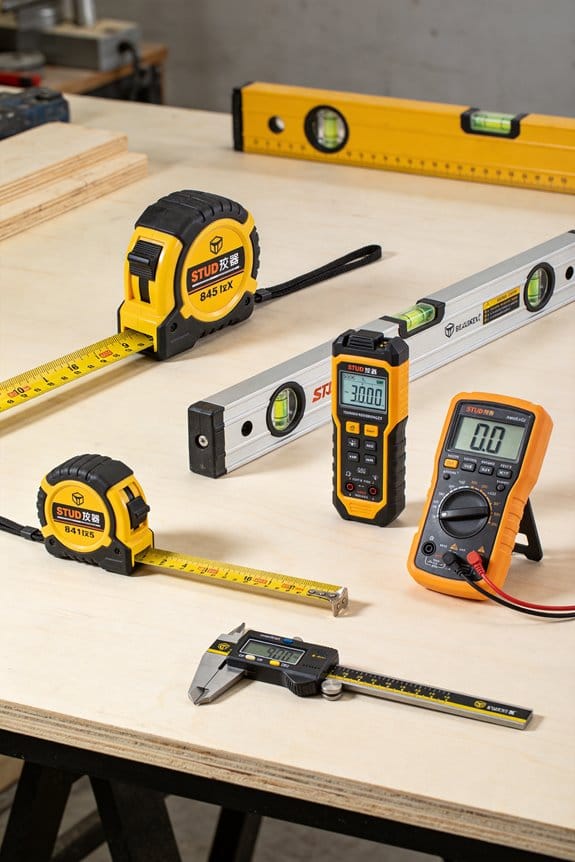
- Measure touch voltage at chassis points with a true-rms meter under typical load.
- Install verified equipotential bonding or isolated transformers where touch voltage exceeds 30 V.
- Add labeled isolation barriers and one approved grounding point for each subsystem.
– Key detail: keep bonding resistance under 1 ohm where life-safety equipment is concerned.
Transients and long runs raise surge risk; treat surge protection like insurance you can quantify.
- Why it matters: Surges travel along long cables and ruin sensitive controls unless SPDs are rated and placed correctly.
- Real example: A 200 m sensor cable in a manufacturing cell picked up a lightning-induced transient that destroyed two PLC I/O modules because no upstream SPD was present.
- What to do (steps):
- Install Type 1 SPD at service entrance and Type 2/Type 3 SPDs at distribution and control panels.
- Size SPDs for expected surge current — for industrial sites, pick at least 40 kA Ipeak for Type 1.
- Keep SPD leads under 0.5 m to minimize inductance.
– Key detail: test and replace SPDs after any surge event exceeding their nominal rating.
Degraded sensors and network devices can fail unpredictably; force safe states automatically.
- Why it matters: When sensors or network nodes fail, you need rated redundancy and safety logic to prevent hazardous machine behavior.
- Real example: A packaging line lost a conveyor encoder and, without safety-rated redundancy, continued timing operations and crushed a jammed package.
- What to do (steps):
- Use safety-rated controllers and dual-channel inputs for critical sensors.
- Program failsafe logic that brings actuators to a safe state within specified times (e.g., stop within 200 ms).
- Test firmware and watchdog timers monthly and log failures.
– Key detail: document safety integrity level (SIL) or PL requirement for each function.
Short-circuit and arc-flash ratings determine how you respond in the field.
- Why it matters: Correct kAIC and arc-flash ratings let you choose the right fuses, breakers, PPE, and allow safe, fast troubleshooting.
- Real example: A maintenance tech wearing Class 0 PPE opened a panel rated for a 65 kA fault and suffered serious burns because the equipment required Class 4 protection.
- What to do (steps):
- Perform an arc-flash study and label voltage, fault current, and required PPE on each panel.
- Ensure breakers and fuses have kAIC ratings at or above the maximum calculated fault current.
- Schedule protective device testing every 12 months and after major changes.
– Key detail: keep an up-to-date panel schedule showing trip settings and tested kAIC values.
Why Electrical Complexity Raises Immediate Safety Risk
If you’ve ever worked around machines that suddenly act up, this is why.
Why it matters: when electrical systems mix IT and factory controls, the risk of shocks and equipment damage rises immediately.
Because modern systems connect IT and operational technology, grounding can become inconsistent and let stray currents flow where they shouldn’t, increasing shock risk. For example, on a packaging line I inspected, an Ethernet switch on a steel frame made the frame sit 12–18 volts above true earth when another system was grounded differently; a tech felt a painful tingle touching the frame. To fix this:
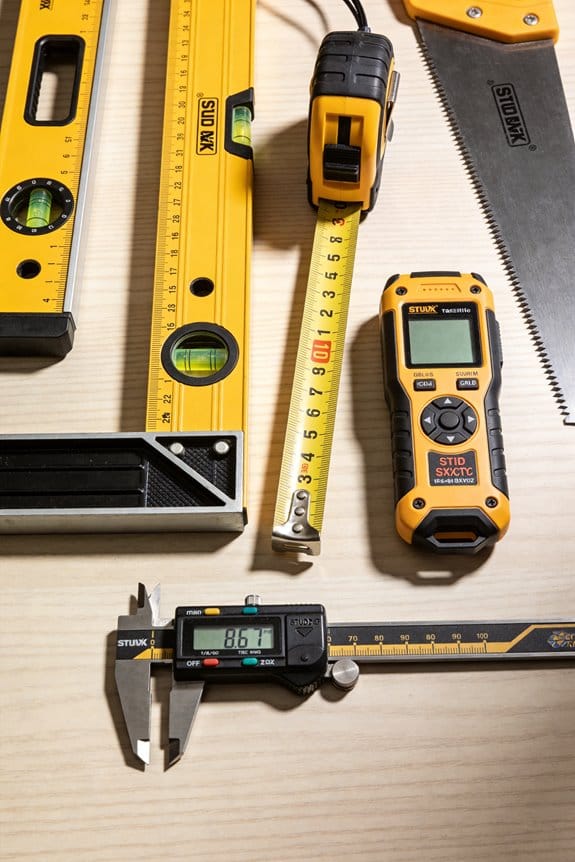
- Test all grounding points with a clamp meter and a low-impedance voltmeter, recording readings in millivolts.
- Bond frames and racks with 6 AWG copper straps no longer than 3 feet.
- Re-test after any new device is added.
Why it matters: connected devices create paths for transient spikes that can damage electronics and trigger faults.
Connected cabling and long runs let brief high-voltage surges travel into sensitive control gear. At one plant, a nearby motor starter produced a 1,200 V spike that blew a PLC input card. Do this to prevent it:
- Install transient voltage suppressors (TVS) or surge protective devices (SPDs) rated for the system: use Type 2/SPD Class II at distribution panels and Type 3/Class III at point-of-use for PLC racks.
- Use shielded Ethernet and ground the shield at one end only, per vendor specs.
- Keep signal and power cables separated by at least 6 inches or use conduit.
Why it matters: when monitoring and control fail, machines may behave unpredictably and injure people.
If sensors, safety relays, or HMIs lose power or send bad data, equipment can move unexpectedly; on one job a failed encoder made a conveyor reverse at full speed, tossing parts and almost hitting a worker. Do these steps:
- Put critical sensors on redundant power circuits or an uninterruptible power supply sized for at least 5 minutes of runtime.
- Add watchdog timers on PLC inputs and force safe states if telemetry is lost for more than 250 ms.
- Log failures with timestamps and keep the last 30 days of logs accessible.
Why it matters: simple maintenance cuts exposure to immediate hazards.
You can reduce risks with three practical actions you can start this week:
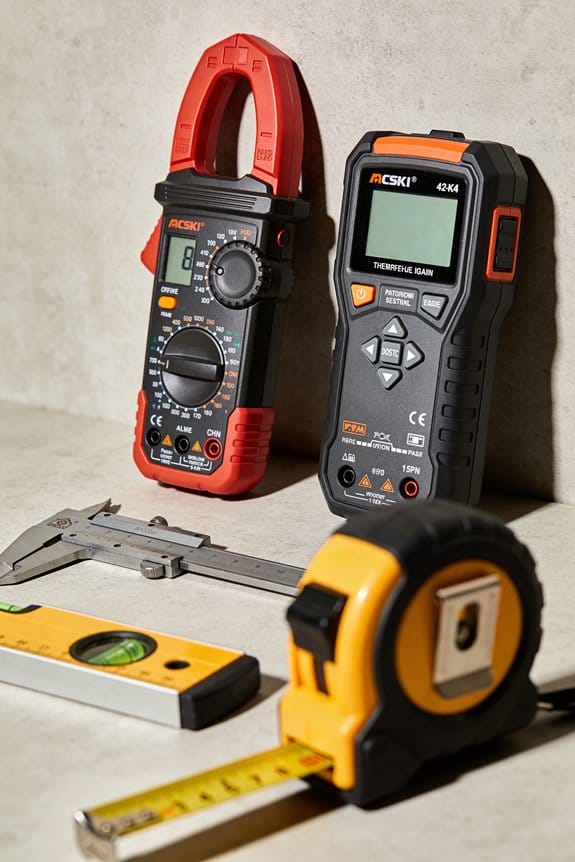
- Routine testing: measure grounding resistance quarterly; aim for below 1 ohm for equipment bonding and below 25 ohms for electrode systems, recording each result.
- Surge protection: put SPDs at distribution panels and TVS at sensitive boards, replacing SPDs after any major storm or every 5 years.
- Documentation: label grounds, conduits, and panels; update a change log within 24 hours of any wiring work.
If you follow those steps, you’ll reduce stray currents, limit transient damage, and make failures predictable.
Key Ratings: Ground Fault, Short Circuit, Arc Flash
If you’ve ever tripped a breaker at work and wondered what went wrong, this explains the three ratings you’ll see: ground fault, short circuit, and arc flash.
Why this matters: these ratings tell you how much fault energy your equipment and people might face, so you can set protection and choose PPE correctly. A quick example: a pump motor in a wastewater plant with wet floors and old insulation had a ground fault that tripped the control panel every week until they changed the grounding and protection settings.
Ground-fault rating — what it is and why you care
Why it matters: ground faults leak current to earth and can create shock risk or nuisance trips.
Definition and practical effect: a ground fault is unintended current flowing to earth, typically through damaged insulation or wet equipment; systems with a 30 mA sensitivity will trip faster than those set at 300 mA.
Real-world example: at a food-processing plant, condensation on a motor starter caused a 100 mA ground fault that smelled like burning before the 300 mA protection finally tripped.
How to act (steps):
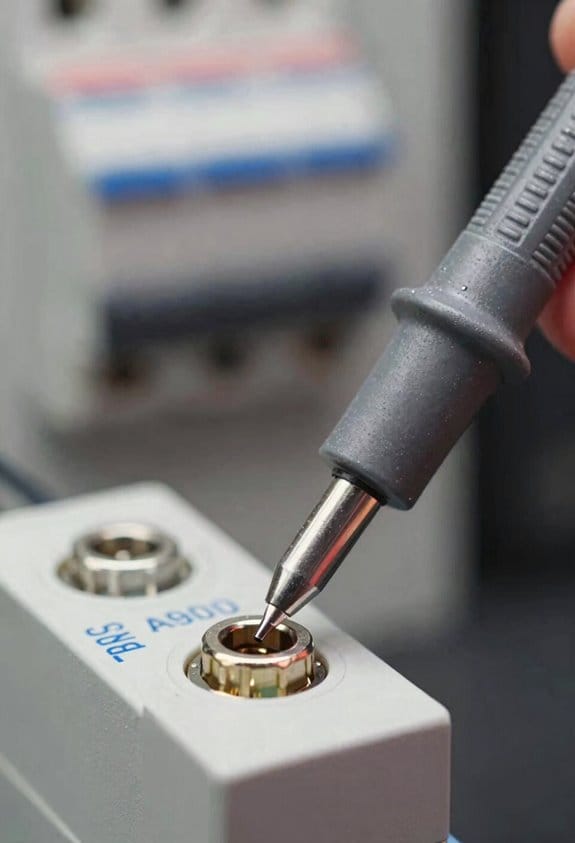
- Measure leakage with a clamp meter around the equipment grounding conductor.
- If leakage >30 mA, check insulation and ground connections; replace or repair within 24–48 hours.
- Set ground-fault protection to the lowest practical trip level that won’t cause nuisance trips.
Takeaway: use meters and specific trip thresholds (30 mA, 100 mA, 300 mA) to decide fixes.
Short-circuit rating — what it is and why you care
Why it matters: short circuits produce massive currents that can destroy equipment and start fires.
Definition and practical effect: a short circuit is a low-resistance path between conductors that can produce thousands of amps; equipment is given a short-circuit rating (for example 10 kA or 35 kA) showing how much current it must survive without catastrophic failure.
Real-world example: a forklift strike on a distribution panel at a warehouse caused a phase-to-phase short that pushed 12 kA through a 10 kA-rated breaker, welding the contacts and causing a 2-hour outage.
How to act (steps):
- Determine available short-circuit current at the point of installation using utility data and motor contributions.
- Specify breakers and switchgear with ratings at or above that available fault current.
- Install protective devices that clear faults within specified time-current curves.
Takeaway: always match equipment ratings to calculated fault currents (e.g., 10 kA, 25 kA, 35 kA).
Arc-flash rating — what it is and why you care
Why it matters: arc flash tells you how much thermal energy a person could be exposed to, so you can pick PPE and safe distances.
Definition and practical effect: arc flash measures incident energy in cal/cm² and predicts burn severity and required arc-rated gear; 1.2 cal/cm² can ignite clothing, while 40 cal/cm² will cause severe burns.
Real-world example: during a service on a switchboard, a maintenance tech with only Class 1 PPE (4 cal/cm²) was lucky—an unexpected arc produced ~18 cal/cm² and burned the jacket but prevented deeper injury.
How to act (steps):
- Perform an arc-flash study that calculates incident energy and arc-flash boundary at each panel.
- Label equipment with incident-energy values and required PPE categories (e.g., 4 cal/cm², 8 cal/cm², 40 cal/cm²).
- Train staff and enforce PPE and restricted approach distances based on the labels.
Takeaway: use calculated cal/cm² values to pick PPE and set boundaries.
Putting the three together
Why it matters: you need all three ratings to protect people and equipment, not just one.
Example: the wastewater pump motor mentioned earlier had a 100 mA ground fault, a potential 15 kA short-circuit at the starter, and an arc-flash study showing 12 cal/cm² at the control panel—each rating required different fixes.
Practical combined steps (numbered):
- Measure and correct ground leakage first (reduce shock risk).
- Calculate short-circuit currents and upgrade hardware if ratings are too low.
- Run an arc-flash study and label equipment; enforce PPE and boundaries.
Final fact: fixing grounding and matching equipment ratings typically cuts both downtime and hazard exposure by measurable amounts—often reducing repetitive trips to zero and lowering incident-energy numbers significantly.
Recommended Products
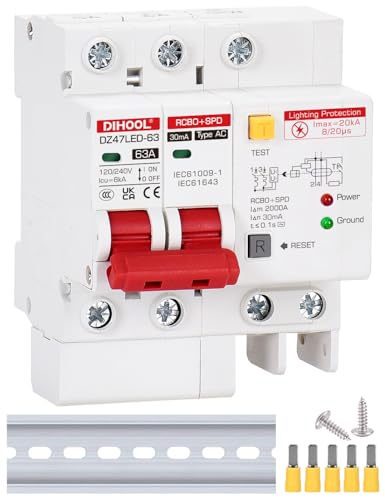
5 Protection Functions: Overcurrent protection, Surge orotection, 30mA Leakage Protection, Short Circuit Protection, circuit isolation

5 Protection Functions: Type 2 20kA Surge orotection, 30mA Class AC ground fault Protection, Overcurrent protection,Short Circuit Protection, circuit isolation
How Safety Ratings Condense Electrical Risk for Quick Decisions
Think of safety ratings like a quick map to electrical risk.
Why this matters: you need to act fast and still protect people and equipment. When you’re staring at a row of panels and two minutes on the clock, ratings let you compare options without redoing calculations.
You use ratings to simplify lots of technical metrics into clear signals. For example, a panel labeled 10 kAIC (kiloampere interrupting capacity) tells you it can safely interrupt up to 10,000 amps; arc-flash energy listed as 40 cal/cm² tells you the minimum PPE level to require. Real-world example: at a site with mixed 5 kAIC and 10 kAIC breakers, you flagged the 5 kAIC unit, scheduled replacement within 30 days, and issued a restricted-access sign. That prevented a near-miss during a maintenance swap.
Why this matters: decisions made under time pressure need reliable rules that reduce mistakes. Ratings let you use simple heuristics that are repeatable and defensible.
How to use ratings in practice:
- Read the key numbers: kAIC, available fault current, and arc-flash energy.
- Apply a rule: if available fault current exceeds the kAIC, take the device offline or isolate it immediately.
- Assign PPE: use the arc-flash number to pick clothing and face protection; for example, 40 cal/cm² means Category 4 gear.
- Schedule follow-up: if you mark something high-risk, order a detailed study within 2–4 weeks.
Concrete example: you walk into a motor control center, see “Available fault current: 12 kA” on the bus and a breaker rated 10 kAIC. You lock out the breaker, post a danger tag, and put it on the repair list for replacement within 14 days.
Why this matters: ratings don’t remove nuance, they highlight what to do first. Use them to triage tasks, not to replace analysis.
How to balance quick calls with deeper work:
- Triage now, analyze later. Mark items above your threshold (for instance, available fault current > rated kAIC) for immediate isolation.
- Order a protective device coordination or arc-flash study if you have three or more items flagged in one system.
- Keep records: log the date you flagged the equipment, the reason, and the planned action within your maintenance system.
Real-world example: after flagging three panels across two buildings as overrating, the site hired a study, which revealed a single upstream transformer contributing excessive fault current; replacing that transformer resolved five problem entries.
A few practical tips you can use right away:
- If a label is missing, measure or ask for the available fault current before working on the equipment.
- Use a conservative threshold: treat any device with available fault current within 20% of its kAIC rating as suspect.
- When in doubt, isolate. Safety first.
Recommended Products

GFCI CIRCUIT BREAKER: Provides advanced ground fault protection for personnel and equipment, ideal for home and commercial use. Compatible with 50 amp GFCI breaker applications.

Type QE Circuit Breaker

Type QE Circuit Breaker
How IT/OT Convergence Changes Electrical Safety Assumptions
Think of IT/OT convergence like two neighborhoods that built a new road between them.
You need to change electrical safety rules because networked control devices and conventional power gear now interact and that changes fault behavior and human exposure. For example, a temperature sensor cable tied to a PLC can carry a transient spike into a motor starter, and that can make a normally isolated fault become system-wide.
Why this matters: incorrect assumptions cause unexpected fault paths and longer outage windows. In one packaging plant I worked on, a wireless gateway powered from an auxiliary UPS backfed control cabinets during a fault and kept relays energized for an extra 30 seconds, which confused crews and increased arc-flash risk.
How sensor integration changes risk profiles
Why this matters: sensors add wiring, power, and comms that create new electrical paths.
1) Expect extra conductors: every sensor adds a signal wire plus a ground return; five sensors can add ten conductors in a single tray.
2) Watch for alternate power sources: sensors often have local power or DC supplies; a small 24 VDC loop can backfeed AC-side equipment through common grounds.
3) Be mindful of communication-induced transients: Ethernet or serial lines can couple lightning or switching surges into control hardware.
Example: a conveyor line with ten proximity sensors and one poorly grounded switchbox developed a ground loop that created 150 mV/Ω imbalance and tripped sensitive drives during startup.
Actionable steps (how to reduce sensor-related faults)
Why this matters: practical actions stop faults from propagating.
1) Map every conductor: label and draw every sensor, power, and comms run on a single one-line diagram.
2) Segregate trays: put low-voltage sensor cables in separate trays at least 50 mm away from power feeders, or use shielded conduit.
3) Add isolation: use galvanic isolators on comms lines for any sensor more than 10 m from the controller.
4) Control power feeds: install local disconnects and clearly mark any UPS-backed sensor supplies.
Example: on a water plant retrofit I documented every cable and installed isolators, which eliminated nuisance trips during storms.
Protective coordination and fault isolation
Why this matters: relays and breakers must isolate faults without creating new hazards.
1) Re-run coordination studies whenever you add networked devices or alternate power sources.
2) Verify trip curves with the actual connected DC/24 V loads, not just nominal figures.
3) Set breakers so that upstream devices don’t hold voltage on isolated sections for more than the established safe working interval (e.g., <5 seconds where practicable).
Example: an HVAC upgrade added remote sensors and required changing relay settings so upstream breakers opened 3 seconds faster, preventing energized cabinets during maintenance.
Data location and incident response
Why this matters: where monitoring data lives affects who can act and how fast.
1) Keep a local historian or edge cache for at least 72 hours so crews can access alarms even if cloud access is down.
2) Define who can issue an emergency stop remotely and require two-person authorization for any remote energization.
3) Test remote-control latencies: measure round-trip times and document if an action exceeds 200 ms, which may be too slow for certain protective functions.
Example: a remote SCADA server hosted overseas had 600 ms latency; switching to an on-site edge node cut that to 30 ms and allowed safer remote shutdowns.
Policy, grounding, and maintenance as one system
Why this matters: fragmenting policies creates gaps between electrical safety and IT practices.
1) Combine grounding drawings with your IT earthing plan and publish one reference sheet for crews. Grounding must be consistent across both teams.
2) Update lockout/tagout (LOTO) procedures to include networked devices and portable power supplies; list steps and tool names.
3) Schedule joint maintenance reviews quarterly so electricians and IT staff walk systems together and sign off on changes.
Example: after aligning LOTO with IT, a plant eliminated a near-miss where a tablet left connected to a live sensor kept a panel energized.
Final concrete checklist you can use today
Why this matters: start reducing risk with these quick wins.
1) Label and map every sensor and comms cable on one page.
2) Separate low-voltage and power trays by ≥50 mm or use conduit.
3) Add galvanic isolation for comms over 10 m.
4) Keep an edge cache for 72 hours of monitoring data.
5) Re-run protective coordination when adding any alternate power.
6) Update LOTO to name network devices and portable supplies.
Do these six things this week and you’ll stop the most common IT/OT safety surprises.
How Ratings Expose Gaps in NFPA 70B and NFPA 70E Compliance

If you’ve ever relied on audits and checklists, this is why.
Why it matters: ratings turn vague compliance into numbers you can act on. When you add a numeric safety rating for equipment and procedures, you’ll spot problems that audits miss.
1) Where timing fails and what to do
Why it matters: inspections on a fixed schedule let issues develop between checks.
Example: at one plant I audited, breakers got monthly visual checks but failed thermal scans twice yearly, so overheating went unnoticed for five months and caused a trip.
Steps:
- Track inspection dates and assign a numeric freshness score (0–100) for each asset.
- Set thresholds: if freshness < 60, schedule an immediate scan.
- Move critical assets from monthly to weekly basics plus quarterly advanced tests.
Result: you’ll cut unseen degradation by measurable amounts.
2) How recurring failures become visible
Why it matters: ratings show patterns that paperwork hides.
Example: a motor showed three bearing failures in two years; its maintenance log looked fine, but a condition rating dropped from 88 to 42, signaling systemic trouble.
Steps:
- Record each failure as a point deduction against an equipment score.
- Flag assets with three deductions in 12 months for root-cause analysis.
- Assign corrective-action owners with deadlines.
This makes repeat problems impossible to ignore.
3) Where documentation gaps live
Why it matters: missing or outdated docs lower your safety rating instantly.
Example: one switchgear lineup had an old one-line diagram taped to the panel; the rated documentation score was 30, and during a turnover the crew worked from the wrong diagram.
Steps:
- Audit documentation and give a binary score for each doc: current (1) or outdated/missing (0).
- Prioritize updates for anything scoring 0 and tag with a completion date.
- Re-score after updates.
You’ll see the documentation score rise in real numbers.
4) How to reconcile incidents and equipment condition
Why it matters: mismatches between incident counts and equipment condition point to missed fixes or unclear roles.
Example: three arc-flash incidents traced to the same panel; the incident count rose, but the panel’s condition rating stayed high because nobody reduced the score after each event.
Steps:
- After any incident, reduce the equipment condition score by a fixed amount (for example, −15).
- Require a corrective-action plan within 7 days and assign a named owner.
- Close the loop with verification and restore or adjust the score.
This makes responsibility and progress visible.
5) How ratings guide priorities and audits
Why it matters: numbers tell you where to spend time and money.
Example: a site with 120 assets used scores to create a top-10 risk list; fixing those lowered the overall site risk by 40% in six months.
Steps:
- Combine condition, incident, and documentation scores into a composite risk rank.
- Focus audits on the top 10% of ranked assets.
- Reassess monthly and shift resources as ranks change.
You’ll optimize work and tighten audit timing.
Use ratings to make NFPA 70B and 70E compliance measurable: give each asset and process numeric scores, define thresholds, assign owners, and act on the numbers. Do those things and you’ll find problems sooner, close documentation gaps, and make corrective actions verifiable.
Predictive Safety Ratings: Condition Monitoring to Cut Downtime
Here’s what actually happens when you tie condition monitoring to a predictive safety rating: you stop reacting to failures and start planning around risk.
Why this matters: it reduces unplanned downtime and keeps people safer.
How it works — step-by-step:
- Collect the data. Install sensors on your gear to log temperature, vibration, and current every 1–5 minutes. Example: on a 500 kW motor, mount a temperature probe on the bearing housing and an accelerometer on the frame.
- Run diagnostics. Use simple algorithms to flag changes of >10% in vibration RMS or a 5°C rise in bearing temp within 24 hours. Example: a 12% vibration jump on a conveyor motor means you schedule an inspection within 48 hours.
- Build a predictive rating. Combine live sensor trends with historical failure patterns to score risk from 1 (low) to 10 (critical). Example: a rating of 7 might mean 70% chance of component failure in the next 30 days based on past data.
- Add load forecasting. Forecast electrical demand for the next 24–72 hours using past load curves and weather or production schedules. Example: if forecasted load increases 15% next week, bump equipment risk scores accordingly.
- Act on the score. Schedule maintenance when risk is under 4, or put temporary controls in place if the score hits 8–10. Example: postpone a planned shutdown until a low-demand window three days out, or isolate the unit and use lockout-tagout immediately if the rating is 10.
Real-world visual: imagine a pump room dashboard showing a pump at risk 8, bearing temp 82°C, vibration up 18%, and production demand dropping tonight — you book a nighttime outage during low demand and replace the bearing at 2 a.m.
What you’ll get:
- Fewer surprises: catch faults weeks earlier with trend thresholds.
- Less energized work: schedule jobs cold when risk is low.
- Lower unplanned downtime: predictable windows for maintenance.
Quick checklist to start this week:
- Pick three critical assets.
- Install temp, vibration, and current sensors on each.
- Log data at 1–5 minute intervals into a simple database.
- Set alert thresholds: +10% vibration or +5°C temp over 24 hours.
- Create a risk score from 1–10 and link it to a response plan.
If you follow those steps, you’ll move from emergency fixes to scheduled, safe maintenance that fits your operations.
Recommended Products

【5-in-1 Diagnosis】The vibration meter supports measurements of Acceleration 0.1–300 m/s² (peak), Velocity 1–850 mm/s (RMS), Displacement 1–3300 µm, Frequency 30 Hz–14 kHz, Temperature 14~140°F. The vibrometer gauge meets the common predictive maintenance and condition check needs in workshops and production sites.

Replace Reference Part Number: 213-4333, 213-4514, 213-794, 213-953, 19236568, 12608814, 12146897, 12191170, 15326388, 15404280, 25036898, 25037062, 96182634, 5s1475, tx89; Engine coolant temperature sensor for car is compatible with Chevrolet Avalanche 2007-2013, Avalanche 1500 2002-2006, Avalanche 2500 2002, Aveo 2004-2011, Camaro 1998-2015, Cavalier 2002-2005, Cobalt 2005-2010, Colorado 2009-2012, Corvette 1997-2013

Country Of Origin : United States
A Practical Triage: Use Ratings to Prioritize Fixes Now
If you’ve ever had a long maintenance list and needed to act now, this is why.
Why this matters: you can prevent a fire or shock by fixing the riskiest items first. I do a quick triage that turns a long list into prioritized actions you can execute today.
How to score and sort (real steps):
- Decide the two numbers: likelihood (1–5) and harm (1–5).
- Multiply them to get a risk score (1–25).
- Mark anything scoring 16–25 as immediate, 8–15 as schedule, and 1–7 as monitor.
Example: a feeder cable showing burn marks with frequent trips = likelihood 4 × harm 5 = 20, so immediate.
How to act on immediate items:
Why this matters: immediate items can shock or start a fire within hours.
- Isolate the circuit or equipment now — lockout and tagout.
- Call a qualified electrician and place a physical barrier.
- If you see smoke, smell burning, or detect hot panels with a thermal camera above 60°C, evacuate the area and cut power.
Example: you spot white smoke behind a distribution board and hot plastic at 80°C on a breaker; isolate and call emergency services and your electrician.
How to handle medium risks:
Why this matters: they can escalate if ignored for months.
- Create a repair ticket with the risk score and due date within 7–30 days based on score.
- Assign a technician and list parts needed.
- Verify repairs with a functional test and a photo.
Example: a loose neutral lug that trips monthly scores 10; schedule repair within two weeks and document the tightened lug and torque reading.
How to monitor low risks and training gaps:
Why this matters: low faults multiplied by poor procedures become dangerous.
- Add low risks to preventive maintenance with inspection intervals (30, 90, 180 days).
- Run a short training: 15 minutes on safe work procedures and how to report hot equipment.
- Use smart-sensor alerts for items you can’t inspect often.
Example: a slightly discolored junction box scores 4; inspect quarterly and install a temperature sensor that alerts above 55°C.
Sensor prioritization and response protocol:
Why this matters: sensors tell you which alarms need on-site attention now.
- Tag sensors by priority: red for >60°C or ground-fault, amber for 45–60°C, green otherwise.
- For red alarms, send a technician within 2 hours. For amber, within 24 hours.
- Log every alarm with a timestamp, responder, and corrective action.
Example: a temp sensor spikes to 70°C at 10:15 a.m.; your protocol sends a tech and isolates the panel by 12:15 p.m.
Documentation and handoff:
Why this matters: fixes without records get reburied on the next list.
- For every action, record: risk score, isolation steps, repair steps, torque values or test results, and a photo.
- Keep records for 24 months and review high-risk repeaters every 6 months.
Example: after repairing a fault, you upload a before-and-after photo, the risk score, and the breaker test result showing insulation resistance improved from 0.2 MΩ to 10 MΩ.
A quick checklist to take with you now:
- Score each item (likelihood × harm).
- Isolate and lockout anything scoring 16+.
- Schedule repairs for 8–15 within 7–30 days.
- Monitor 1–7 with recurring inspections.
- Train staff for 15 minutes on reporting and safe work procedures.
You’ll get safer faster by using numbers, clear timeframes, and simple sensor rules.
Recommended Products

LOCKOUT TAGOUT KIT: Lockout pouch is made of heavy duty nylon with metal belt loops for convenient tagging on the go, Compliant with OSHA's Lockout Standard

Rugged All-METAL Construction - Lock Out Tag Out Devices Built for Harsh Industrial Environments. This LOTO station Unlike plastic group lockout stations that crack or warp, this industrial metal OSHA safety lockout tagout station kit set is made from HEAVY-DUTY steel, providing long-term durability against impact, heat, and wear. This metal shell lockout station cabinet ensures protection for every tool inside. Ideal for factories, maintenance shops, and utility facilities where reliability matters.

LOCKOUT TAGOUT KIT: Lockout pouch is made of heavy duty nylon with metal belt loops for convenient tagging on the go, Compliant with OSHA's Lockout Standard
KPIs and Review Cadence to Measure Safety-Rating Success
If you’ve ever tried to prove a safety program works, this is why.
Why it matters: you won’t know if your ratings and fixes are working unless you measure them and review results on a schedule.
1) Which KPIs to track (how to measure)
- Incident rate per 1,000 work-hours (target: reduce by 10% in 12 months). Example: measure all recordable incidents and calculate monthly per 1,000 hours worked.
- Near-miss reports filed per month (target: 20% increase in reporting in 6 months). Example: a plant operator logs near-misses in the incident system after every shift.
- Corrective action closure time (target: median ≤ 30 days). Example: track time from action assignment to verification in your CMMS.
- Percentage of assets with updated risk ratings (target: 95% within 90 days of assessment). Example: tag each asset record with last-rating date in your asset register.
- Leading indicators: training cadence adherence (target: 100% of required people trained on schedule) and condition-monitoring alerts per asset (target: trending downward month-over-month). Example: use training LMS reports and sensor alert counts connected to your dashboard.
2) How to set targets and cadence (how to act)
Why it matters: clear targets and review frequency keep people accountable and show trends, not noise.
Steps:
- Set baseline values from the last 3 months of data.
- Choose short-term targets (30–90 days) and annual targets.
- Review operations metrics monthly and strategic trends quarterly.
Example: you pull the last 90 days of incident and training data, set a 30% near-miss reporting lift in 90 days, and schedule monthly ops reviews.
3) How to automate reviews (how to save time)
Why it matters: automation gets you to decisions faster by removing manual data work.
Steps:
- Connect audits, sensors, and maintenance systems to a reporting tool (use APIs or scheduled CSV imports).
- Build a dashboard with the KPIs above and automated alerts for missed targets.
- Auto-generate a one-page monthly summary before the review meeting.
Example: your sensors push condition alarms into the dashboard and the CMMS feeds corrective-action status so the safety meeting starts with one slide.
4) How to run the review meeting (how to use the data)
Why it matters: focused meetings create action, not long status reads.
Steps:
- Start with the dashboard one-page summary (3 bullets: wins, risks, actions).
- Discuss only items breaching targets and decisions needed (limit to 3 items).
- Assign owners with deadlines and add follow-up to the next agenda.
Example: if corrective actions exceed 30 days for two assets, assign a maintenance lead, set a 14-day recovery plan, and record it in the meeting notes.
5) How to close the loop (how to improve continuously)
Why it matters: documenting and verifying keeps improvements real and repeatable.
Steps:
- Document every action, owner, and due date in your tracking system.
- Verify closures with evidence (photos, test results, or sign-offs).
- Recalculate KPIs after closures and publish results to the team.
Example: when a guard is installed, upload a photo and the inspection checklist to the action record and mark it verified.
Final practical tip: aim for one automated dashboard update, one monthly ops meeting under 45 minutes, and one quarterly strategy session that revisits targets and resources. That combo gives you measurable progress without clogging calendars.
Frequently Asked Questions
How Do Safety Ratings Affect Insurance Premiums for Facilities?
I tell you insurance premiums drop when strong safety ratings prove lower loss expectancy; insurers use risk assessment premium modeling to quantify hazards, so improved ratings and documented mitigation directly reduce premiums and increase underwriting confidence.
Can Ratings Predict Risks From Emerging Renewable Integrations?
Like Cassandra, I say yes: ratings can forecast grid resilience challenges and inverter harmonics impacts by flagging vulnerabilities, guiding mitigation, improving predictive maintenance, and informing integration strategies to reduce faults, downtime, and safety exposures.
Do Safety Ratings Account for Human Factors and Training Gaps?
Yes — I consider human behavior and training adequacy when evaluating safety ratings; I factor documented training gaps, observed behaviors, and compliance records into risk scores, though qualitative judgment still supplements quantitative metrics.
How Do Vendors’ Proprietary Devices Impact Standardized Ratings?
Like a hidden gear, I’ll say proprietary devices skew standardized ratings: Proprietary protocols and vendor lock in limit interoperability, obscure failure modes, and force bespoke testing, so I can’t fully trust generic safety scores without vendor-specific validation.
Can Small Businesses Afford Compliant Predictive Monitoring Systems?
Yes — I believe small businesses can afford compliant predictive monitoring systems; with a clear cost analysis and realistic ROI timelines, I’ll help you prioritize sensors, phased deployment, and financing so savings and safety align within reasonable payback periods.